
Table of Contents
ToggleUnderstanding the I-730 Package
The I-730 form, also known as the Refugee/Asylee Relative Petition, is a crucial document for individuals seeking to bring family members to the United States. When submitting this form, it is essential to include translated exhibits that support your application. Proper organization of these documents can significantly impact the processing time and the likelihood of approval.
Why Organization Matters
Organizing translated exhibits is not just about aesthetics; it plays a vital role in ensuring that your application is processed smoothly. A well-organized package can help immigration officials quickly locate necessary documents, reducing the risk of delays or requests for additional information.
Key Components of the I-730 Package
- Form I-730: The primary form that initiates the petition.
- Supporting Documents: Includes proof of relationship, identity documents, and any other relevant paperwork.
- Translated Exhibits: Documents that must be translated into English, such as birth certificates, marriage certificates, and other legal documents.
Steps to Organize Translated Exhibits
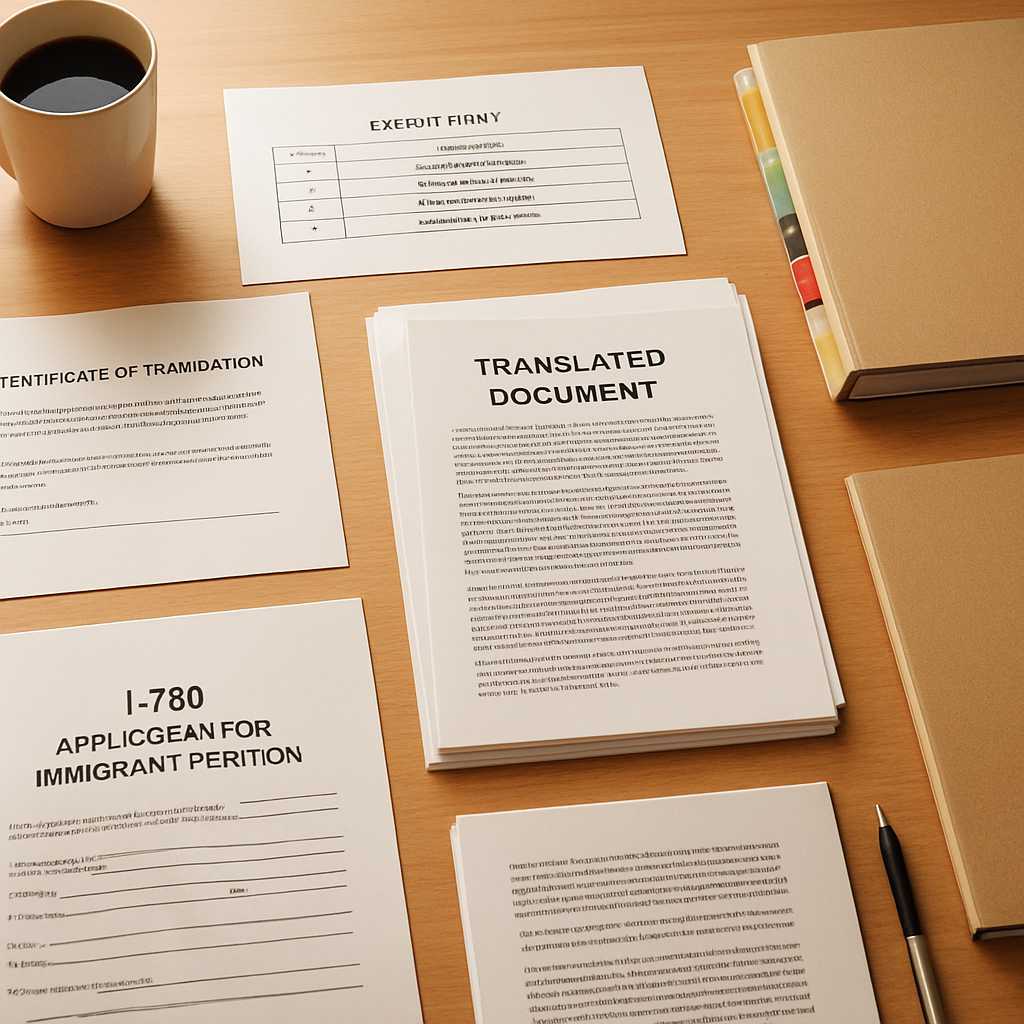
Create an Exhibit Index
Start by creating an exhibit index that lists all the documents included in your I-730 package. This index should include:
- The title of each document
- The original language of the document
- The page number of the document in the package
This index will serve as a roadmap for immigration officials, making it easier for them to navigate your submission.
Proper File Naming
When saving your translated documents, use a clear and consistent file naming convention. For example:
- LastName_FirstName_BirthCertificate.pdf
- LastName_FirstName_MarriageCertificate.pdf
This practice not only helps you keep track of your documents but also aids immigration officials in identifying them quickly.
Merging PDF Files
If you have multiple pages for a single document, consider merging them into one PDF file. This can be done using various online tools or software. Ensure that:
- The merged file is clearly labeled.
- Each page is in the correct order.
Using Binder Tabs
To enhance organization, use binder tabs to separate different sections of your I-730 package. Label each tab according to the content it contains, such as:
- Form I-730
- Exhibit Index
- Translated Exhibits
Placement of Translation Certificates
Each translated document should be accompanied by a certificate of translation. Place these certificates immediately following the corresponding translated document. This ensures that immigration officials can easily verify the authenticity of the translations.
Common Mistakes to Avoid
When organizing your I-730 package, be mindful of the following common mistakes:
- Failing to include an exhibit index.
- Using inconsistent file naming conventions.
- Not merging multi-page documents.
- Misplacing translation certificates.
Conclusion
Organizing translated exhibits for your I-730 package is a critical step in the immigration process. By following these guidelines, you can ensure that your application is clear, concise, and easy for immigration officials to review. For further assistance with translations, consider our academic translation services or authorized translation services.
FAQs
What documents need to be translated for the I-730?
Documents such as birth certificates, marriage certificates, and any legal documents that are not in English must be translated.
How should I format my translated documents?
Translated documents should be formatted similarly to the original, with a certificate of translation included.
Can I organize my documents in a digital format?
Yes, you can submit your documents digitally, but ensure they are clearly labeled and organized as per the guidelines.
What is an exhibit index?
An exhibit index is a list of all documents included in your I-730 package, helping immigration officials navigate your submission.
Do I need a professional translator for my documents?
Yes, using a certified translator ensures that your documents meet USCIS requirements.
