
When an authority asks for an authorised or authorized translation, they are not asking for “any” translation. They expect an official English translation that meets strict legal standards so your documents are accepted the first time – especially for USCIS immigration, courts, embassies, universities, banks and professional bodies.
At USCIS Official Translation, we specialise in preparing authorized translations that follow the exact wording, layout and certification wording required by the receiving authority. Every translation is delivered with a signed certification statement confirming it is complete, accurate and prepared by a competent translator, so you can submit with confidence.
What Is an Authorized Translation?
Definition:
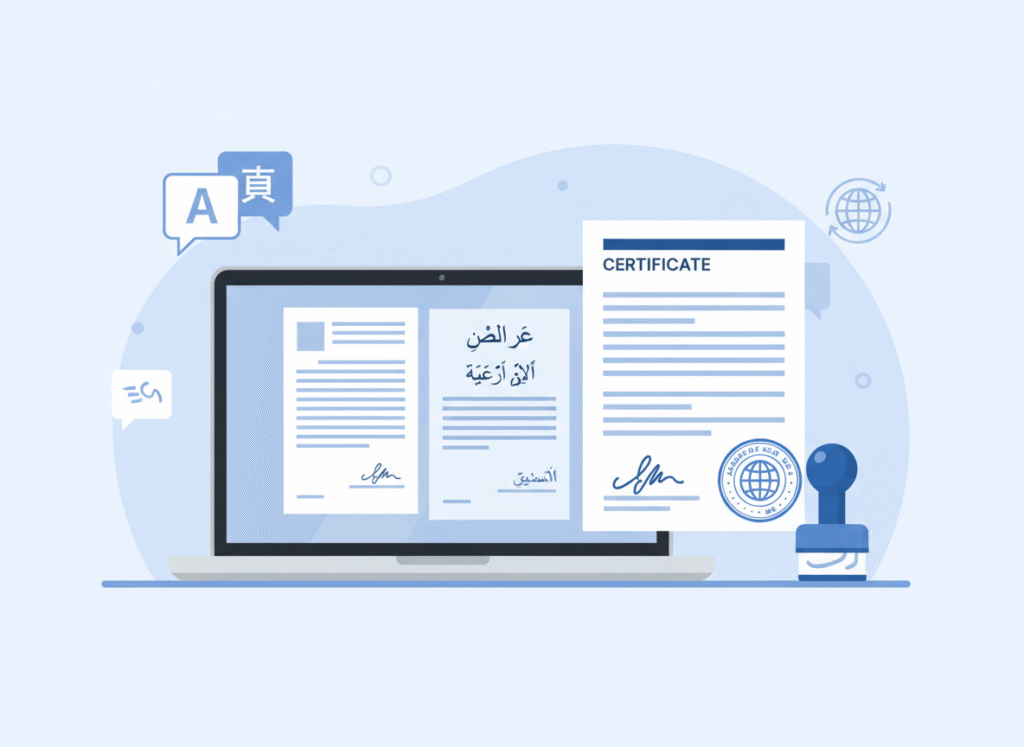
An authorized translation (also called a certified or official translation, depending on the country) is a translation that:
- Includes a full, word-for-word English translation of the original document (no summaries or partial extracts)
- Is accompanied by a signed certification statement from the translator or translation company
- States that the translation is complete and accurate, and that the translator is competent in both languages
- Is formatted so that authorities can easily compare the original and the translation
In some countries, only a sworn or authorised translator registered with a court or government body may provide such translations. In the United States, the law focuses on the statement of accuracy and competence, not on a specific licence; any competent translator may certify, as long as the statement meets the rules.
When Do You Need an Authorized / Official English Translation?
You typically need an authorized translation whenever a non-English document is used for an official purpose, for example:
- USCIS immigration applications (green cards, visas, naturalisation)
- Family immigration: marriage-based, fiancée, parents or children
- Court and legal matters: litigation, evidence, contracts, powers of attorney
- Civil status: birth, marriage, divorce and death certificates
- Academic & professional: diplomas, transcripts, professional licences, résumés
- Financial & business: bank statements, company registration, tax returns
- Embassy & consular procedures: visas, residency, citizenship applications
For USCIS, any foreign-language document must be accompanied by a full English translation plus a signed certification confirming completeness, accuracy and the translator’s competence.
Authorized vs Certified vs Sworn vs Notarised Translation
Certified Translation
- A certified translation is a translation with a signed statement of accuracy from the translator or agency.
- Widely used for USCIS, universities and many government bodies in English-speaking countries.
Authorized / Official Translation
- “Authorized translation” is often used interchangeably with “certified” to mean a translation that meets the legal standard for official use.
- The key is that the translation can be relied upon by the authority (USCIS, court, embassy, etc.) under its own rules.
Sworn Translation & Authorised Translator
- In many European and Latin American countries, a sworn translator (or authorised translator) is appointed by a court or government body.
- Their signature and seal give the translation an enhanced legal status for use before local authorities and courts.
Notarised Translation
- A notarised translation is where a notary public witnesses the translator’s signature on the certification statement.
- The notary is not checking the quality of the translation; they are verifying the identity of the signatory.
Why Choose USCIS Official Translation for Authorized Translations?
Clear Acceptance Standards
- Translations prepared in line with 8 CFR 103.2(b)(3) for USCIS filings: full English translation, certified as complete and accurate, with confirmation of the translator’s competence.
- Certification wording tailored to USCIS, NVC, embassies, universities, banks and regulatory bodies as needed.
Professional Human Translators
- Experienced linguists specialising in legal, immigration and academic documents
- Native-level command of both languages and deep familiarity with official terminology
Formatting That Mirrors Your Original
- Careful preservation of headings, tables, seals, stamps and numbering, so your authorised translation is easy to review and cross-check
- Where appropriate, we can provide side-by-side layouts to simplify verification for caseworkers and legal teams.
Speed Without Compromising Accuracy
- Typical turnaround from 24–48 hours for standard document sets
- Urgent and same-day options available for time-sensitive filings (subject to document length and complexity)
Security & Confidentiality
- Encrypted file handling and restricted access to your documents
- NDAs available on request for law firms, corporate clients and professional advisers
Authorized translation vs sworn translation and sworn interpreter
A sworn translator (or authorised translator) is a translator who has been formally appointed or authorised by a court or government authority to produce translations that carry legal value.
A sworn interpreter is a specialist interpreter who has taken an oath before a court and provides oral interpretation in legal settings such as court hearings, notarial acts, and police interviews.
If you:
- Need a written document (such as a birth certificate) translated for official use, you need an authorized / certified translation.
- Need an interpreter for live proceedings (for How Our Authorized Translation Process Works
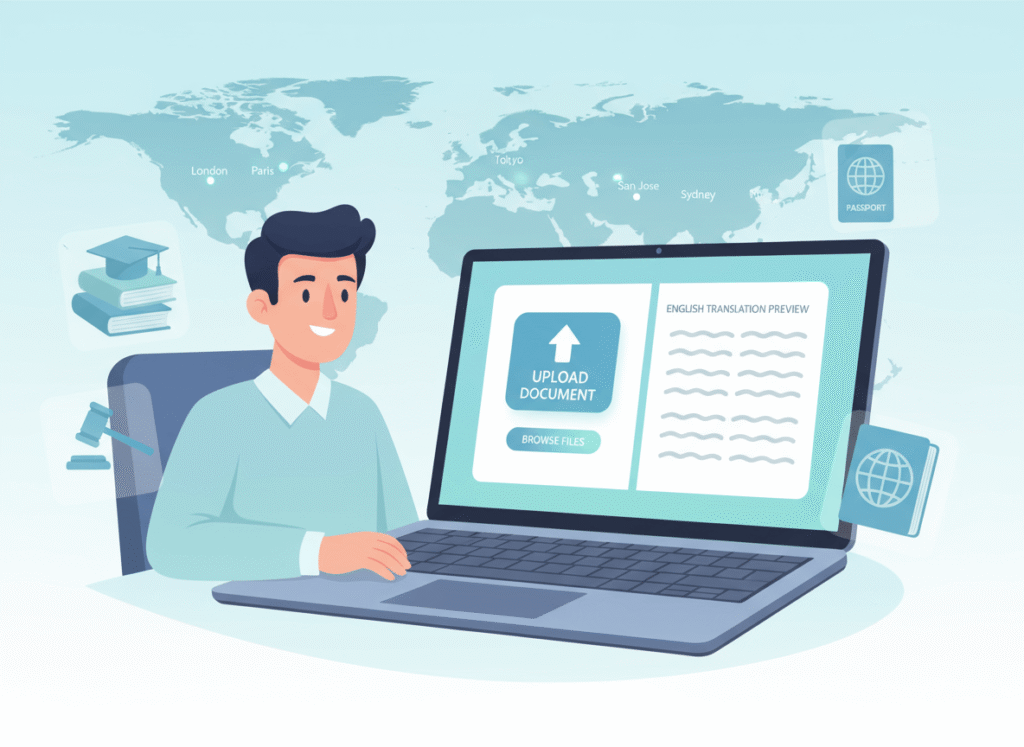
1. Upload Your File & Get a Quote
Upload scans or photos (PDF, JPG, PNG) or editable files (DOCX, XLSX, PPTX).
Tell us where the translation will be used (USCIS, court, embassy, university, bank, employer, etc.).
Receive a clear, all-inclusive quote – no hidden fees.
CTA: Get a Quote – Share your documents securely for a clear, upfront price.
2. We Assign a Specialist Authorised Translator
We match your file to a subject-matter specialist, e.g. immigration, family law, academic or financial.
Your translator prepares a word-for-word authorised translation, keeping the layout as close as possible to the original.
3. Quality Review & Certification
A second linguist or reviewer checks accuracy, completeness and formatting.
We add the certificate of translation accuracy, including:
Translator’s or company’s name
Language pair
Statement of competence
Statement that the translation is complete and accurate
Signature and date
4. Delivery & Support
You receive a signed, stamped PDF ready to upload or print, and – where requested – hard copies by post or courier.
Our team is available if your lawyer, university or case officer has follow-up questions.
Documents We Commonly Provide Authorized Translation For
We provide official English translations and authorised translations for a very wide range of documents, including:
Personal & Civil Status
- Birth, marriage, civil partnership and divorce certificates
- Death certificates and adoption papers
- Passports, national ID cards and driving licences
Immigration & Legal
- Immigration forms, supporting evidence and USCIS correspondence
- Police clearance certificates, criminal record extracts and penal certificates
- Court orders, judgements, settlement agreements and powers of attorney
Academic & Professional
- School reports, diplomas, degree certificates and academic transcripts
- Professional licences, medical registrations and bar association certificates
- Training certificates, CPD records and reference letters
Business & Financial
- Company incorporation documents and shareholder resolutions
- Bank statements, tax returns and pay slips
- Contracts, NDAs, service agreements and commercial correspondence
If your situation also requires an in-person sworn interpreter for a court hearing, notarial appointment or interview, we can arrange a sworn interpreter or court-approved interpreter in many jurisdictions, working alongside your authorised translations.
FAQs About Authorized Translation & Official English Translation
1. What exactly is an authorised / authorized translation?
An authorised (authorized) translation is a complete, word-for-word translation of a document plus a signed certification statement confirming that the translation is complete, accurate and prepared by a competent translator. Authorities treat this as an official English translation for legal and administrative purposes.
2. Who is allowed to provide an authorized translation?
In the United States, there is no state licence for translators. A translation is considered “certified” or “authorized” when the translator or translation company signs a statement confirming accuracy and competence, and includes their details. Other countries may require a sworn or authorised translator registered with a court or government body, so it is important to check the rules for the destination country.
3. Will your authorized translations be accepted by USCIS?
Our translations are prepared in line with 8 CFR 103.2(b)(3) and USCIS guidance, which require a full English translation plus a certification that it is complete, accurate and prepared by a competent translator. While no private provider can guarantee a decision outcome, our clients use our authorised translations successfully across a wide range of USCIS applications.
4. How fast can I get my official English translation?
For standard civil documents (like birth, marriage or police certificates), many projects are completed within 24–48 hours from payment and confirmation. Larger document sets, complex legal files or urgent deadlines can often be accommodated with priority options – simply let us know your target date when you request a quote.
5. Do you offer sworn interpreters as well as translations?
Yes. If you need a sworn interpreter or court-approved interpreter for a hearing, interview, notarial appointment or immigration interview, we can arrange this in many locations through our interpreter network. Your interpreter will be briefed on the relevant documents and context to support you effectively.
6. Can you provide notarised or apostilled translations?
Where a notarised certification or additional apostille/legalisation is required, we can guide you through the process and, in many cases, arrange the necessary appointments and documentation. This is especially common for documents destined for overseas courts, embassies and land registries.
