
If you are applying for a Spanish visa, dual citizenship, marriage abroad, or registering children in a Spanish-speaking country, you will almost certainly be asked for your birth certificate translated into Spanish – and often in a very specific format.
Choosing the wrong type of translation (or the wrong provider) can lead to rejected applications, extra costs, and weeks of delay. This guide explains exactly where you can get your birth certificate translated to Spanish, which type of translation you need, how much it usually costs, and how to avoid common mistakes.
Throughout, we’ll also show you how USCIS Official Translation can handle your birth certificate translation quickly, securely, and in the format authorities expect.
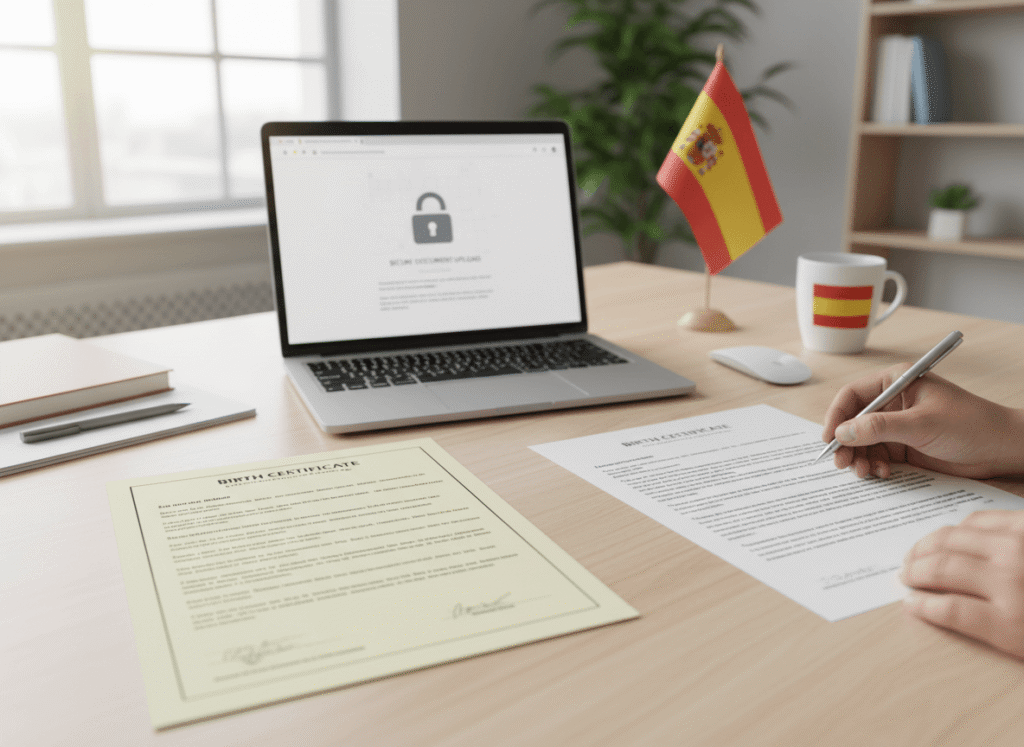
First Things First: Do You Actually Need Spanish or English?
Before you spend money, clarify what the authority is asking for:
- For US immigration (USCIS):
USCIS normally requires documents in a foreign language (including Spanish) to be translated into English with a signed certification statement confirming completeness and accuracy. - For Spain and Spanish consulates:
Documents often need to be translated into Spanish, and for many visa or citizenship procedures the translation must be done by a sworn translator (traductor/intérprete jurado) officially appointed by the Spanish Ministry of Foreign Affairs. - For Latin American countries or other Spanish-speaking authorities:
Requirements vary. Some accept any professional certified translation; others request translators registered locally or notarised translations.
If your letter or checklist says “translated into Spanish” (for Spain, a Spanish consulate, or a Spanish-speaking country), keep reading – this guide is for you. If it clearly says “translated into English for USCIS”, you likely need an English translation instead (which we also provide).
What Type of Spanish Translation Do You Need?
Not all translations are equal. Authorities care less about who you like and more about how the translation is certified.
Certified vs Sworn Translation – What’s the Difference?
Certified translation (general international use)
- The translator or translation company signs a statement declaring the translation is complete and accurate and that they are competent in both languages.
- This model is common in the United States and many other countries, where there is no central government licensing of translators, but a written certification statement is required.
Sworn translation (Spain and some other jurisdictions)
- In Spain, a sworn translator is appointed by the Spanish Ministry of Foreign Affairs and registered in an official list.
- Their signature and stamp give the translation legal value before Spanish public bodies, courts, universities and many consulates.
Think of it this way:
- Certified translation = recognised professional translation backed by a signed statement.
- Sworn translation = certified translation plus legal authority granted by the Spanish state.
When You Need a Sworn Spanish Translation
You will typically need a sworn translation into Spanish when:
- Your birth certificate is being used for Spanish immigration or residency.
- You are applying at a Spanish consulate abroad for a long-stay visa or citizenship, and their checklist mentions “sworn translation” or “traductor jurado”
- A Spanish court, university, or civil registry (registro civil) is processing your case.
In these cases, a random translator or an uncertified online service is not enough. You must use a sworn translator whose name appears on the official Spanish list.
When a Regular Certified Spanish Translation Is Enough
Situations where a non-sworn but certified Spanish translation may be acceptable include:
- Certain Latin American embassies/consulates that accept translations from recognised translation agencies.
- Banks, employers, insurers, or private institutions who simply need to understand a birth certificate in Spanish.
- Bilingual documentation where Spanish is requested for convenience, but no formal sworn status is mentioned.
Always check the exact wording on the checklist or email from the authority. When in doubt, ask them whether they require a sworn translator (Spain) or simply a certified translation.
Can You Translate Your Own Birth Certificate into Spanish?
In almost all official contexts, the answer is no.
Authorities typically require a neutral third-party translator who certifies the translation’s accuracy. For immigration and visa cases, self-translation is not accepted because you have a clear interest in the outcome, and there is no independent confirmation of accuracy.
Even if you are fluent in Spanish, you should:
- Use a professional translator for any government, consular, or legal process.
- Save self-translation for personal reference only.

Where Can I Get My Birth Certificate Translated to Spanish?
Let’s look at your main options, from fastest and most convenient to more local alternatives.
1. Specialist Online Translation Services (Best for Most People)
A reputable online provider like USCIS Official Translation is often the fastest and simplest route, especially if:
- You need certified translation into Spanish from anywhere in the world.
- You want a clear digital workflow: upload, pay securely, receive PDF (and, if required, hard copies).
- You are handling multiple documents – e.g. birth certificate, marriage certificate and apostille.
With USCIS Official Translation, you can typically:
- Upload a scan or photo of your birth certificate and any apostille or legalisation.
- Choose Spanish as the target language and specify the authority (e.g. “Spanish Consulate in [City]” or “Immigration office in [Country]”).
- Receive a quote and turnaround time before confirming.
- Get a certified Spanish translation, including a signed declaration of accuracy, formatted to mirror the original layout as closely as possible.
- Request printed, signed copies by courier if the authority needs paper originals.
This option is ideal when you want:
- Speed – urgent delivery is often available.
- Security – encrypted upload and confidential handling of personal data.
- Support – a team who understand official formats and can highlight if a sworn translator is required instead.
Action step: Upload your birth certificate securely to USCIS Official Translation and tell us which embassy, consulate, or authority will receive it. We’ll advise you if a sworn translation is needed and handle the process from there.
2. Sworn Translators Appointed in Spain
If your documents are clearly for use in Spain or a Spanish consulate, you may be required to use a sworn translator (traductor jurado) registered with the Spanish Ministry of Foreign Affairs.
You can normally:
- Consult the official list of sworn translators (published by the Ministry or consulate).
- Contact them directly by email to request a quote.
- Send scans of your birth certificate and apostille; they’ll tell you if they need originals.
- Receive the translation by post, stamped and signed, with the sworn translator’s seal.
This route is particularly common for:
- Spanish long-stay visas (student, non-lucrative, digital nomad, highly qualified worker).
- Citizenship by residency or descent applications.
- Marriage registration in Spain.
If you’re unsure which translators are recognised, your local Spanish consulate often links to up-to-date lists.
3. Local Translation Companies, Notaries and Law Firms
In many cities, you’ll find:
- Local translation agencies offering Spanish translations.
- Notaries or law firms who work with preferred translators.
- Business centres that act as intermediaries.
These can be useful if:
- You prefer to hand over documents in person.
- You need help with notarisation and legalisation as part of a package.
However, always confirm in writing:
- Whether the translation will be sworn (for Spain) or simply certified.
- Whether the translator is on the official list if your consulate requires it.
4. Online Marketplaces and “Any Translator” Platforms
You may also find freelance translators through marketplaces and general gig sites. This can work if you:
- Only need the translation for internal or informal use, and
- You carefully check the translator’s qualifications and experience.
For official use, you must be more cautious:
- Marketplaces rarely guarantee that a translator is sworn or officially recognised.
- Some authorities explicitly refuse translations done by “unverified online platforms”.
If you go down this route, ask for:
- A clear certification statement, including name, contact details, languages and date.
- A sample certification to show your consulate before you commit.
5. Machine Translation and DIY Tools – Why They’re Risky
Free machine translation tools are brilliant for getting the “gist” of a text, but:
- They mis-handle names, abbreviations, handwritten notes and stamps.
- They are not trained to comply with legal or consular terminology.
- No official authority treats “screenshot from a translation app” as a valid certified or sworn translation.
For anything related to visas, residence, citizenship, or courts, machine translation should never be used as the final translation.
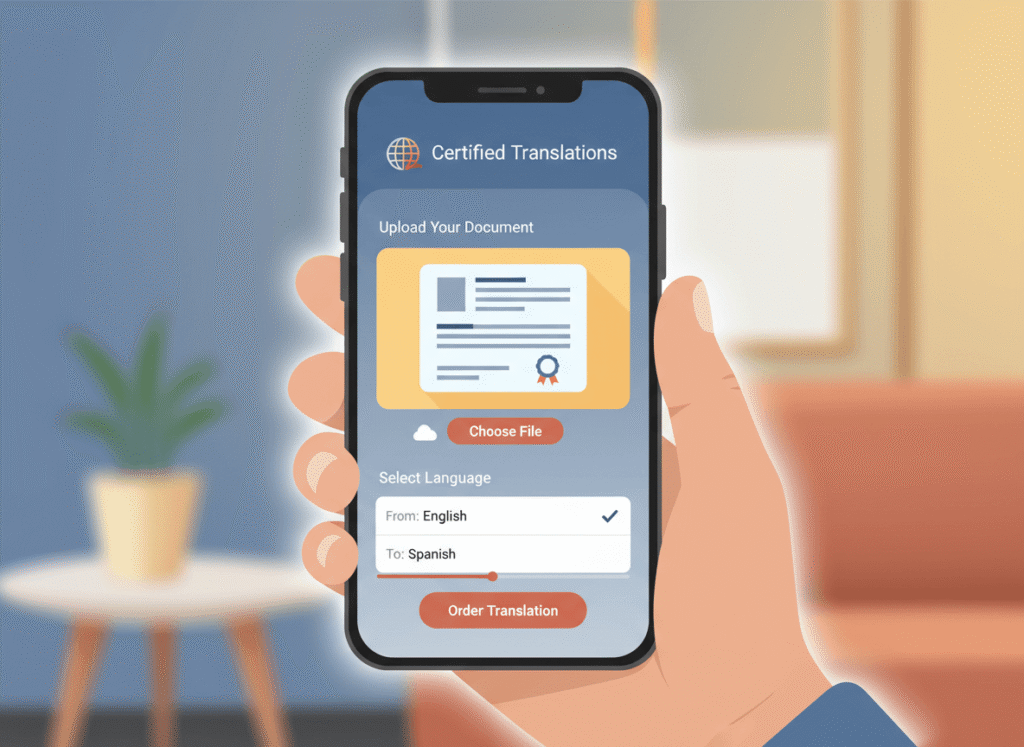
Step-by-Step: How the Process Works with USCIS Official Translation
Here is how a typical birth certificate → Spanish order works with us:
- Collect your documents
- Birth certificate (front and back, if applicable).
- Any apostille or legalisation stamps. Many Spanish consulates require the apostille to be translated as well as the certificate itself.
- Upload everything securely
- Use our online form to upload scans or clear photos.
- Indicate the target authority (e.g. “Spanish Consulate in Los Angeles”, “Immigration office in Madrid”, “Consulate of [Country] in [City]”).
- We review and confirm what you need
- We check whether your case requires a sworn or certified translation.
- You receive a transparent quote, turnaround time, and delivery options (digital only, or digital + printed copies).
- Professional Spanish translation
- A qualified Spanish linguist with legal/official documents experience translates your birth certificate and any apostille.
- Layout is carefully mirrored so the translation is easy for officials to follow.
- Certification and quality checks
- We add the required certification statement, signed and dated, confirming completeness and accuracy.
- Internal checks ensure names, dates, registry numbers and places match the original.
- Delivery
- You receive a PDF copy by email.
- If needed, you can request printed, stamped copies sent by courier.
Ready to move forward? Upload your birth certificate now and our team will confirm exactly what kind of Spanish translation your application requires before you pay.
How Much Does It Cost to Translate a Birth Certificate into Spanish?
Prices vary by country, provider and urgency, but as a general guide:
- Many online certified translation providers start from around $25 per page for straightforward birth certificates.
- Sworn translations in Spain may cost more, particularly if the translator must handle notarisation or additional legal formalities.
Factors that affect price:
- Language pair (e.g. English → Spanish, Arabic → Spanish, etc.).
- Urgency (same-day or 24-hour delivery usually costs extra).
- Document condition (old, handwritten, damaged or multi-page certificates may require extra effort).
- Whether you need apostille translation, multiple copies, or shipping.
With USCIS Official Translation, you always see your quote up
Common Mistakes to Avoid
1. Using the wrong language direction
Some applicants mistakenly request Spanish translation when the authority actually wants English (for example, USCIS). Always double-check the wording.
2. Not translating the apostille
Spanish consulates often require both the birth certificate and apostille to be translated into Spanish.
3. Ignoring sworn vs certified requirements
A regular certified translation may be rejected when a sworn translator is required for Spain.
4. Editing the translation yourself
Changing dates, names, or wording can invalidate the certification. If something looks wrong, ask the translator to correct it instead of editing the PDF.
5. Waiting until the last minute
Even fast services can’t control consulate appointment availability. Order your translation early, especially in peak visa seasons.
Why Work with USCIS Official Translation?
Choosing the right provider can save you time, money and stress. When you ask “where can I get my birth certificate translated to Spanish?”, here’s why USCIS Official Translation should be at the top of your list:
- Specialists in official documents
We focus on immigration, consular and legal documentation, so we understand how strictly authorities read your birth certificate. - Spanish-speaking legal translation expertise
Your birth certificate is translated by native-level linguists familiar with civil registry formats, legal terminology and consular expectations. - Guidance on requirements
We help you interpret checklists and decide whether you need a sworn or certified translation for your specific case. - Secure, global online process
Upload from anywhere, pay securely, receive your translation digitally – with the option of printed signed copies when needed. - Clear pricing and fast turnarounds
Transparent per-document pricing, with rush options where available.
Next step: Upload your birth certificate and apostille to USCIS Official Translation, share which consulate or authority will receive them, and we’ll deliver a Spanish translation tailored to those requirements
Frequently Asked Questions
1. Where can I get my birth certificate translated to Spanish for a Spanish visa?
You can use a specialist translation provider like USCIS Official Translation for certified Spanish translations, or a sworn translator listed by the Spanish Ministry of Foreign Affairs if your consulate explicitly requires a sworn translation. Many Spanish consulates advise applicants to use translators on their official lists to ensure acceptance.
2. Can I translate my own birth certificate into Spanish for official use?
No. For visas, residence permits or citizenship, authorities expect a neutral, professional translator to certify the translation’s accuracy. Self-translated documents are generally not accepted, and may cause delays or refusals.
3. Do I need a sworn translator or just a certified translation?
It depends on the authority:
- Spain / Spanish consulates: often require a sworn translator (traductor jurado).
- Some Latin American countries and private institutions: may accept a certified translation from a reputable agency.
If your checklist mentions “sworn”, “official Spanish translator appointed by the Ministry”, or “traductor jurado”, you must use a sworn professional.
4. How long does it take to translate a birth certificate into Spanish?
For a standard, clearly legible birth certificate:
- Many providers can deliver a certified translation within 24 hours, with faster options sometimes available.
- Sworn translations may take slightly longer, especially if printed, stamped copies must be posted or combined with legalisation.
Ordering early gives you more breathing room for consular appointments and postal delays.
5. Do I need to translate the apostille as well?
Often, yes. Many Spanish consulates and immigration offices require both the birth certificate and the apostille or legalisation page to be translated into Spanish, so they can see the full chain of authentication.
To be safe, send both documents when you request a quote and ask your translator to include the apostille.
6. Will a digital PDF translation be accepted?
Some authorities now accept digital, signed PDFs; others still insist on original, stamped paper copies.
