
If you need to translate a French birth certificate into English for official use—especially for USCIS—accuracy, formatting, and certification are not optional. A poorly translated document can delay your application or even lead to rejection.
This guide walks you through exactly how to translate a French birth certificate to English correctly, what USCIS expects, and how to avoid common mistakes.
If you want a fully compliant translation without risk, you can upload your document and receive a certified translation prepared for submission.
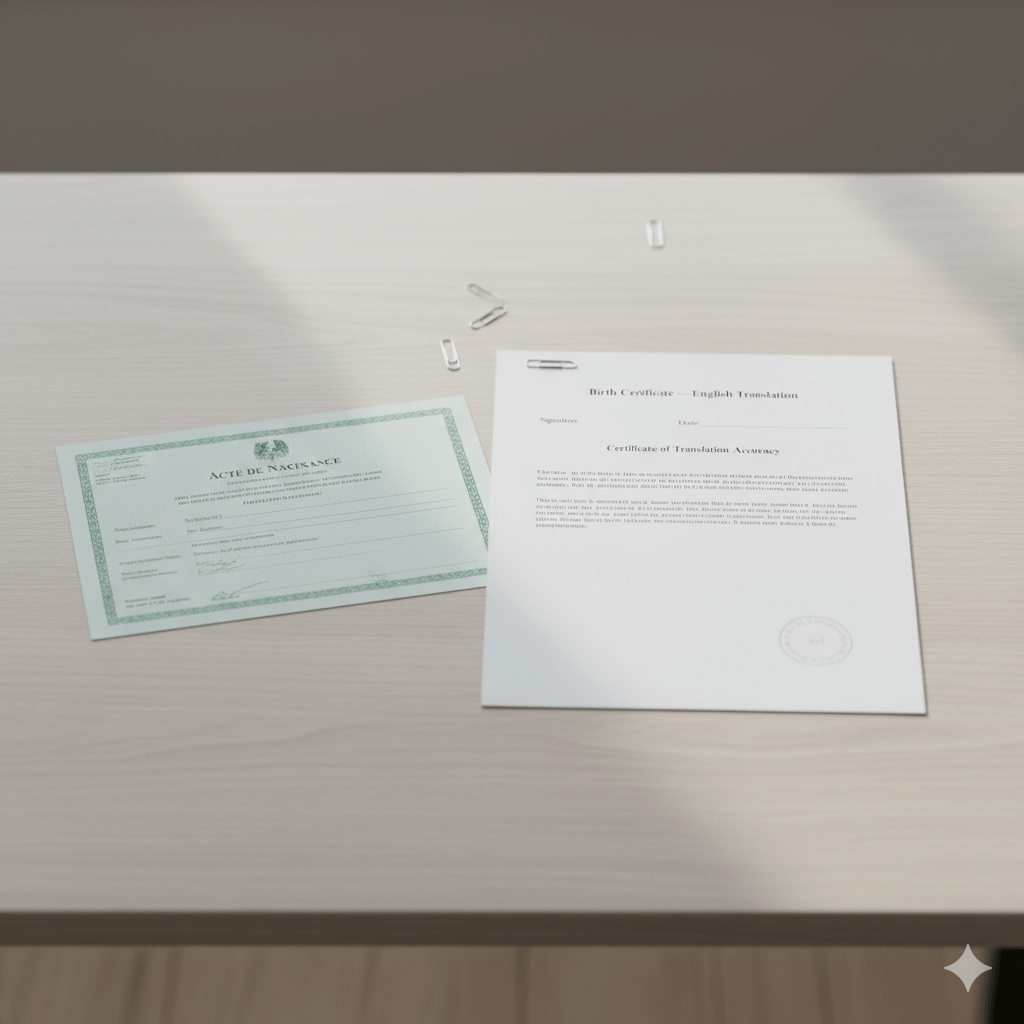
Why Translating a French Birth Certificate Matters
A birth certificate is one of the most important identity documents used in immigration processes. USCIS requires all foreign-language documents to be translated into English, along with a certification confirming accuracy.
French birth certificates often contain:
- Civil registry terms unfamiliar in English
- Handwritten or stamped annotations
- Official abbreviations and formatting structures
Without proper translation, these elements can be misunderstood or omitted, causing issues during review.
USCIS Requirements for Birth Certificate Translation
To be accepted by USCIS, your translation must meet specific requirements:
- A complete and accurate translation of all visible text
- A certification statement confirming accuracy
- The translator’s name, signature, and date
- Clear formatting that reflects the original document
Even stamps, seals, marginal notes, and handwritten entries must be translated.
If anything is missing, USCIS may issue a Request for Evidence (RFE), delaying your application.

Step-by-Step: How to Translate a French Birth Certificate
Step 1: Understand the Original Document
French birth certificates (Acte de Naissance) typically include:
- Name of the individual
- Date and place of birth
- Parents’ names and details
- Registration information
- Marginal notes (marriage, divorce, etc.)
Before translating, review the full document carefully to ensure nothing is missed.
Step 2: Translate All Content — Not Just Main Text
Every element must be translated, including:
- Official stamps and seals
- Marginal notes
- Handwritten annotations
- Registration numbers
Example:
- “Mention marginale” → “Marginal note”
- “Officier de l’état civil” → “Civil Registrar”
Leaving out these elements is one of the most common reasons translations are rejected.
Step 3: Maintain Original Formatting
Your English translation should mirror the structure of the original document as closely as possible.
Best practices:
- Keep headings aligned with the source
- Use similar spacing and sections
- Reflect tables or structured layouts
This helps case officers quickly verify the information.
Step 4: Use Accurate Legal Terminology
Direct word-for-word translation is not enough. You must use correct legal equivalents.
Examples:
- “Commune” → “Municipality”
- “Département” → “Department (Administrative Region)”
- “Acte de naissance” → “Birth Certificate”
Incorrect terminology can create confusion or misinterpretation.
Step 5: Add a Certification Statement
USCIS requires a certification confirming that:
- The translation is complete and accurate
- The translator is competent in both languages
A standard certification includes:
- Translator’s full name
- Signature
- Date
- Statement of accuracy
Without this, the translation will not be accepted.
Common Mistakes to Avoid
Even small errors can lead to delays. Avoid the following:
- Missing stamps or annotations
- Incorrect name spellings (must match passport exactly)
- Incomplete translation of marginal notes
- No certification statement
- Poor formatting that doesn’t reflect the original
A professional review ensures none of these issues occur.
Can You Translate It Yourself?
USCIS allows self-translation in some cases, but it is strongly discouraged.
Why?
- Risk of errors in legal terminology
- Lack of professional formatting
- Missing certification requirements
- Higher chance of rejection or delays
For immigration applications, accuracy is critical. A certified translation removes uncertainty.
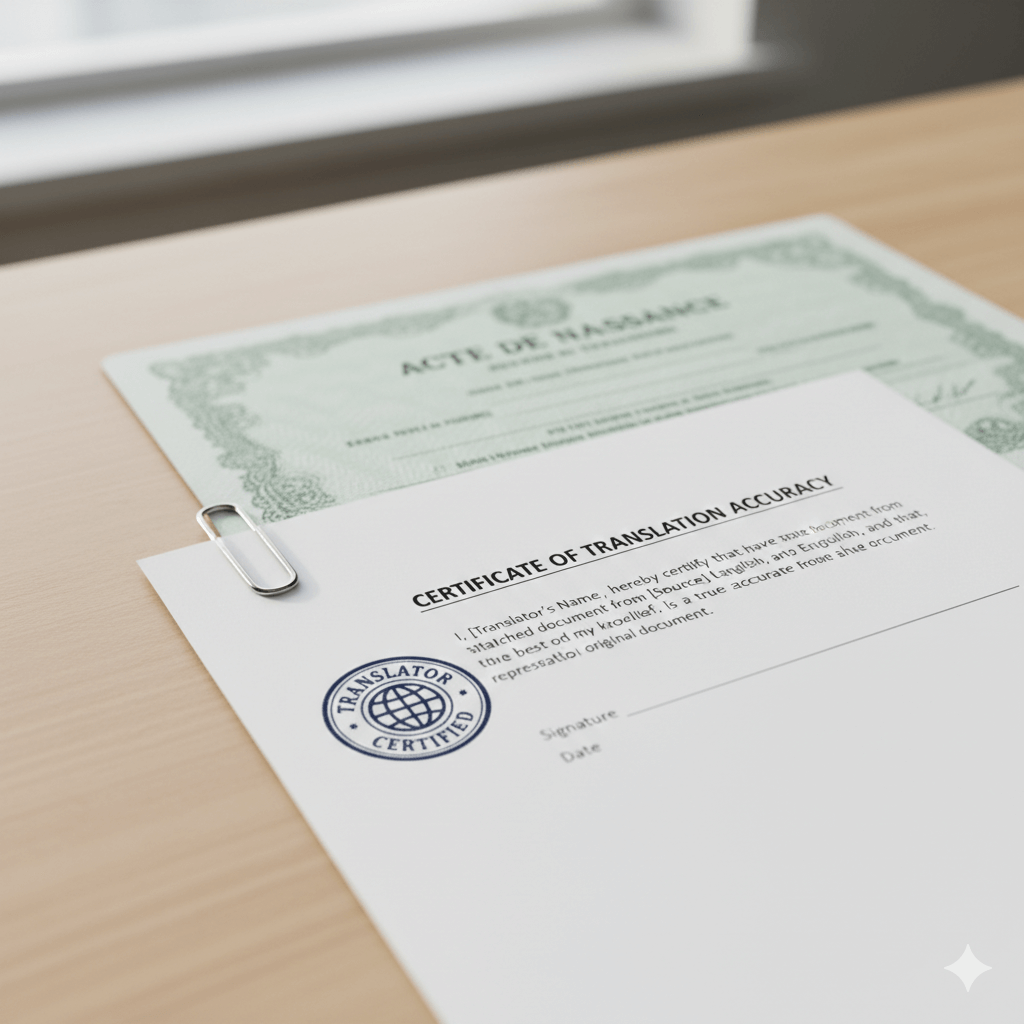
What a Proper Certified Translation Includes
When done correctly, your translated birth certificate will include:
- Full translation of all visible text
- Structured formatting aligned with the original
- Clear translation of stamps and notes
- Certification statement signed and dated
- Delivered as a ready-to-submit document
This ensures immediate acceptance without additional requests.
Real Example: Before vs After Translation
Before (Common Issues):
- Missing marginal notes
- Literal translations that don’t make sense
- No certification
After (Correct Version):
- Complete translation including annotations
- Accurate legal terminology
- Professional formatting
- Signed certification
The difference directly impacts whether your application proceeds smoothly.
Turnaround Time and Delivery Options
Typical timelines for certified translation:
- Standard: 1–2 business days
- Urgent: 24 hours (where possible)
- Same-day: Available for short documents
Delivery options:
- Certified PDF via email
- Optional printed copies
Ready to Translate Your French Birth Certificate?
Avoid delays, rejections, and unnecessary stress.
Submit your document today and receive a certified English translation prepared specifically for USCIS requirements.
Frequently Asked Questions
How do I translate a French birth certificate for USCIS?
You must provide a complete English translation along with a certification statement confirming accuracy and translator competence.
Can I translate my own birth certificate?
Yes, but it is not recommended. Errors or missing certification can lead to delays or rejection.
What must be included in the translation?
All visible text, including stamps, marginal notes, and handwritten content, must be translated.
How long does it take to translate a birth certificate?
Most translations are completed within 1–2 business days, with faster options available.
Does USCIS require notarisation?
Not always. A certified translation is usually sufficient, but requirements can vary depending on the case.
