
Table of Contents
ToggleUnderstanding Sworn Statements
A sworn statement is a formal declaration made under oath, often required in legal contexts. It serves as a critical document in various proceedings, including immigration, court cases, and administrative processes. When translating a sworn statement, accuracy is paramount, as even minor errors can lead to significant consequences.
How to Translate a Sworn Statement Correctly
1. Format Requirements
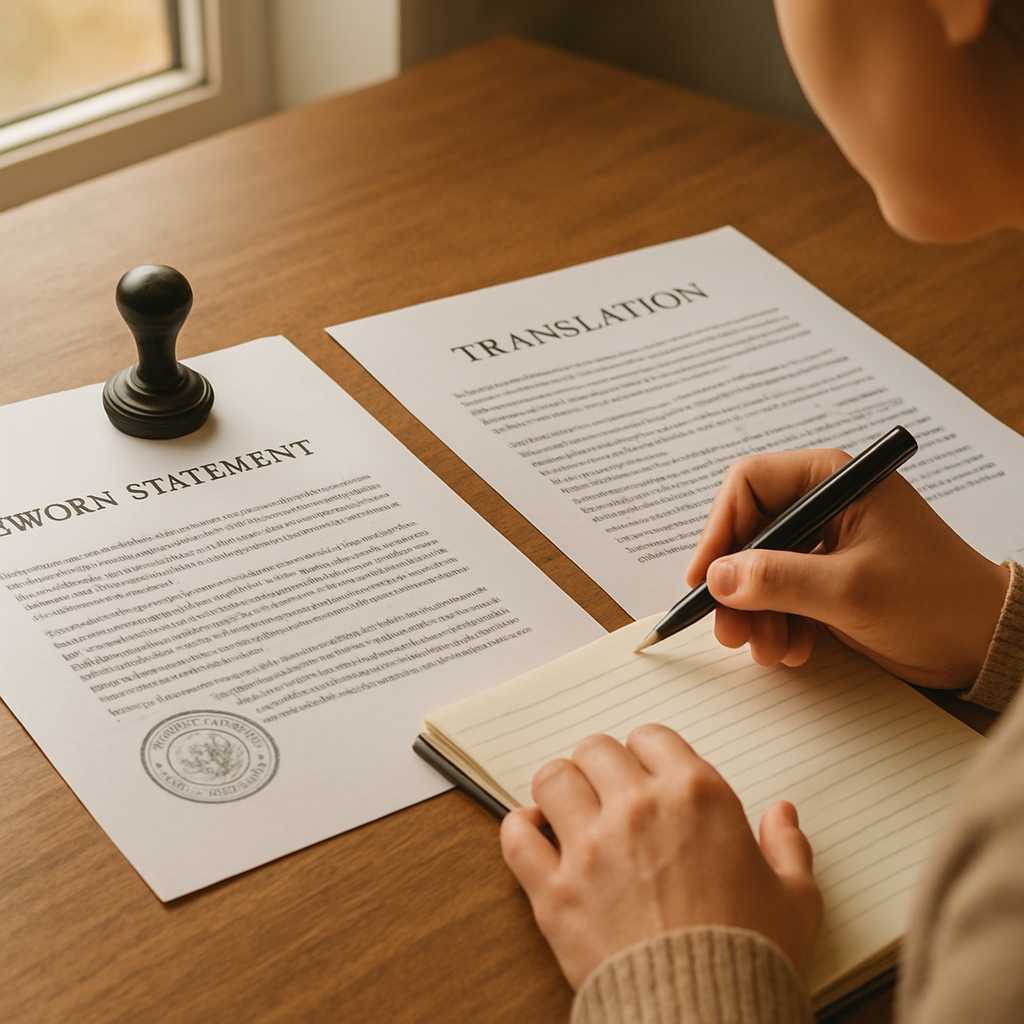
The format of a sworn statement translation must closely mirror the original document. Here are some key formatting tips:
- Maintain Original Layout: The translated document should reflect the original’s layout, including headings, paragraphs, and bullet points.
- Font and Size: Use the same font and size as the original document to ensure consistency.
- Page Numbers: Include page numbers that correspond to the original document.
2. Seals and Stamps
Many sworn statements require official seals or stamps. Here’s how to handle them:
- Translate Stamps and Seals: If the original document includes stamps or seals, these must be translated and included in the final document. Ensure that the translation accurately reflects the original’s intent.
- Placement: Place the translated seals and stamps in the same location as they appear in the original document.
3. Notes and Certifications
Including notes and certifications is crucial for the validity of the translation:
- Translator’s Certification: A certification statement should accompany the translation, affirming that the translation is accurate and complete. This is often required for legal submissions.
- Oath of Accuracy: Some jurisdictions may require the translator to take an oath regarding the accuracy of the translation.
Common Mistakes to Avoid
When translating sworn statements, certain pitfalls can lead to errors:
- Omissions: Ensure that no sections of the original document are omitted in the translation.
- Inaccurate Terminology: Use precise legal terminology to avoid misinterpretation.
- Ignoring Cultural Context: Be aware of cultural nuances that may affect the translation.
Sworn Statement Translation Example
Consider a sworn statement that includes personal identification details. The translation should maintain the same structure:
Original: “I, John Doe, hereby declare…”
Translation: “Yo, John Doe, por la presente declaro…”
Conclusion
Translating a sworn statement correctly involves careful attention to format, seals, and notes. By following the guidelines outlined above, you can ensure that your translation meets the necessary legal standards. For professional assistance, consider our Certified Translation Services in Dallas.
FAQs
What is a sworn statement?
A sworn statement is a formal declaration made under oath, often used in legal contexts.
Do I need a certified translation for a sworn statement?
Yes, a certified translation is typically required for sworn statements to ensure accuracy and authenticity.
How should I format a sworn statement translation?
Maintain the original layout, font, and size, and ensure all elements are accurately translated.
What should I include in the certification of translation?
Your certification should affirm that the translation is complete and accurate, often accompanied by your signature and date.
