
Table of Contents
ToggleUnderstanding Pay Stubs and Their Importance
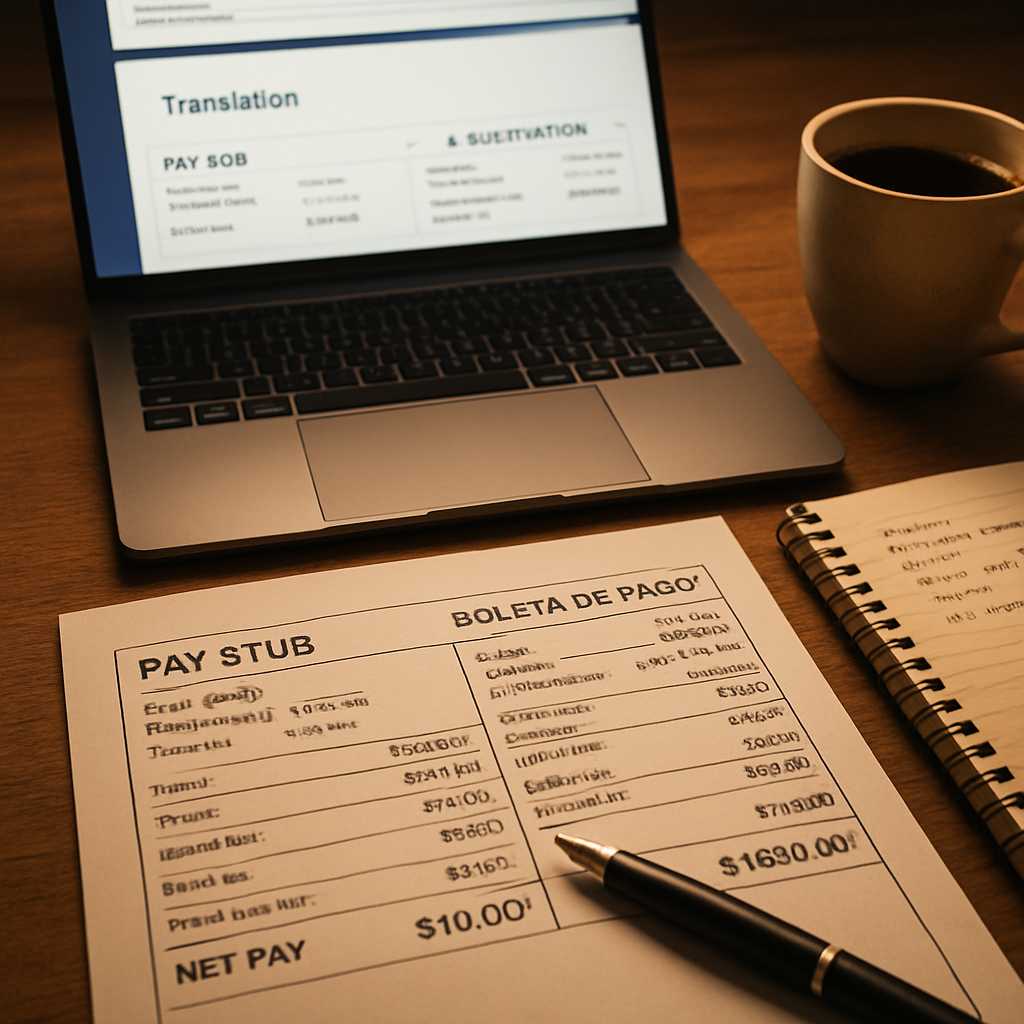
A pay stub is a crucial document that provides a detailed breakdown of an employee’s earnings, deductions, and net pay for a specific pay period. Translating a pay stub correctly is essential for various purposes, including immigration applications, financial assessments, and legal documentation. Misinterpretations or inaccuracies in translation can lead to significant issues, making it imperative to follow established guidelines.
How to Translate a Pay Stub Correctly
1. Gather Necessary Documents
Before starting the translation process, ensure you have the original pay stub and any relevant documents that provide context, such as employment contracts or tax forms. This will help you understand the terminology and context better.
2. Understand the Format
Pay stubs typically include several key sections:
- Employee Information: Name, address, and identification number.
- Employer Information: Company name, address, and contact details.
- Pay Period: Dates that the pay stub covers.
- Earnings: Gross pay, overtime, bonuses, and other compensations.
- Deductions: Taxes, insurance, retirement contributions, and other withholdings.
- Net Pay: The final amount received by the employee.
3. Translate Stamps and Seals
Many pay stubs may include official stamps or seals that validate the document. It is crucial to translate these accurately, as they often carry legal significance. Ensure that:
- You note the type of seal (e.g., company seal, notary seal).
- You provide a clear description of the seal in the translation.
- You maintain the original layout to preserve the document’s integrity.
4. Maintain the Original Layout
When translating a pay stub, it is vital to keep the original layout intact. This includes:
- Using the same font and size as the original document.
- Aligning text in the same manner to ensure readability.
- Including all sections in the same order as they appear in the original.
5. Avoid Omissions
Every detail on a pay stub is important. Ensure that:
- You do not omit any information during translation.
- You double-check figures and amounts for accuracy.
- You include all notes or footnotes present in the original document.
6. Certification of Translation
For official purposes, a certified translation may be required. This means:
- The translator must provide a signed statement attesting to the accuracy of the translation.
- The translation should include a certification statement and the translator’s contact information.
Common Mistakes to Avoid
When translating a pay stub, be aware of common pitfalls:
- Using incorrect terminology that may confuse the reader.
- Failing to translate all sections, especially deductions and taxes.
- Not verifying the accuracy of numerical data.
FAQs
What is a pay stub translation example?
A pay stub translation example includes the original pay stub alongside its translated version, demonstrating how each section corresponds to the other.
Do I need to translate stamps and seals on a pay stub?
Yes, translating stamps and seals is essential as they often hold legal significance and validate the document.
What are the complete translation standards for pay stubs?
Complete translation standards require accuracy, maintaining the original layout, and including all necessary certifications.
How can I avoid omissions when translating a pay stub?
To avoid omissions, carefully review the original document and ensure every section is translated accurately without skipping any details.
Conclusion
Translating a pay stub correctly is crucial for ensuring that the document serves its intended purpose without any misunderstandings. By following the guidelines outlined above, you can ensure a high-quality translation that meets all necessary standards.
If you need professional assistance with translating your pay stub, contact us for certified translation services.
