
Table of Contents
ToggleUnderstanding the Importance of Accurate National ID Card Translation
Translating a national ID card is a crucial step for individuals navigating immigration processes, applying for visas, or engaging in international transactions. A precise translation ensures that all personal information is accurately conveyed, which can significantly impact the outcome of applications and legal proceedings. This guide will provide you with essential tips on how to translate a national ID card correctly, focusing on format, seals, and important notes.
Key Elements of a National ID Card Translation
1. Format of the Translation
The format of your translation should mirror the original document as closely as possible. Here are some key points to consider:
- Document Layout: Maintain the original layout, including headings, sections, and any tables present in the ID card.
- Font and Size: Use a similar font and size to ensure readability and consistency.
- Language Direction: Ensure that the translation flows in the correct direction, especially for languages that read from right to left.
2. Seals and Stamps
Many national ID cards feature official seals or stamps that validate the document. When translating, it is vital to:
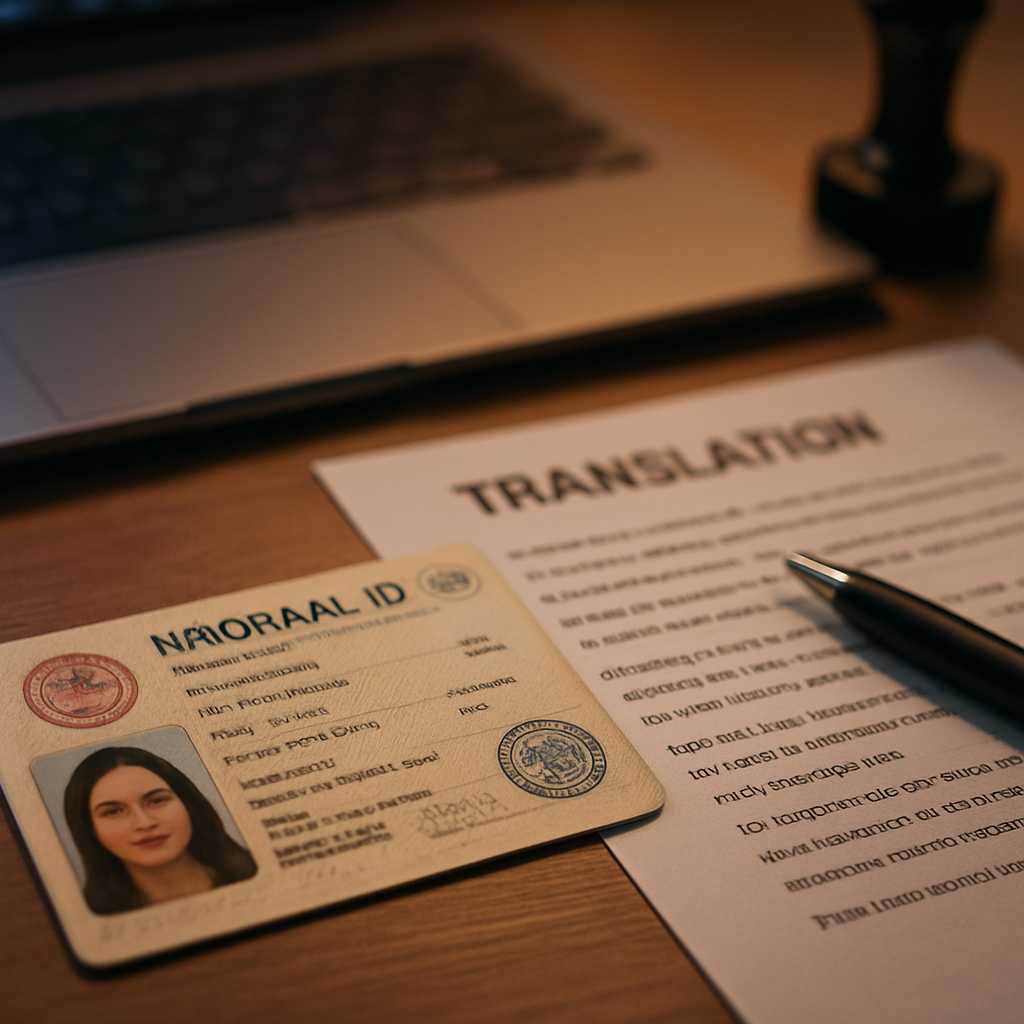
- Include Images: If possible, include images of the seals or stamps in the translation document.
- Provide Descriptions: Describe the seals in the translation, indicating their significance and placement on the original document.
3. Notes and Additional Information
In some cases, additional notes may be necessary to clarify specific terms or phrases that do not have direct translations. Consider the following:
- Footnotes: Use footnotes to explain any cultural or legal terms that may not be familiar to the reader.
- Contextual Information: Provide context for any abbreviations or acronyms used in the ID card.
Common Mistakes to Avoid
When translating a national ID card, it is essential to avoid common pitfalls that can lead to inaccuracies:
- Omissions: Ensure that no information is left out during the translation process.
- Literal Translations: Avoid translating phrases word-for-word, as this can lead to misunderstandings.
- Ignoring Formatting: Neglecting the original document’s format can result in a disorganized translation.
Examples of National ID Card Translations
To illustrate the correct approach, here are a few examples of how to translate specific sections of a national ID card:
- Name: If the name is “Juan Pérez,” it should be translated as “Juan Pérez” without alteration.
- Date of Birth: Ensure the date format is consistent with the target language’s conventions.
Frequently Asked Questions
1. What is the best way to translate a national ID card?
The best way is to use a certified translation service that understands the nuances of both languages involved.
2. Do I need to translate the seals on my national ID card?
Yes, including seals and stamps is crucial for the authenticity of the translation.
3. Can I translate my national ID card myself?
While you can, it is recommended to use a professional service to ensure accuracy and compliance with legal standards.
4. What should I do if my national ID card contains abbreviations?
Provide explanations for any abbreviations in footnotes or a separate section of the translation.
5. How can I ensure my translation is accepted by immigration authorities?
Use a certified translation service that provides a certificate of accuracy along with the translation.
Conclusion
Translating a national ID card correctly is essential for various legal and immigration processes. By following the guidelines outlined in this article, you can ensure that your translation is accurate, complete, and compliant with necessary standards. For professional assistance, consider our Certified Translation of National ID Card for U.S. Immigration Filings.
