
Translating a birth certificate into Spanish is a critical step for immigration, legal, and administrative processes across Spain, Latin America, and Spanish-speaking authorities. Whether you’re applying for citizenship, registering a marriage, or submitting documents for official use, accuracy and proper certification are essential.
This guide explains exactly how to translate a birth certificate to Spanish, what authorities expect, and how to ensure your translation is accepted the first time—without delays or rejections.
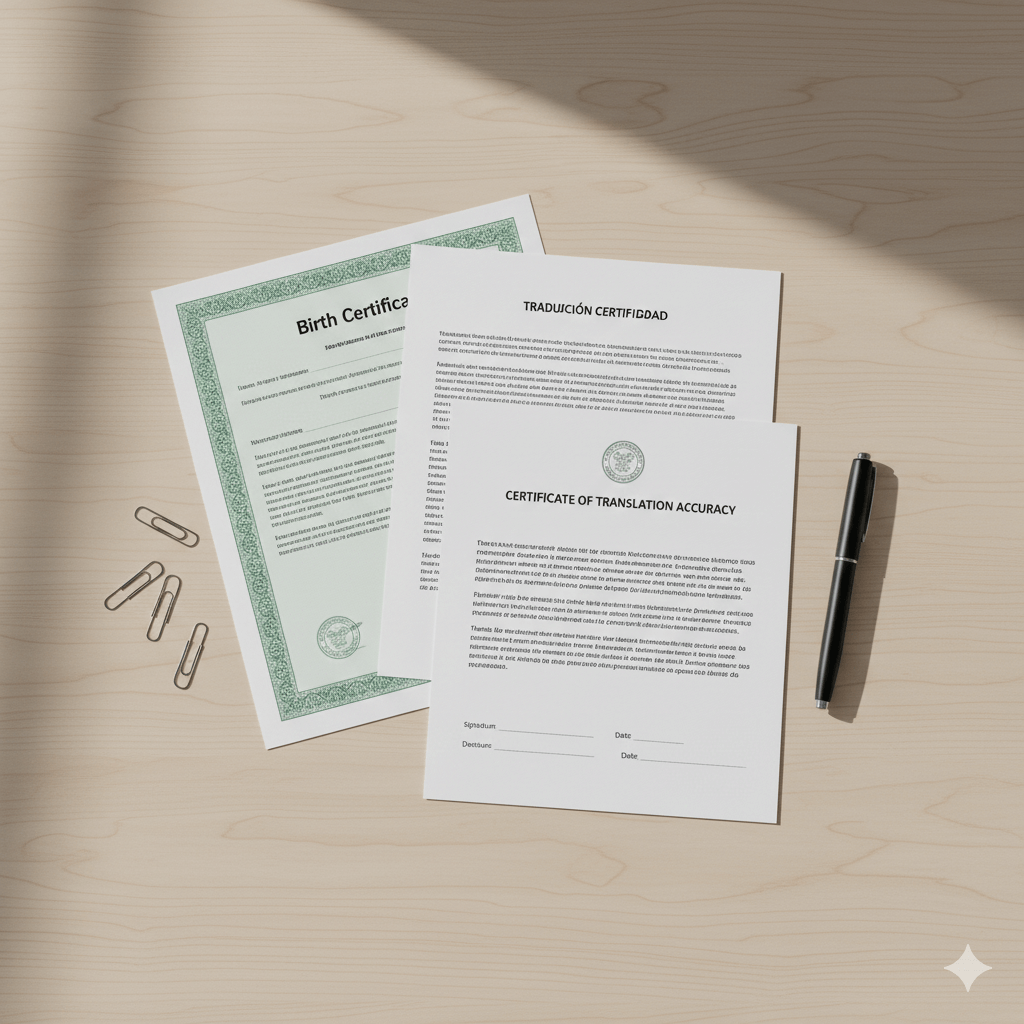
Why You May Need a Spanish Birth Certificate Translation
Birth certificate translations are commonly required for:
- Immigration and visa applications
- Spanish citizenship or residency
- Marriage registration in Spanish-speaking countries
- Academic or employment verification
- Legal proceedings and identity verification
Even small errors—such as name mismatches or missing seals—can lead to rejection.
What a Valid Spanish Birth Certificate Translation Must Include
To be accepted by official authorities, your translation must be:
Complete and Accurate
Every element must be translated, including:
- Names and dates
- Registration numbers
- Stamps, seals, and annotations
- Signatures and marginal notes
Formatted Like the Original
The translated version should mirror the layout of the original document as closely as possible.
Certified
A certification statement must confirm:
- The translation is complete and accurate
- The translator is competent
- Contact details are included
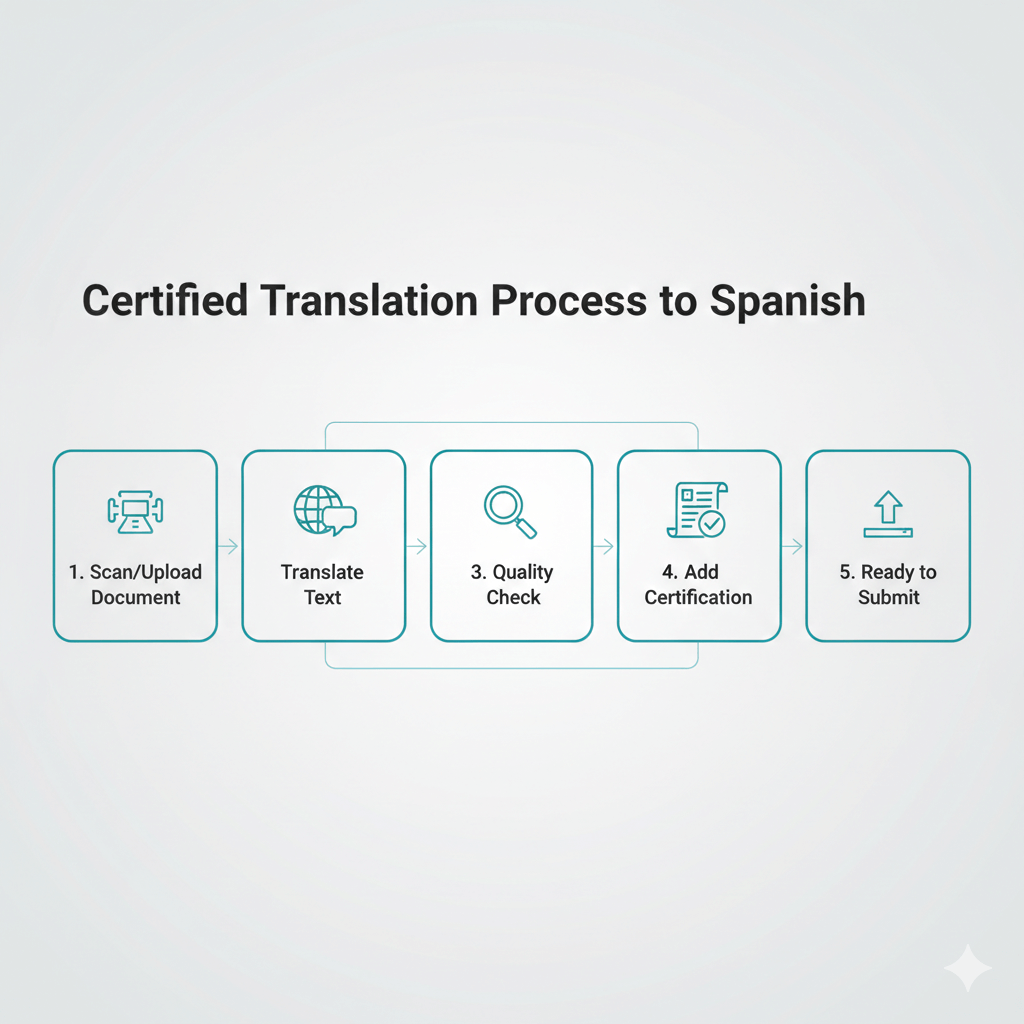
Step-by-Step: How to Translate a Birth Certificate to Spanish
1. Prepare a Clear Copy of Your Document
Ensure the document is:
- Fully visible (no cropped edges)
- High resolution
- Legible, including stamps and signatures
2. Translate Every Section Word-for-Word
A proper translation includes:
- Literal translation of all text
- Transliteration of names where required
- Notes such as “[Stamp: Civil Registry Office]”
Avoid summarising or skipping sections—this is one of the most common reasons for rejection.
3. Maintain Original Structure and Layout
Preserve:
- Tables and columns
- Headings and spacing
- Alignment of fields
This helps authorities quickly verify the translation against the original.
4. Add a Certificate of Translation Accuracy
This statement typically includes:
- Translator’s full name
- Signature and date
- Confirmation of accuracy
- Contact details
Without this, your translation may not be accepted.
5. Verify Requirements Based on Use Case
Different authorities have different requirements:
- USCIS (United States): Requires certified translation
- Spain: Often requires sworn translation (traducción jurada)
- Latin America: Requirements vary by country
Always confirm whether you need a certified or sworn translation before submission.
Certified vs Sworn Translation (Spanish Requirements)
| Feature | Certified Translation | Sworn Translation |
|---|---|---|
| Who provides it | Professional translator | Government-authorised translator |
| Acceptance | USCIS, general use | Spain and official institutions |
| Legal standing | Declaration-based | Legally binding |
| Stamp/Seal | Optional | Required |
If you are submitting documents in Spain, a sworn translator authorised by the Ministry of Justice is usually required.
Common Mistakes That Lead to Rejection
- Missing translation of stamps or seals
- Name inconsistencies across documents
- Poor scan quality
- Partial translations
- No certification statement
Avoiding these errors ensures faster processing and prevents costly delays.
Real Example: Accepted vs Rejected Translation
Rejected Version:
- Missing registrar stamp translation
- Name spelled differently from passport
- No certification
Accepted Version:
- Full translation including annotations
- Consistent spelling across documents
- Signed certification statement included

How Long Does It Take?
Typical turnaround times:
- Standard: 24–48 hours
- Urgent: Same-day available
Time depends on:
- Document clarity
- Certification requirements
- Volume of documents
How Much Does It Cost?
Pricing usually depends on:
- Word count or document type
- Certification level (certified vs sworn)
- Urgency
Most professional services offer fixed pricing for birth certificates to keep things simple.
Get Your Birth Certificate Translated to Spanish
If you need a fast, accurate, and officially accepted translation, working with a professional service ensures:
- 100% acceptance guarantee
- Certified or sworn translators
- Fast turnaround options
- Secure and confidential handling
Upload your document today and receive your Spanish translation ready for submission.
Frequently Asked Questions
Do I need a certified translation for a birth certificate in Spanish?
Yes. Most authorities require a certified translation confirming accuracy and completeness. Spain may require a sworn translation.
Can I translate my birth certificate myself?
No. Self-translations are typically not accepted for legal or immigration purposes.
What is the difference between certified and sworn translation?
A certified translation includes a signed statement of accuracy, while a sworn translation is completed by a government-authorised translator and carries legal authority.
How do I know if my translation will be accepted?
Ensure it includes full translation, certification, correct formatting, and matches all official requirements of the receiving authority.
Do I need to translate stamps and seals?
Yes. All visible elements, including stamps and seals, must be translated or described.
