
Attending a B2 visitor visa interview can be stressful—especially if English is not your strongest language. Many applicants worry about misunderstanding questions or giving incomplete answers, which can affect the outcome of their application. Interpreter and language-support arrangements for B2 visa interviews vary by U.S. embassy or consulate. Check the instructions for the exact post where your interview will take place before making arrangements.
This guide explains exactly how to request a translator for a B2 visa interview, who qualifies, what languages are allowed, what to expect on interview day, and how to prepare your documents properly so nothing works against you.
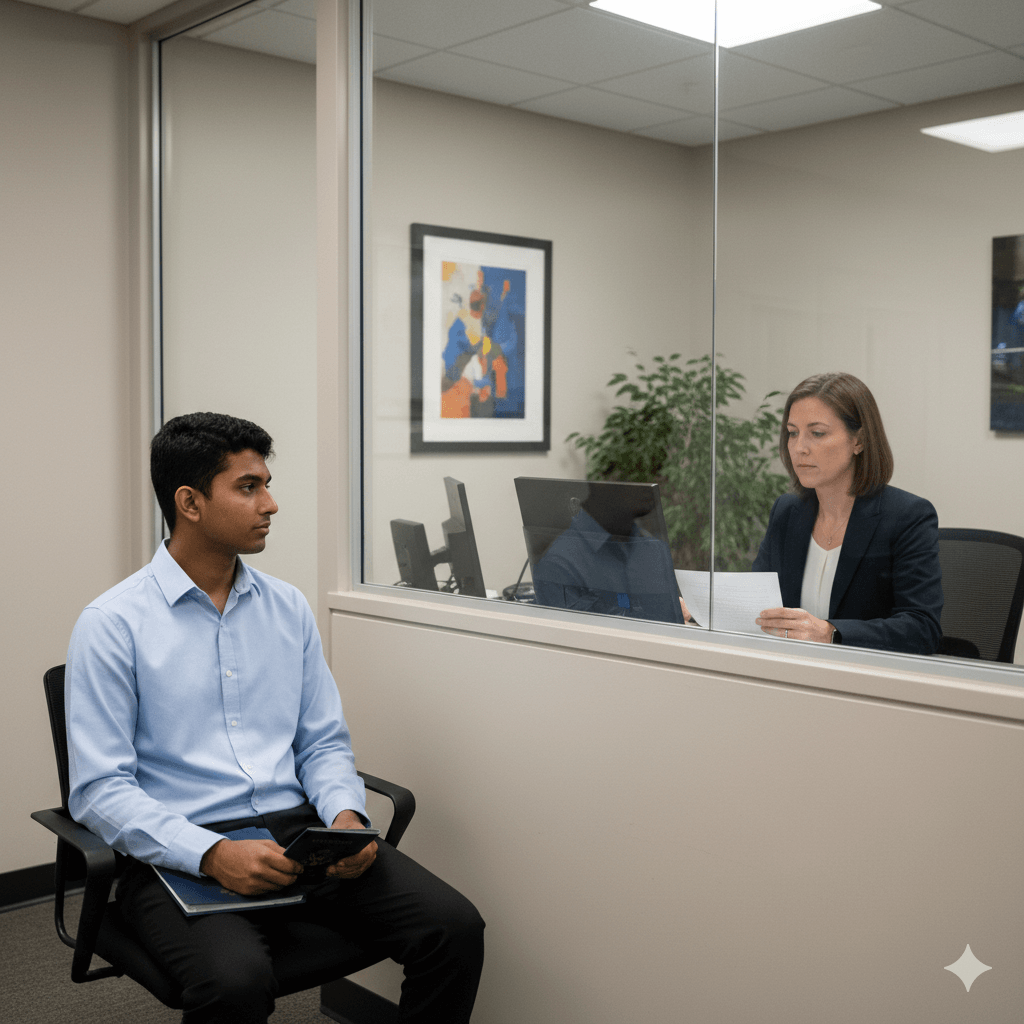
Understanding the Translator Rules for B2 Visa Interviews
A B2 visa interview is conducted by a U.S. consular officer, and the interview itself is considered a legal and official proceeding. Because of this, translation rules are strict and must be followed carefully.
Who Provides the Translator?
There is no single interpreter arrangement that applies at every U.S. embassy or consulate. Some posts provide language assistance for certain languages, while others may permit an interpreter under their local procedures. Follow the guidance for your specific interview location.
The availability of translators depends on:
- The embassy or consulate location
- The language requested
- Staffing capacity on the interview date
When You Should Request a Translator
You should request a translator if you are not comfortable answering detailed questions in English, particularly about:
- Travel purpose
- Financial situation
- Ties to your home country
- Previous U.S. travel history
Even small misunderstandings can lead to refusals, delays, or requests for additional documentation.
How to Request a Translator for a B2 Visa Interview
Step 1: Check the Embassy’s Language Policy
Each U.S. embassy sets its own language policies. Some accept interviews only in English and the local language, while others allow additional languages with prior approval.
Start by reviewing your specific embassy’s interview language guidelines.
Step 2: Check Your Appointment and Post Instructions
Review your appointment confirmation, scheduling portal and the embassy or consulate’s official interview instructions for any language or interpreter guidance. Look for:
- Language preference fields
- Special accommodation requests
- Additional notes or comments sections
If no option appears, proceed to the next step.
Step 3: Contact the Embassy Directly
Send a formal request to the embassy or consulate where your interview will take place. Your request should include:
- Full name (as on passport)
- DS-160 confirmation number
- Interview appointment date
- Language requested
- Reason for needing a translator
Keep your request factual and concise. Avoid emotional language.
Step 4: Wait for Written Confirmation
Follow the instructions given by your embassy or consulate. If you receive written approval or other correspondence about language assistance, keep a copy with your interview documents.
Can You Bring Your Own Translator?
Whether you may bring your own interpreter depends on the embassy or consulate. Some posts allow an interpreter in specified circumstances, while others provide language assistance or apply different local rules.
If your post permits an accompanying interpreter, follow that post’s requirements for the interpreter. These can cover identification, relationship to the applicant and conduct during the interview.
- Check any identification or eligibility requirements before the appointment.
- The interpreter should translate accurately without coaching or answering for the applicant.
Do not assume an accompanying interpreter will be admitted unless the instructions for your post allow it.
Languages Commonly Accepted at B2 Interviews
Available interview languages vary by post and can change. Check the official guidance for your interview location rather than relying on a general language list.
- Confirm your preferred language with the specific embassy or consulate where you will interview.
If your preferred language is not listed or clearly covered, confirm the available options with the relevant embassy or consulate before your appointment.
What Happens During the Interview With a Translator
The interpreter’s role is strictly limited to word-for-word translation. They cannot:
- Explain questions
- Coach answers
- Clarify intent
The consular officer will still assess:
- Your credibility
- Consistency of answers
- Supporting documents
You remain fully responsible for the accuracy of your responses.
Document Translation: A Critical but Often Missed Step
Interview interpretation and document translation are separate issues. Check the document instructions for your visa category and interview post to see which supporting documents require an English translation.
This includes:
- Bank statements
- Employment letters
- Invitation letters
- Property documents
- Travel records
If an English translation is required, an incomplete or inaccurate translation can create avoidable questions or delays.
Where a certified English translation is required, it should provide:
- Accuracy
- A complete English rendering of the source document
- The certification information required by the receiving authority
If Language Support Is Not Available
If your preferred language or interpreter arrangement is not available, follow the instructions given by the embassy or consulate. Depending on the post, the next step may involve a different language option, additional guidance or rescheduling.
- Ask staff or the post’s official support channel what options are available for your appointment.
- Do not rely on interpreter rules from a different embassy or consulate.
Do not assume the interview must proceed in English if adequate communication is not possible; follow the post’s instructions for the appropriate next step.
What to Do If Your Requested Arrangement Is Not Available
If the arrangement you expected is not available:
- Do not argue on interview day
- Ask what language-support or rescheduling options are available
- Focus on short, clear answers
- Use translated documents to support responses
Prepare any document translations required by your visa instructions separately from the spoken-language arrangements for the interview.
Practical Interview Preparation Tips
- Practice answering common B2 questions aloud
- Review your DS-160 line by line
- Ensure documents match your spoken answers
- Bring both original documents and certified translations
Applicants who prepare thoroughly often perform better—even without a translator.
Frequently Asked Questions
Can I request a translator on the day of the interview?
It depends on the interview location. Check the post’s instructions before your appointment and arrange language assistance in advance whenever the post requires it.
Does requesting a translator affect visa approval?
Language assistance is a procedural matter. Visa eligibility is assessed under the rules for the visa category, so follow the post’s instructions and answer the officer’s questions accurately.
Are family members allowed to translate?
Rules vary by embassy or consulate. Check whether your post permits an accompanying interpreter and whether it places restrictions on who may interpret.
What if my documents are not in English?
Follow the document instructions for your visa category and interview post. When an English translation is required, make sure it is complete and prepared in the required format.
Is a notarized translation required?
Requirements depend on the document and receiving authority. Do not add notarization unless the relevant instructions require it.
