
Table of Contents
ToggleUnderstanding the I-129F Package
The I-129F form, also known as the Petition for Alien Fiancé(e), is a crucial document for individuals seeking to bring their foreign fiancé(e) to the United States. This form requires various supporting documents, including translated exhibits, to ensure a smooth processing experience. Proper organization of these documents is essential to avoid delays or requests for additional evidence (RFEs).
Why Organizing Translated Exhibits Matters
When submitting an I-129F package, the clarity and accessibility of your documents can significantly impact the processing time. Well-organized exhibits help immigration officers quickly verify the information provided, reducing the likelihood of complications. Here are some key reasons to prioritize organization:
- Efficiency: Organized documents streamline the review process.
- Compliance: Ensures adherence to USCIS requirements.
- Professionalism: Reflects well on the applicant and their preparedness.
Steps to Organize Translated Exhibits for I-129F
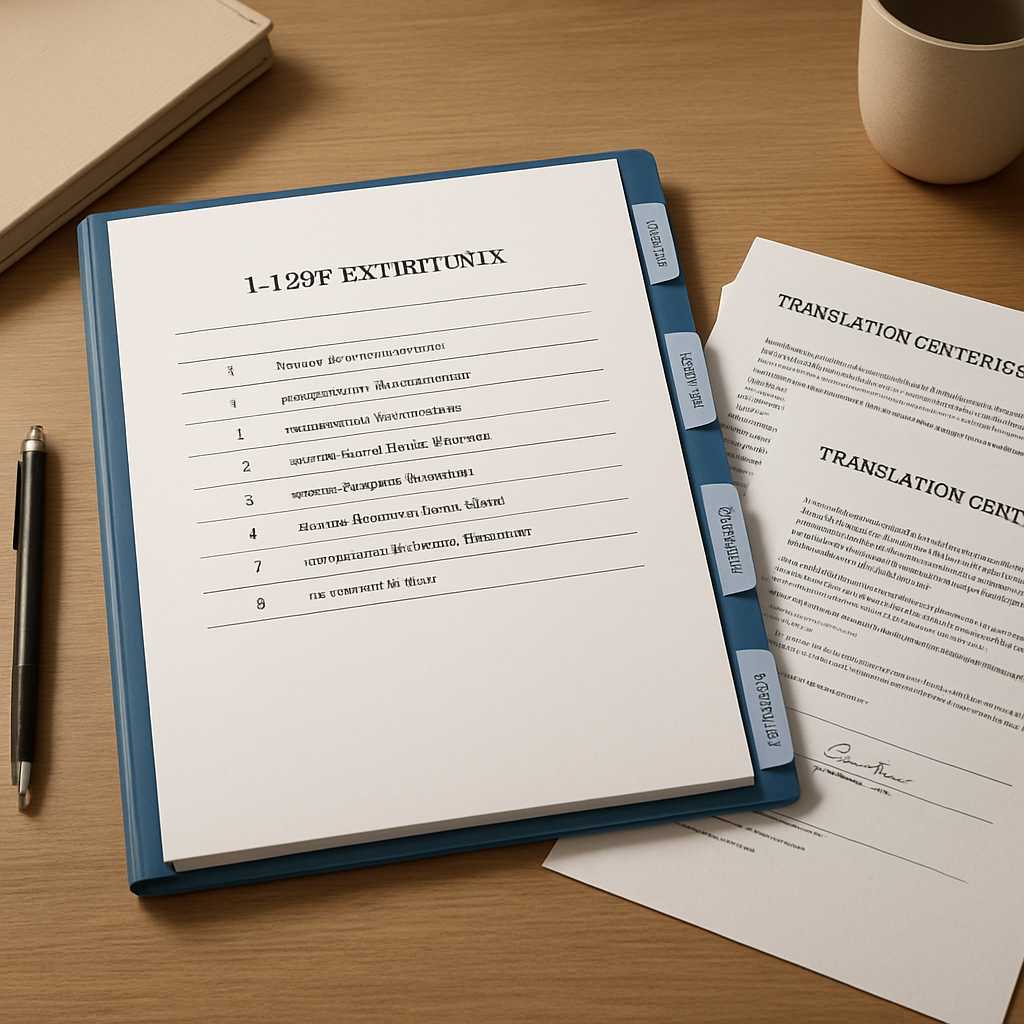
1. Create an Exhibit Index
Start by drafting a comprehensive exhibit index. This index should list all documents included in your I-129F package, along with their corresponding translations. A clear index allows for easy navigation through your submission.
2. Use Clear File Naming Conventions
When saving your documents, use descriptive file names that include the type of document and the language. For example, “Birth_Certificate_Translation_Spanish.pdf” is more informative than “Document1.pdf”. This practice enhances clarity and helps USCIS officers locate specific documents quickly.
3. Merge PDF Files When Necessary
If you have multiple pages for a single document, consider merging them into one PDF file. This reduces the number of files and simplifies the review process. Use reliable PDF merging tools to maintain the quality of your documents.
4. Utilize Binder Tabs
For physical submissions, using binder tabs can significantly improve organization. Label each tab according to the exhibit index, making it easy for reviewers to find specific documents. This method is particularly useful for larger submissions.
5. Place Translation Certificates Strategically
Each translated document should be accompanied by a translation certificate. Place these certificates immediately after the corresponding translated documents. This arrangement ensures that the reviewer can easily verify the authenticity of the translations.
Common Mistakes to Avoid
While organizing your I-129F package, be mindful of common pitfalls:
- Failing to include all required documents.
- Not providing certified translations where necessary.
- Submitting documents without proper indexing or labeling.
Conclusion
Organizing translated exhibits for your I-129F package is a critical step in ensuring a successful application process. By following the outlined steps, you can enhance the clarity and professionalism of your submission, ultimately improving your chances of approval. For assistance with certified translations, consider our academic translation services to ensure compliance with USCIS standards.
FAQs
What is an exhibit index for the I-129F?
An exhibit index is a list of all documents included in your I-129F package, helping to organize and clarify your submission.
How should I name my translated documents?
Use descriptive file names that include the document type and language, such as “Marriage_Certificate_Translation_French.pdf”.
Do I need to merge PDF files for my I-129F submission?
Merging PDF files is recommended for documents with multiple pages to simplify the review process.
Where should I place translation certificates?
Translation certificates should be placed immediately after the corresponding translated documents for easy verification.
What are common mistakes to avoid when organizing my I-129F package?
Common mistakes include failing to include all required documents, not providing certified translations, and poor indexing.
