
If you’re applying for immigration, a passport, or legal status in the United States, one question comes up again and again:
Does a translated birth certificate need to be notarized?
The short answer is: usually no — but it depends on who is requesting it.
For most immigration filings with the (USCIS), notarization is not required. What is required is a certified translation that meets specific federal standards.
However, certain courts, state agencies, or foreign embassies may require notarization or additional authentication.
In this comprehensive guide, we break down:
- When notarization is required
- When it is not required
- The difference between certified and notarized translations
- USCIS translation rules
- Common mistakes that cause rejection
- How to ensure your translation is accepted the first time
What USCIS Actually Requires for Birth Certificate Translations
When submitting a birth certificate to USCIS as part of:
- Green card applications
- Naturalization
- Adjustment of status
- Family petitions
- K-1 fiancé visas
USCIS requires:
- A complete and accurate English translation
- A certification statement from the translator
That certification must confirm:
- The translator is competent in both languages
- The translation is complete and accurate
USCIS does not require notarization of the translation.
This requirement is clearly outlined in USCIS policy guidance and immigration filing instructions.
What the Certification Statement Must Include
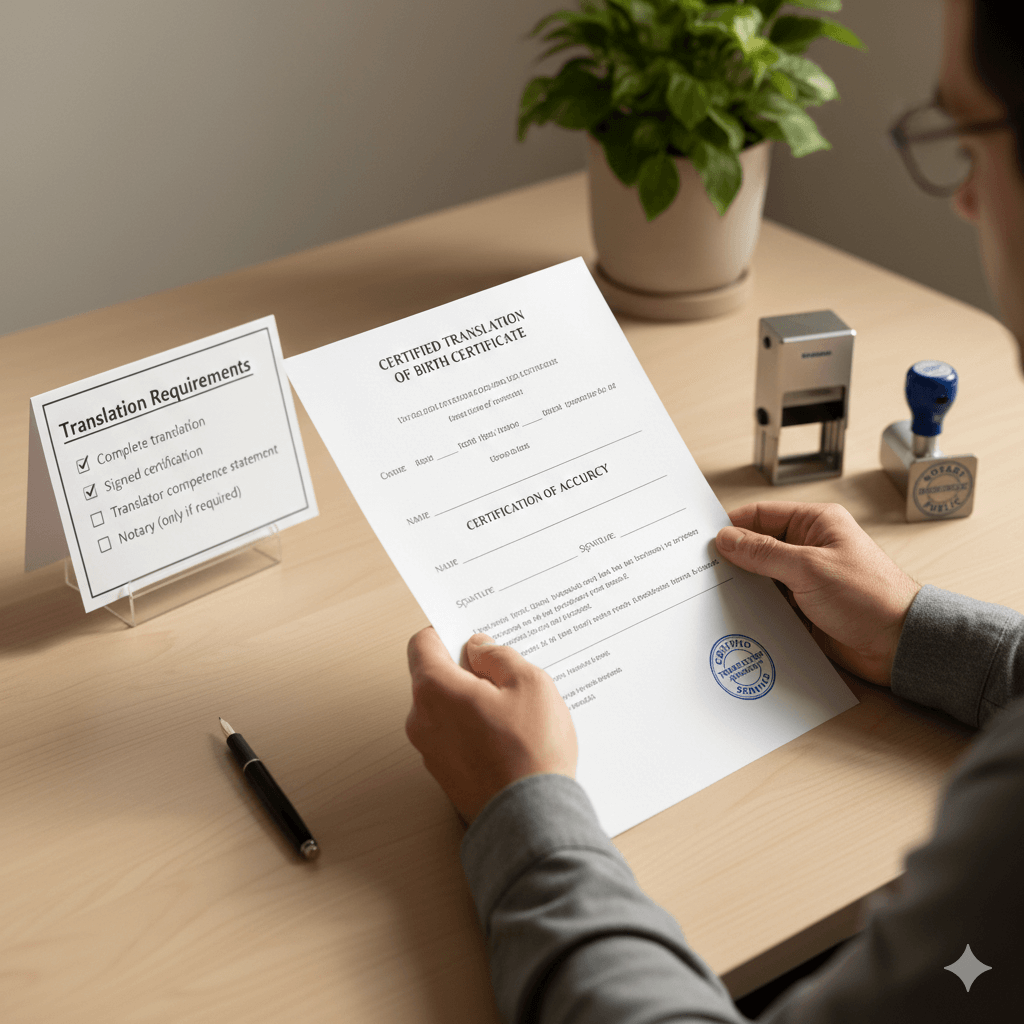
A compliant certification statement should include:
- Translator’s full name
- Signature
- Date
- Statement of fluency
- Contact information
Without this certification, your document may be rejected or trigger a Request for Evidence (RFE).
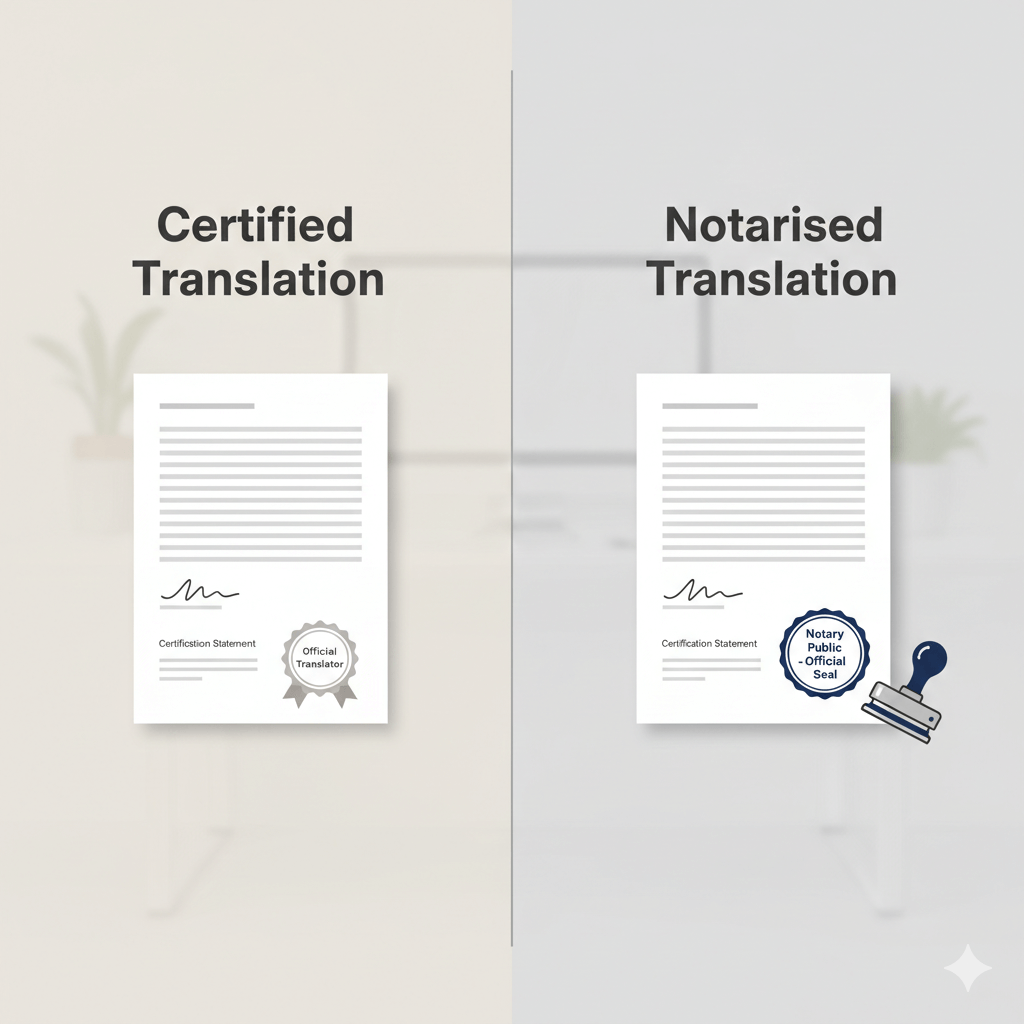
Certified vs Notarized Translation: What’s the Difference?
This is where confusion happens.
Certified Translation
A certified translation includes:
- The translated document
- A signed certification of accuracy
This is what USCIS requires.
Notarized Translation
A notarized translation means:
- A notary public verifies the identity of the translator
- The notary confirms the translator signed the certification in their presence
The notary does not verify translation accuracy. They only verify identity.
That distinction is critical.
So, Does a Translated Birth Certificate Need to Be Notarized?
For USCIS:
No, notarization is generally not required.
For State Agencies:
Sometimes.
For Foreign Embassies or Consulates:
Often yes.
For example, certain countries may require notarization before documents can be apostilled by the U.S. Department of State.
If you are unsure, always check:
- The specific filing instructions
- The official government website
- Your attorney’s guidance
Or request a review before submission.

When Notarization May Be Required
You may need notarization if:
- A foreign government requires it for civil registration
- A court demands sworn documentation
- You are preparing documents for apostille
- A university requests notarized academic records
- You are submitting documents for dual citizenship abroad
In those cases, notarization is an extra layer of formality, not a translation quality measure.
Why USCIS Does Not Require Notarization
USCIS focuses on:
- Accuracy
- Completeness
- Certification
Requiring notarization would add unnecessary administrative burden without improving document reliability.
Instead, USCIS relies on the translator’s certification statement.
This is why certified translation providers that specialize in immigration documentation are typically sufficient.
Common Mistakes That Cause Rejection
Even when notarization isn’t required, many applications are delayed because of avoidable mistakes.
1. Incomplete Translation
Every element must be translated, including:
- Stamps
- Seals
- Handwritten notes
- Marginal text
- Annotations
Leaving out small details can lead to an RFE.
2. Missing Certification Statement
Submitting just the translated document without certification will likely result in rejection.
3. Self-Translation Without Proper Certification
While USCIS does not explicitly prohibit self-translation, it is strongly discouraged. The translator must certify competence objectively.
For immigration filings, using an independent professional is safer.
4. Machine Translation
Automated tools do not provide certified statements and often produce errors.
Immigration officers review thousands of documents. Formatting and compliance matter.
Case Insight: Avoiding a Costly RFE
A recent applicant submitted:
- Original foreign birth certificate
- English translation
- No certification statement
USCIS issued an RFE, delaying processing by 60+ days.
After submitting a compliant certified translation, the case resumed.
The takeaway: compliance saves time.
How to Ensure Your Translation Is Accepted the First Time
Here’s a simple checklist:
✔ Full translation of all visible text
✔ Certified statement included
✔ Translator signature
✔ Clear formatting
✔ PDF copy for upload (if filing online)
✔ Original language copy included
If your document will also be used internationally, confirm whether notarization or apostille is needed before ordering.
Do You Need Notarization for Apostille?
This depends on state rules.
In many U.S. states:
- A translation must be notarized
- Then it can be apostilled
Apostilles authenticate the notary’s signature — not the translation itself.
If you are preparing documents for international use under the Hague Convention, this step may be required.
Who Can Provide Compliant Certified Translations?
Professional agencies experienced in immigration documentation understand:
- USCIS formatting expectations
- Certification language requirements
- Digital submission standards
USCIS Official Translation specializes in certified immigration translations accepted by federal authorities.
Each translation includes:
- Signed certification
- Digital delivery
- Optional notarization (if required)
- Fast turnaround
If you’re unsure whether notarization is necessary for your situation, request a review before submitting your case.
Frequently Asked Questions
Does USCIS require notarized birth certificate translations?
No. USCIS requires a certified translation with a signed statement of accuracy, not notarization.
Can I translate my own birth certificate?
Technically possible, but strongly discouraged. USCIS requires certification of competence. Using an independent translator reduces risk of rejection.
What happens if I submit a non-certified translation?
USCIS may issue a Request for Evidence, delaying your case.
Is a notarized translation better than a certified translation?
Not necessarily. Notarization verifies identity, not translation accuracy. For USCIS, certified translation is sufficient.
Do I need notarization for passport applications?
It depends on the issuing authority. U.S. passport agencies typically follow federal translation rules similar to USCIS, but always confirm specific instructions.
How long does a certified translation take?
Most professional services provide delivery within 24–48 hours, depending on document length.
