
If you’re applying for immigration benefits, a passport, visa, dual citizenship, or legal recognition in another country, you may be asking: do I need to translate my birth certificate?
In most cases, the answer is yes — if your birth certificate is not in the official language of the authority reviewing it. Submitting the wrong format or an unofficial translation is one of the most common causes of delays, Requests for Evidence (RFEs), or application rejections.
This guide explains exactly:
- When birth certificate translation is required
- What type of translation authorities accept
- Whether you can translate it yourself
- How to ensure your document is approved the first time
When Do You Need to Translate Your Birth Certificate?
You must translate your birth certificate whenever it is submitted to an authority that does not accept the original language.
Translation is required for:
- USCIS immigration applications
- U.S. passport applications
- UK passport or visa applications
- Marriage registration abroad
- Green card and adjustment of status
- Citizenship and naturalisation
- School or university enrollment overseas
- Dual nationality claims
If any portion of your birth certificate is not in the accepted language, the reviewing authority requires a complete, certified translation.
Even bilingual certificates may require translation if critical sections (registry notes, annotations, marginal remarks) are not fully in English.
Birth Certificate Translation for USCIS Applications
For U.S. immigration filings, the USCIS clearly states that any foreign-language document must be accompanied by a full English translation with certification.
This applies to:
- Form I-130 (Petition for Alien Relative)
- Form I-485 (Adjustment of Status)
- K-1 fiancé visa applications
- Naturalisation filings
- Consular processing cases
The certification must confirm:
- The translation is complete and accurate
- The translator is competent in both languages
- The translation reflects the entire original document
Without this, your application may receive an RFE, delaying processing by weeks or months.

Birth Certificate Translation for U.S. Passports
When applying, any birth certificate not in English must be translated.
Partial translations are not accepted. The entire document—including stamps and annotations—must be translated.
Birth Certificate Translation in the UK
For British passport applications or immigration matters, requires translations that:
- Accurately reflect the original
- Include translator details
- Match layout and formatting
- Translate all visible text
Missing registry margins or handwritten notes often cause delays.
What Type of Translation Is Required?
Authorities do not accept informal translations.
Accepted format: Certified Translation
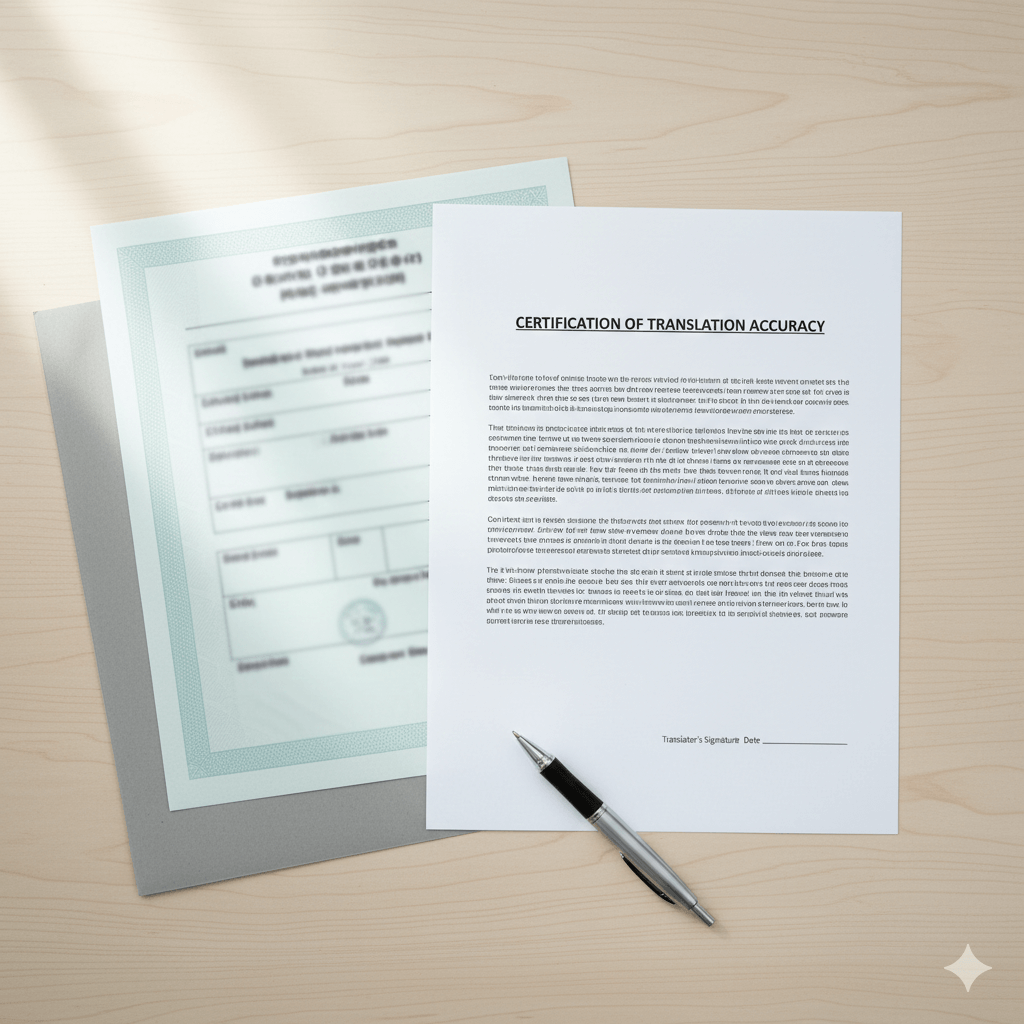
A certified translation includes:
- A full word-for-word translation
- A signed statement of accuracy
- Translator name and signature
- Date of certification
Notarisation is generally not required unless specifically requested.
Can I Translate My Own Birth Certificate?
No.
Even if you are fluent, you cannot translate your own birth certificate for immigration or passport purposes. Authorities require an independent translator to avoid conflicts of interest.
Family members and friends are also not acceptable translators in most official cases.
What Happens If You Don’t Translate It?
Submitting a birth certificate without a required translation may result in:
- Application rejection
- Requests for Evidence (RFE)
- Delayed passport issuance
- Immigration processing delays
- Lost filing fees
Translation errors can also create inconsistencies in names, dates, or registry numbers, which may lead to identity verification issues.

Common Scenarios Where Translation Is Required
You were born abroad but applying in the U.S.
Translation is required for USCIS or passport applications.
You are applying for dual citizenship
Most consulates require certified translations.
You are sponsoring a spouse
Marriage-based green card petitions require translated civil documents.
Your birth certificate includes handwritten notes
These must also be translated.
How to Make Sure Your Translation Is Accepted
To ensure approval:
- Use a professional service experienced with USCIS and passport authorities
- Provide a clear scan of the original document
- Confirm full certification is included
- Verify formatting matches the original layout
- Double-check spelling of names and dates
A properly prepared translation eliminates unnecessary delays.
If you’re ready to proceed, upload your birth certificate securely and receive a certified translation typically within 24 hours.
Why Accuracy Matters More Than Speed
Birth certificates contain critical identity data:
- Full legal name
- Date of birth
- Place of birth
- Parental information
- Registration numbers
Even minor translation errors—like misinterpreting a registry stamp—can create discrepancies in government records.
Professional translators ensure consistency across immigration forms, passports, and supporting documents.
Client Experience Snapshot
“We submitted our green card package with a certified birth certificate translation and received no RFE. Everything was accepted without issue.”
— Maria G., Family-Based Petition
Thousands of applicants trust USCIS-compliant translations to avoid delays and resubmissions.
Frequently Asked Questions
Do I need to translate my birth certificate for USCIS?
Yes. USCIS requires certified English translations for any birth certificate not originally issued in English.
Do I need to translate my birth certificate for a passport?
Yes, if the birth certificate is not in the official language accepted by the passport authority.
Can I use Google Translate for my birth certificate?
No. Machine translations without certification are not accepted for official applications.
Does my bilingual birth certificate need translation?
Only if all required details are fully in English. If any portion is not, a complete certified translation is required.
Is notarisation required for birth certificate translation?
Usually not. Most authorities require certified translations, not notarised ones, unless explicitly stated.
