
If you’re applying for immigration, a visa, adjustment of status, or another official process and your birth certificate isn’t in English, one question comes up again and again: can a public notary translate a birth certificate?
The short, reliable answer is sometimes — but usually no, and misunderstanding this can lead to costly rejections and delays.
This guide explains exactly when a notary can translate a birth certificate, when they cannot, what USCIS and other authorities actually require, and how to make sure your translation is accepted the first time.
What a Public Notary Actually Does
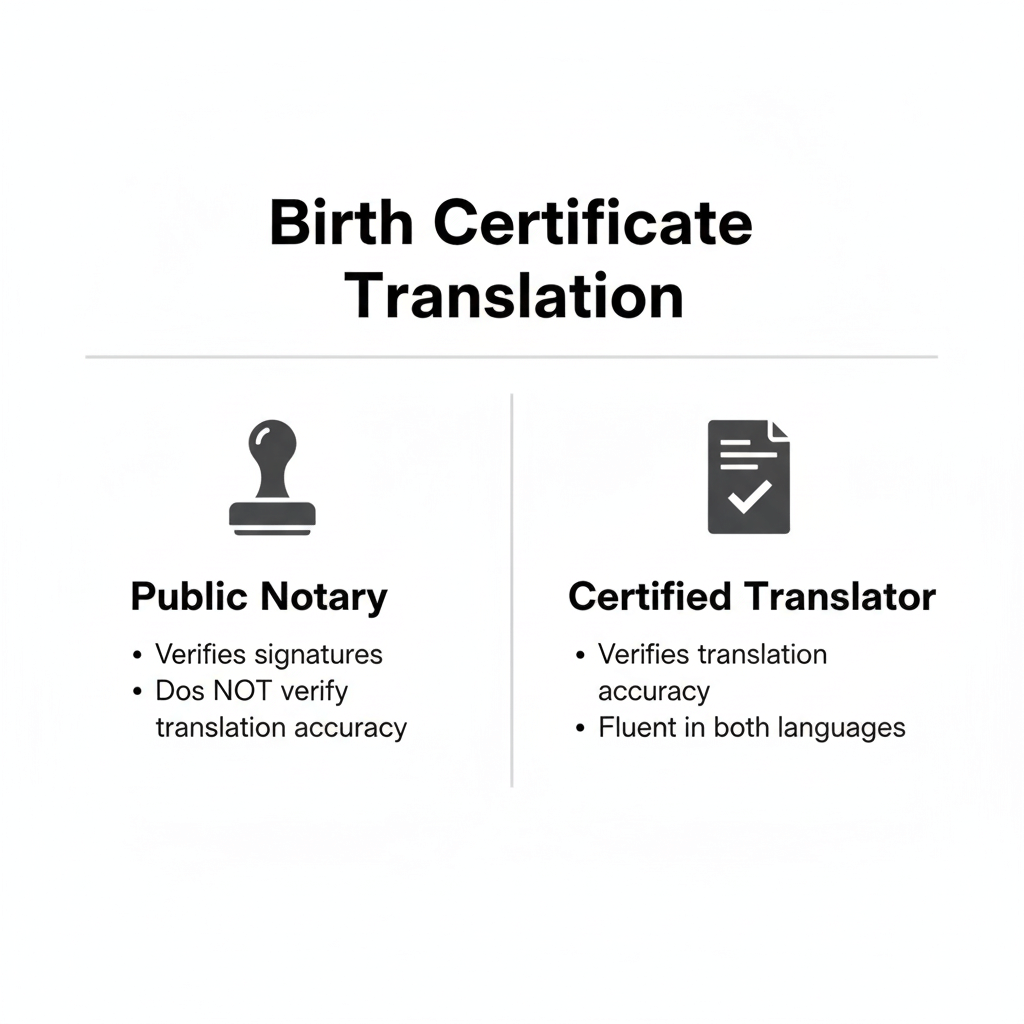
A public notary’s primary role is verification, not translation.
A notary public is authorised to:
- Verify the identity of a signer
- Witness signatures
- Administer oaths and affirmations
- Notarise affidavits and sworn statements
A notary does not automatically qualify as a translator, and notarisation alone does not make a translation valid for immigration or government use.
Can a Public Notary Translate a Birth Certificate?
Yes — but only under very specific conditions.
A public notary may translate a birth certificate only if:
- They are fully fluent in both the source language and English
- They personally complete the translation
- They provide a signed certification confirming the translation is complete and accurate
- They certify that they are competent to translate
In practice, this is rare. Most notaries do not offer translation services, and many government bodies reject translations where the notary’s role is unclear or improperly documented.

Why Most Notary Translations Are Rejected
Applications are frequently delayed or refused because:
- The notary only notarised a signature instead of certifying the translation
- The translation certificate wording does not meet USCIS requirements
- The notary did not explicitly state language competence
- The translation lacks a proper accuracy statement
- The notary is not independent from the applicant
Immigration officers focus on who translated the document, not who stamped it.
What USCIS Actually Requires for Birth Certificate Translations
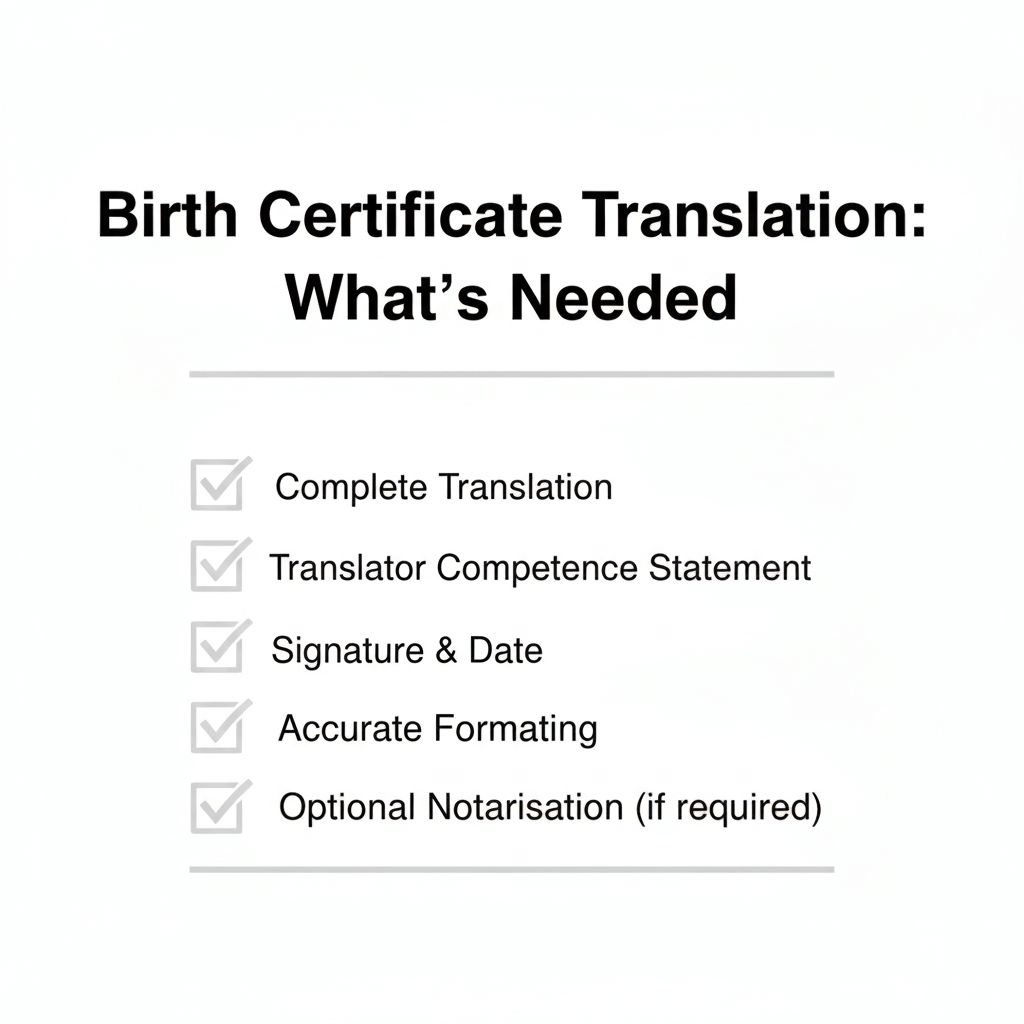
For USCIS and most US immigration processes, a birth certificate translation must include:
- A full, word-for-word English translation
- A signed certification stating:
- The translation is complete and accurate
- The translator is competent in both languages
- The translator’s:
- Full name
- Signature
- Date
There is no requirement for a notary stamp — unless the translator chooses to notarise their own certification.
Notary vs Certified Translator: Key Differences
Public Notary
- Verifies identity and signatures
- May not be a linguist
- Translation acceptance is inconsistent
- Higher risk of rejection
Certified Translator or Professional Translation Service
- Specialises in official document translation
- Uses USCIS-compliant certification language
- Accepted by USCIS, NVC, and consulates
- Minimal risk of rejection
For immigration purposes, authorities care about accuracy and accountability, not notarisation alone.
When Is a Notarised Translation Actually Required?
A notarised translation may be required when:
- A foreign authority specifically requests notarisation
- The document is being used for court proceedings
- An embassy or consulate explicitly states notarisation is mandatory
For USCIS birth certificate translations, notarisation is optional, not required.
Real-World Example: Avoiding a Costly Delay
An applicant submitted a translated birth certificate notarised by a local notary. USCIS issued a Request for Evidence because:
- The certification did not state translator competence
- The notary only authenticated the signature
- The translation accuracy statement was missing
The result: a 6–8 week delay and additional fees.
Submitting a properly certified translation from the start would have avoided the issue entirely.
The Safest Option for Birth Certificate Translation
If your birth certificate is required for:
- USCIS applications
- Adjustment of status
- Consular processing
- Visa or immigration filings
The safest approach is to use a professional certified translation service that:
- Specialises in immigration documents
- Provides USCIS-accepted certification wording
- Delivers fast turnaround
- Guarantees acceptance
This removes uncertainty and prevents unnecessary rejections.
Frequently Asked Questions
Can a notary public translate a birth certificate for USCIS?
Only if the notary is also the translator and provides a compliant certification. Most notary translations are rejected because they do not meet USCIS requirements.
Does USCIS require notarised translations?
No. USCIS requires a certified translation, not a notarised one.
Can I translate my own birth certificate and notarise it?
No. The translator must be independent from the applicant.
Is a stamped translation automatically certified?
No. A stamp alone does not replace a proper translation certification statement.
What happens if my translation is rejected?
USCIS may issue a Request for Evidence, causing delays and additional costs.
