
If you’re preparing documents for a U.S. immigration application, one question comes up again and again: can I translate my birth certificate myself?
At first glance, the idea sounds reasonable. You speak both languages, you understand the document, and translating it yourself feels faster and cheaper.
But when it comes to official immigration filings, especially with USCIS, the rules are stricter than many applicants realise. A small mistake or misunderstanding can lead to delays, requests for evidence, or even rejection.
This guide explains exactly what USCIS allows, what it strongly discourages, and what usually works best if you want your application processed smoothly the first time.
What USCIS Requires for Birth Certificate Translations
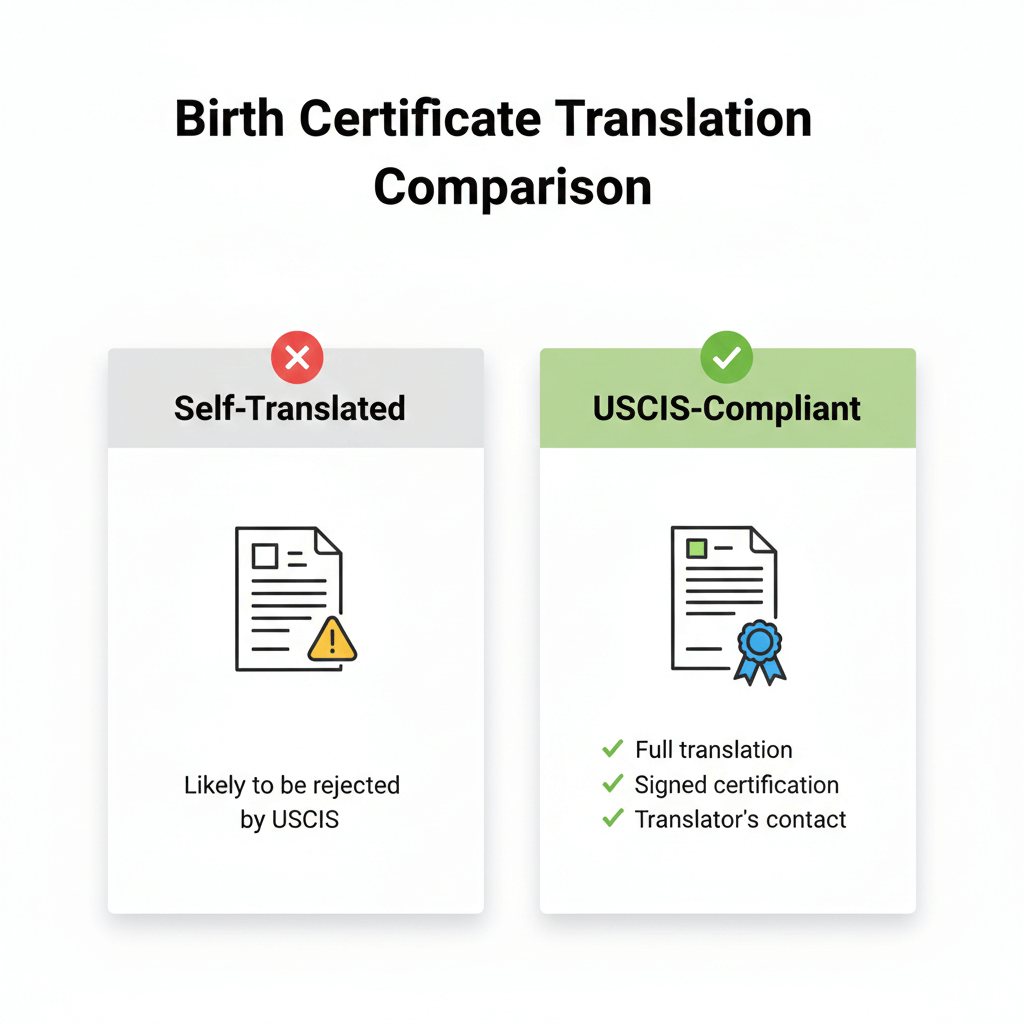
USCIS does not require translations to be notarised or completed by a government office. However, every non-English document must be accompanied by a complete and accurate English translation and a signed certification.
That certification must confirm that:
- The translation is complete and accurate
- The translator is competent to translate from the original language into English
The key word here is translator.
Technically Yes — But Practically Risky
Can I translate my birth certificate myself?
Technically, yes. USCIS does not explicitly ban self-translation.
Should you translate your own birth certificate?
In practice, it’s strongly discouraged.
Here’s why:
- USCIS expects the translator to be independent and impartial
- Self-translation creates a conflict of interest
- Officers may question credibility, especially for identity documents
- Any inconsistency can trigger a Request for Evidence (RFE)
Birth certificates are considered core identity documents. USCIS officers tend to scrutinise them more closely than supporting paperwork.
Why Self-Translated Birth Certificates Get Flagged
USCIS officers review thousands of applications. When they see:
- The applicant listed as the translator
- Informal wording or inconsistent formatting
- Missing stamps, notes, or marginal text
- Incorrect transliteration of names or places
…it raises red flags.
Even fluent bilingual applicants commonly make mistakes with:
- Official terminology
- Civil registry language
- Abbreviations and handwritten notes
- Date formats and regional conventions
These are exactly the details USCIS looks at most closely.
What USCIS Considers an Acceptable Translation
An acceptable birth certificate translation must include:
- A word-for-word English translation
- All stamps, seals, annotations, and marginal notes translated
- A signed certification statement
- Translator’s full name and signature
- Confirmation of language competency
Most importantly, the translator should be someone other than the applicant.
Common Mistakes Applicants Make When Translating Themselves
Self-translated documents often fail because of:
- Skipped sections (“this part isn’t important”)
- Paraphrasing instead of literal translation
- Incorrect name order or spelling
- Missing registrar stamps or handwritten notes
- Using machine translation without review
Even one of these issues can delay an application by weeks or months.
Who Should Translate Your Birth Certificate Instead?
The safest and most widely accepted options are:
- A professional certified translator
- A translation service experienced with USCIS filings
- A qualified third party who is fluent and not related to the case
Professional services ensure:
- USCIS-compliant certification wording
- Consistent formatting
- Zero conflicts of interest
- Acceptance across all visa and adjustment categories
If your application matters — and it does — this is not the place to cut corners.

Why USCIS Applications Get Delayed Over Translations
Translation issues are one of the most common causes of RFEs related to civil documents.
USCIS may request:
- A new translation
- A corrected certification
- Proof of translator competence
Each request adds processing time and stress — especially if deadlines are involved.
When a Certified Translation Is the Smarter Choice
A professionally prepared translation:
- Eliminates credibility concerns
- Meets USCIS expectations automatically
- Is accepted by embassies, NVC, and courts if needed later
- Saves time, revisions, and follow-ups
For many applicants, it’s a one-time cost that prevents months of delay.
Frequently Asked Questions
Can USCIS reject my application if I translate my own birth certificate?
Yes. While not automatically rejected, self-translations are more likely to be questioned or rejected during review.
Does USCIS require notarised translations?
No. USCIS requires a signed certification, not notarisation.
Can a family member translate my birth certificate?
It’s possible, but still risky. USCIS prefers a neutral, independent translator.
Can I use Google Translate for my birth certificate?
No. Machine translations without certification are not accepted.
What if my birth certificate has stamps or handwriting?
All stamps, seals, handwritten notes, and margins must be fully translated.
