
Table of Contents
ToggleUnderstanding the Importance of Organized Translated Exhibits
When applying for an I-140 visa, the organization of your translated exhibits is crucial. Properly organized documents not only enhance clarity but also ensure compliance with USCIS requirements. This guide will provide you with detailed steps on how to organize translated exhibits for I-140 applications, including tips on creating an exhibit index, merging PDFs, and more.
Step-by-Step Guide to Organizing Translated Exhibits
1. Create an Exhibit Index
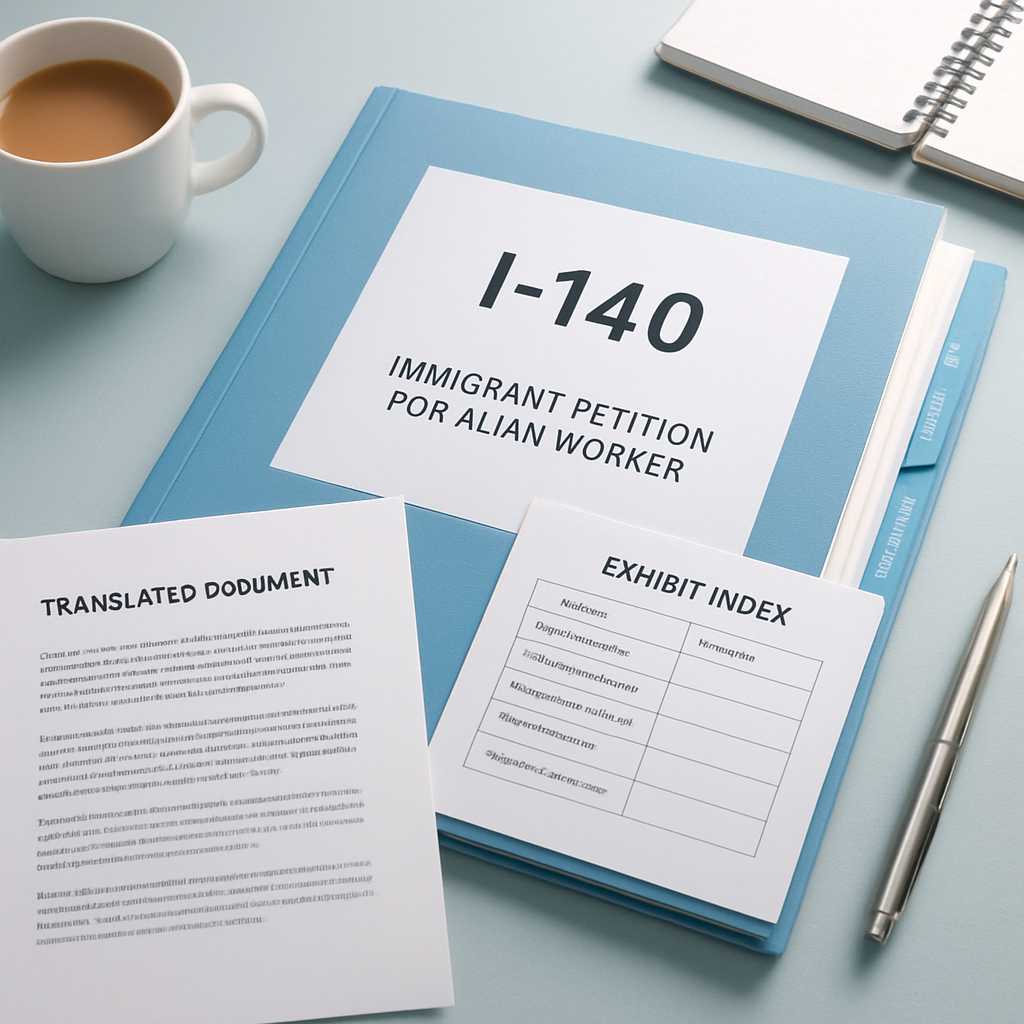
Start by creating a comprehensive exhibit index. This index should list all documents included in your I-140 package, along with their corresponding page numbers. An organized index helps USCIS officers quickly locate necessary documents, reducing the risk of delays.
2. Ensure Accurate Translations
Before organizing your exhibits, ensure that all documents are accurately translated. Use certified translation services to guarantee compliance with USCIS standards. For more information on certified translations, visit our Authorized Translation page.
3. Use Clear File Naming Conventions
File naming is essential for easy navigation. Use descriptive names that include the document type and date. For example, “Birth_Certificate_Translation_2023.pdf” is more effective than “Document1.pdf.” This practice aids in quick identification and retrieval.
4. Merge PDF Files for Cohesion
Merging your translated documents into a single PDF file can streamline the submission process. Use reliable PDF merging tools to combine files while maintaining quality. Ensure that the final document is not excessively large, as this can hinder submission.
5. Include Binder Tabs
For physical submissions, consider using binder tabs to separate different sections of your I-140 package. Label each tab clearly, corresponding to the exhibit index. This organization method allows for quick access to specific documents during review.
6. Place Translation Certificates Strategically
Each translated document should be accompanied by a translation certificate. Place these certificates immediately following the corresponding translated document. This practice ensures that USCIS officers can easily verify the authenticity of translations.
Common Mistakes to Avoid
When organizing your translated exhibits, be mindful of common pitfalls:
- Inconsistent Formatting: Ensure uniform formatting across all documents.
- Missing Documents: Double-check your index against the actual documents to avoid omissions.
- Poor Quality Translations: Always use certified translators to avoid issues with accuracy.
FAQs
What is an exhibit index for I-140 applications?
An exhibit index is a list of all documents included in your I-140 package, helping USCIS officers quickly locate necessary information.
How do I merge PDF files for my I-140 package?
You can use various online tools or software to merge PDF files. Ensure the final document is not too large for submission.
Where should I place translation certificates?
Translation certificates should be placed immediately after the corresponding translated document for easy verification.
What are common mistakes when organizing translated exhibits?
Common mistakes include inconsistent formatting, missing documents, and using poor-quality translations.
Conclusion
Organizing translated exhibits for your I-140 application is a critical step in ensuring a smooth submission process. By following the steps outlined in this guide, you can enhance the clarity and compliance of your application. For professional assistance with translations, consider our Academic Translation Services.
