
Table of Contents
ToggleUnderstanding the Translator Certification Statement
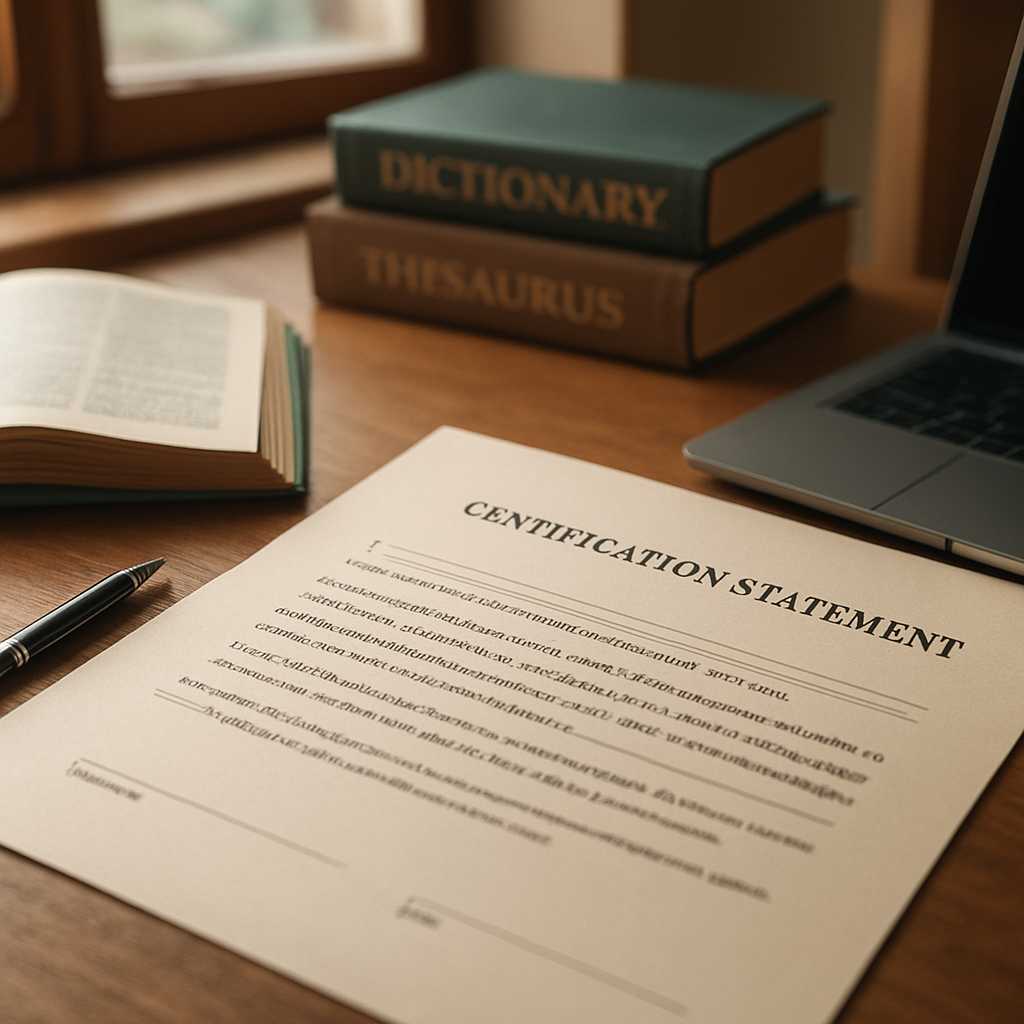
A translator certification statement is a formal declaration by a translator affirming that the translation they have provided is accurate and complete. This statement is often required for legal documents, immigration applications, and academic purposes. Understanding how to write a translator certification statement is crucial for ensuring that your translations are accepted by authorities.
Step-by-Step Guide to Writing a Translator Certification Statement
Step 1: Gather Necessary Information
Before you begin writing your certification statement, gather the following information:
- Your Name: Include your full name as the translator.
- Contact Information: Provide your phone number and email address.
- Language Pair: Specify the languages you are translating from and to.
- Date of Translation: Indicate when the translation was completed.
- Document Details: Describe the document being translated, including its title and purpose.
Step 2: Write the Certification Statement
Your certification statement should include the following components:
- Opening Statement: Start with a clear declaration, such as, “I, [Your Name], hereby certify that the following document is a true and accurate translation of the original document.”
- Details of the Translation: Include the details gathered in Step 1, ensuring clarity and completeness.
- Competence Statement: Add a statement affirming your qualifications, such as, “I am competent to translate from [Source Language] to [Target Language].”
- Signature: Sign the document to validate your certification.
Step 3: Format the Document
Ensure that your certification statement is formatted professionally. Use a standard font, such as Times New Roman or Arial, and maintain a font size of 12. Include your contact information at the top, followed by the date, and then the body of the certification statement. Finally, leave space for your signature.
Step 4: Review and Edit
Before finalizing your certification statement, review it for accuracy and completeness. Check for any grammatical errors or typos. It may be helpful to have a colleague review the document as well.
What to Include in a Translator Certification Statement
When writing your certification statement, ensure that you include:
- Your full name and contact information
- The languages involved in the translation
- A clear declaration of accuracy
- Your qualifications or credentials
- The date of the translation
- Your signature
Common Questions About Translator Certification Statements
What is a competent to translate statement?
A competent to translate statement is a declaration made by the translator affirming their ability to accurately translate documents between specific languages.
What is a true and accurate statement?
A true and accurate statement is a formal assertion that the translation provided is a faithful representation of the original document, free from errors or omissions.
Do I need a signed certification?
Yes, a signed certification is often required to validate the authenticity of the translation, especially for legal or official documents.
Where can I find examples of certification statements?
You can find examples of certification statements on professional translation websites or through resources like certified translation examples.
Conclusion
Writing a translator certification statement is a straightforward process that requires attention to detail and adherence to specific guidelines. By following the steps outlined above, you can create a certification statement that meets the necessary requirements and enhances the credibility of your translations.
