
If you need to translate a marriage certificate, it’s usually for something important—immigration, visa applications, legal proceedings, or official registrations. The process is not just about converting words from one language to another. It must meet strict formatting and certification requirements to be accepted by authorities.
This guide explains exactly how to translate a marriage certificate correctly, avoid rejection, and ensure your document is accepted the first time.
Why Marriage Certificate Translation Matters
Marriage certificates are often required for:
- Immigration and visa applications
- Spouse sponsorship cases
- Legal name changes
- Divorce or court proceedings
- Property or financial documentation
Authorities such as USCIS, UK Home Office, and other institutions require accurate, complete, and certified translations. Even small errors—like incorrect dates or names—can delay your application.
What Is a Certified Marriage Certificate Translation?
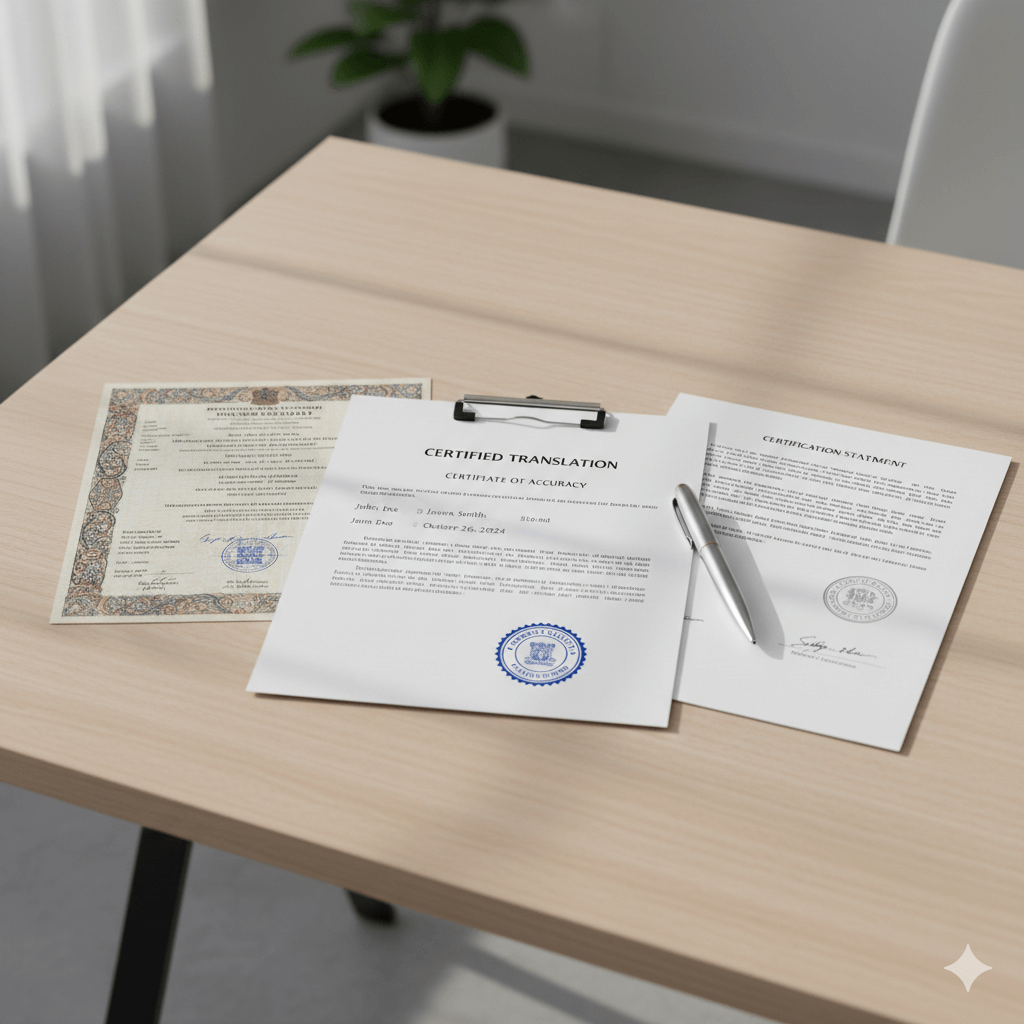
A certified translation includes:
- A complete, word-for-word translation of the original document
- Replication of formatting (tables, stamps, seals)
- A Certificate of Accuracy signed by the translator
This certificate confirms:
The translation is accurate and complete, and the translator is competent in both languages.
Step-by-Step: How to Translate a Marriage Certificate
1. Get a Clear Copy of the Original Document
Before translation begins:
- Ensure the scan is high-quality and readable
- Include all pages, stamps, and seals
- Avoid cropped or blurred images
Poor-quality scans can lead to inaccuracies or rejection.
2. Choose a Qualified Translator
You have three main options:
Professional Translation Service (Recommended)
- Meets immigration and legal standards
- Includes certification
- Reduces risk of rejection
Freelance Translator
- Must provide certification
- Ensure experience with legal documents
Self-Translation (Not Recommended)
- Not accepted by most authorities (including USCIS)
3. Translate Every Element (No Omissions)
A valid translation must include:
- Names (exact spelling)
- Dates (correct format conversion if needed)
- Locations
- Official stamps and seals
- Signatures (noted as “Signature” if unreadable)
Nothing can be skipped—even handwritten notes or marginal text.
4. Maintain Original Formatting
The translated document should mirror the original:
- Same structure and layout
- Tables and sections aligned
- Labels clearly translated
This helps officials cross-check the translation easily.
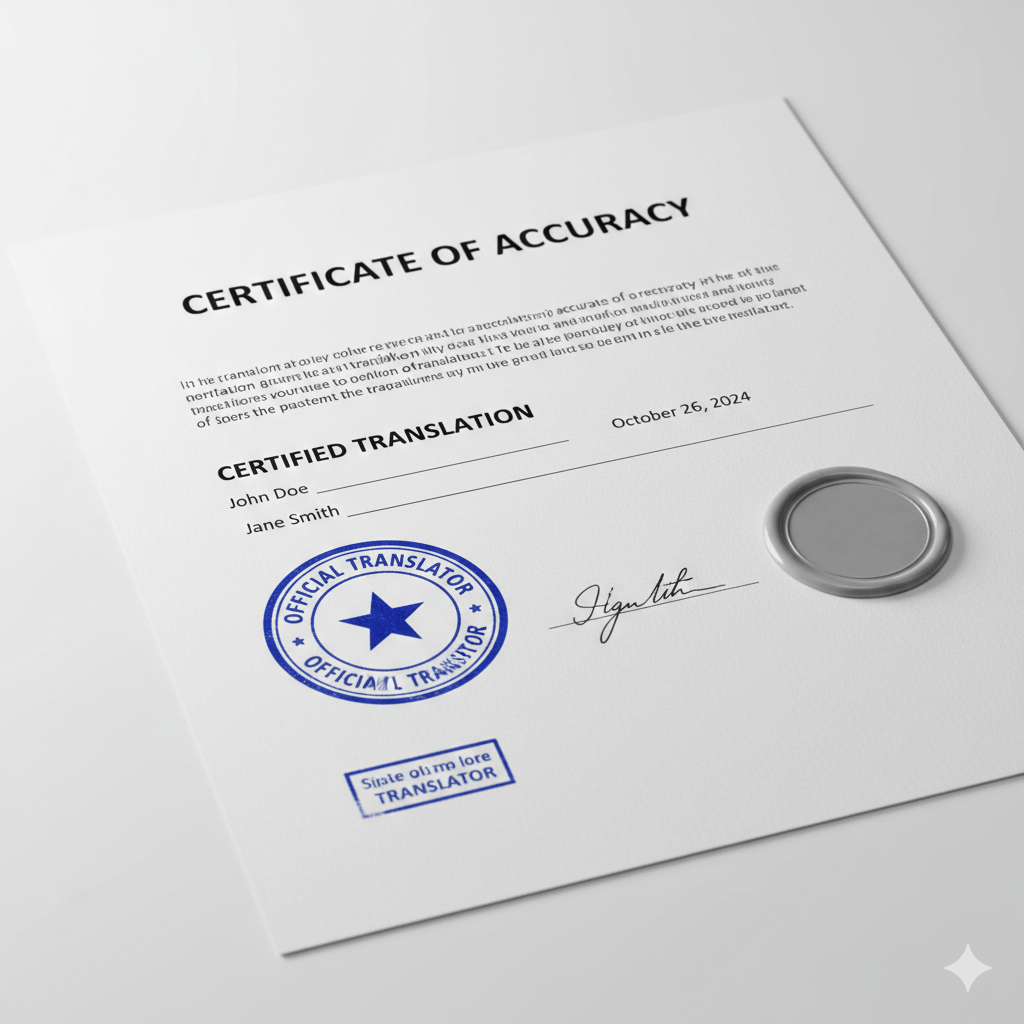
5. Add a Certificate of Accuracy
Every certified translation must include a statement such as:
- Translator’s name
- Signature
- Date
- Contact details
- Declaration of accuracy
Without this, your translation may be rejected.
6. Review Before Submission
Double-check:
- Names match passports exactly
- Dates are correct (especially day/month format differences)
- No missing sections
- Formatting is consistent
A second review can prevent costly delays.
Common Mistakes to Avoid
- Using Google Translate or AI tools without human review
- Omitting stamps or seals
- Incorrect spelling of names
- Submitting uncertified translations
- Using low-quality scans
Even one mistake can lead to rejection.
Example: What a Proper Translation Includes
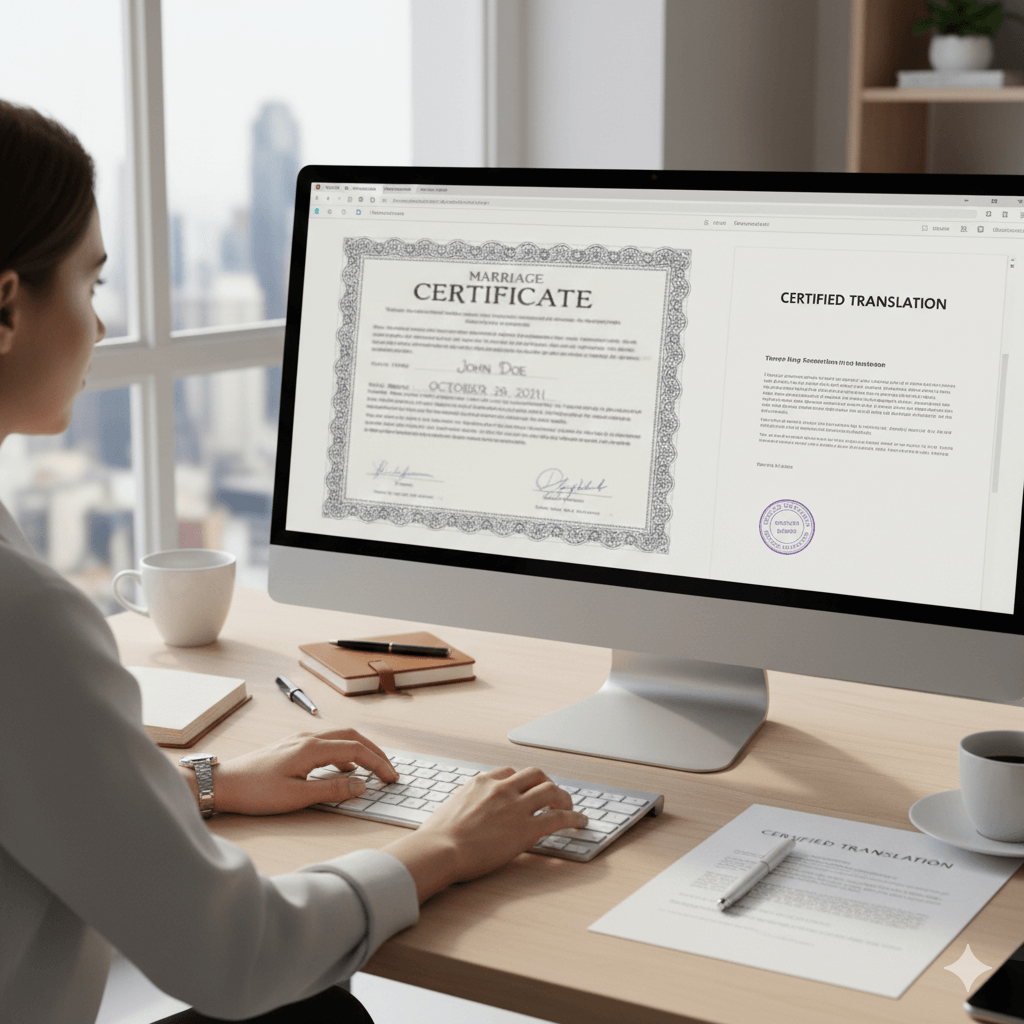
A professional marriage certificate translation typically includes:
- Header indicating “Certified Translation”
- Full translated text
- Notes for seals/stamps (e.g., “[Official Seal]”)
- Translator’s certification statement
- Signature and date
How Much Does It Cost to Translate a Marriage Certificate?
Typical pricing (UK & US markets):
- Standard certified translation: £20 – £60 / $25 – $80
- Urgent (24-hour service): +£10–£30
- Notarisation (if required): additional fee
Costs vary based on language, complexity, and turnaround time.
How Long Does It Take?
- Standard turnaround: 24–48 hours
- Same-day service: Available for urgent cases
Simple one-page certificates are usually completed quickly.
When Do You Need Notarisation?
Most immigration authorities (including USCIS) do NOT require notarisation, only certification.
You may need notarisation if:
- Requested by a court
- Required for embassy/legalisation
- Needed for international legal use
Why Professional Translation Is Worth It
A professional service ensures:
- Acceptance by immigration authorities
- Accurate terminology
- Proper formatting
- Certified documentation
This reduces risk and saves time in the long run.
Get Your Marriage Certificate Translated Today
If you need a fast, accurate, and fully certified translation, working with an experienced team ensures your document is accepted without delays.
Start your translation today and receive a certified, ready-to-submit document within 24 hours.
Frequently Asked Questions
Can I translate my own marriage certificate?
No. Most authorities require a third-party translator to ensure impartiality and accuracy.
Does USCIS require certified translation?
Yes. USCIS requires a full translation along with a signed Certificate of Accuracy.
Do I need a notarised translation?
Usually not. Certification is sufficient unless specifically requested.
How many copies should I submit?
Typically one certified copy is enough, but always check your application requirements.
What if my certificate has handwritten text?
It must still be translated, and unclear sections should be noted accordingly.
