
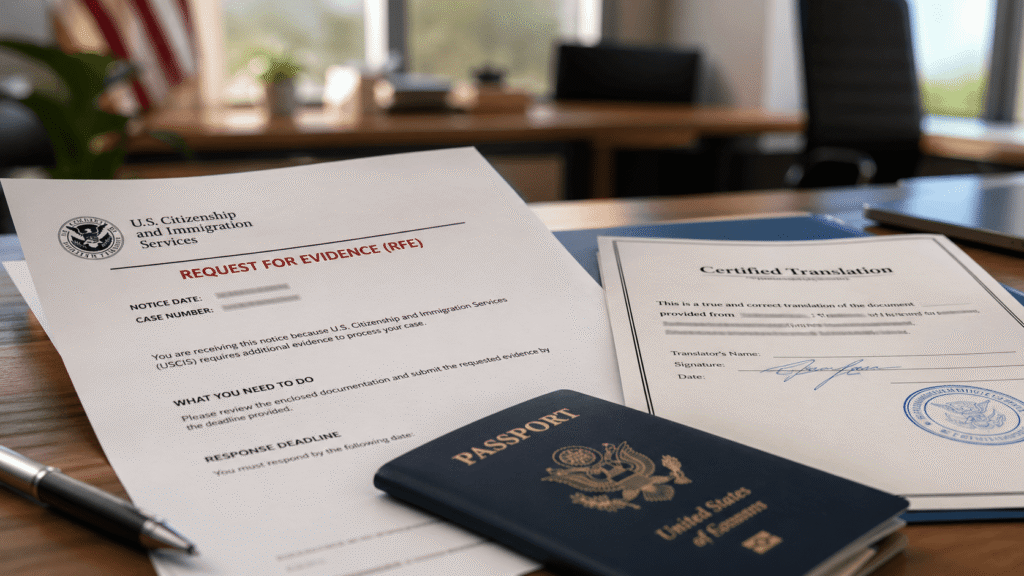
Receiving a Request for Evidence (RFE) from USCIS can be stressful—especially when it relates to translation issues. A USCIS RFE translation typically means your documents were either incomplete, incorrectly translated, or missing proper certification.
The good news? Most translation-related RFEs are fixable—and avoidable.
This guide explains exactly:
- Why USCIS issues RFEs for translations
- How to respond correctly (without delays or rejection)
- How to avoid future RFEs altogether
What Is a USCIS RFE for Translation?
A Request for Evidence (RFE) is a formal notice from USCIS asking for additional or corrected documentation before they can proceed with your case.
When it comes to translations, an RFE usually means:
- The translation didn’t meet USCIS standards
- Required certification was missing
- The document was incomplete or unclear
USCIS requires that any non-English document must be submitted with a full English translation and a certification of accuracy.
Common Reasons for USCIS Translation RFEs
Understanding why RFEs happen is the first step to avoiding them.
1. Missing Certification Statement
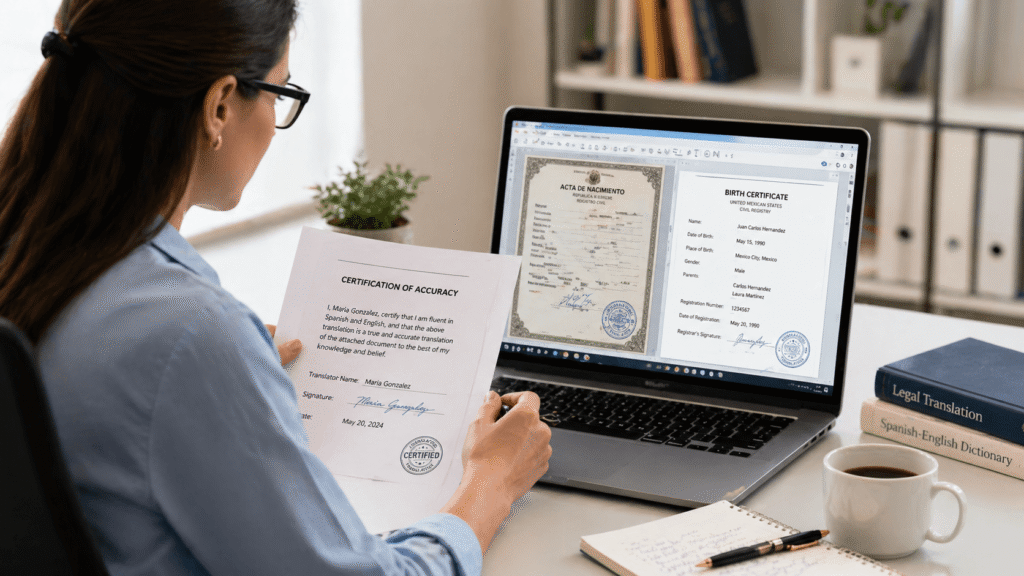
Every translation must include a signed certification confirming:
- The translator is competent
- The translation is complete and accurate
Without this, USCIS may reject the document outright.
2. Partial or Incomplete Translations
USCIS requires full translations, not summaries.
This includes:
- Stamps and seals
- Marginal notes
- Handwritten content
Even small omissions can trigger an RFE.
3. Poor-Quality or Illegible Documents
If the original scan is unclear:
- The translation may be inaccurate
- USCIS may not accept it
Blurry or cropped documents are a common issue.
4. Self-Translation by Applicant
While not explicitly banned, self-translations often lead to RFEs due to:
- Lack of formal certification
- Perceived bias or inaccuracy
5. Incorrect Formatting or Missing Details
Common issues include:
- Missing translator name/signature
- No date on certification
- No statement of fluency

How to Respond to a USCIS RFE for Translation
If you’ve received an RFE, timing and accuracy are critical.
Step 1: Carefully Review the RFE Notice
Identify exactly what USCIS is requesting:
- Missing certification?
- Re-translation required?
- Additional documents?
Step 2: Get a Proper Certified Translation
Ensure your new translation includes:
- Complete, word-for-word translation
- Certification statement
- Translator’s name, signature, and date
Step 3: Double-Check Before Submission
Verify:
- All pages are included
- Names and numbers match originals
- Formatting is consistent
Step 4: Submit Before Deadline
RFEs come with strict deadlines.
Late responses can result in:
- Case denial
- Restarting the entire application process
What Happens If You Ignore a Translation RFE?
Ignoring an RFE can have serious consequences:
- Application denial
- Loss of filing fees
- Delays in immigration status
In some cases, it can affect future applications.
How to Avoid USCIS Translation RFEs Completely
Prevention is always better than correction.
Use Certified Translation Services
A professional service ensures:
- USCIS-compliant formatting
- Accurate terminology
- Proper certification
Submit High-Quality Scans
Always provide:
- Clear, high-resolution documents
- Full pages (no cropping)
Translate Everything
Don’t skip:
- Stamps
- Seals
- Annotations
Verify Requirements Before Submission
Different applications may have specific expectations.
Always confirm:
- Whether notarisation is needed
- If additional formatting is required
Certified vs Notarised Translation: What USCIS Accepts
Many applicants confuse these two.
Certified Translation (Required by USCIS)
- Includes certification of accuracy
- Signed by translator
Notarised Translation (Not Always Required)
- Signed in front of a notary
- Adds an extra layer of authentication
For USCIS, certified translation is usually sufficient.
Real Example: USCIS RFE Translation Fix
A client submitted a birth certificate translated by a friend.
Issues:
- Missing certification
- Incorrect date format
- Partial translation
Result:
- USCIS issued an RFE
Solution:
- Full certified re-translation
- Proper formatting
- Clear document scan
Outcome:
- Case approved without further delays
Why Professional Translation Matters for USCIS
A proper translation isn’t just about language—it’s about compliance.
Professional translators ensure:
- Accuracy in legal terminology
- Complete document coverage
- USCIS-compliant certification
This reduces risk and speeds up processing.
Start Your USCIS Translation the Right Way
Avoid delays, stress, and costly mistakes.
Upload your document today and receive a fully compliant certified translation—ready for USCIS submission.
FAQs: USCIS RFE Translation
What is a USCIS RFE translation issue?
A USCIS RFE translation issue occurs when submitted translations do not meet USCIS requirements, such as missing certification or incomplete translation.
Can I translate my own documents for USCIS?
It’s not recommended. Self-translations often lead to RFEs due to lack of proper certification and credibility concerns.
How long do I have to respond to a USCIS RFE?
Deadlines vary but are typically between 30–90 days. Always check your RFE notice and respond early.
Do USCIS translations need to be notarised?
No, notarisation is not usually required. A certified translation is sufficient in most cases.
What happens if my translation is rejected by USCIS?
You may receive an RFE requesting a corrected translation. If not addressed, your application could be denied.
What should a certified translation include?
It must include:
- Complete translation
- Certification statement
- Translator’s signature and date
