
Table of Contents
ToggleUnderstanding the Importance of a Travel Consent Letter
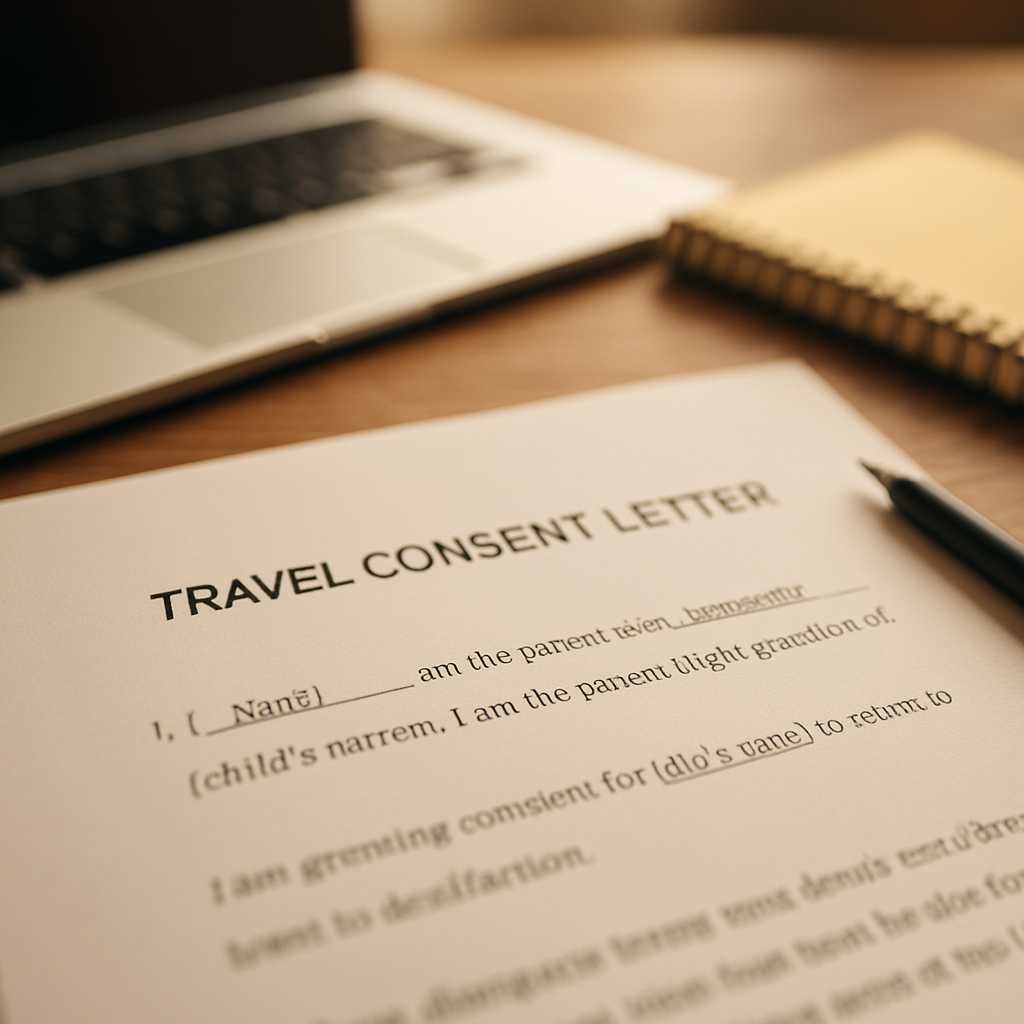
A travel consent letter is a crucial document when a child is traveling without one or both parents. It serves as legal permission for the child to travel and can be required by airlines, border control, or other authorities. Given its significance, ensuring that this document is accurately translated is essential, especially if it is being presented in a different language.
How to Translate a Travel Consent Letter Correctly
Translating a travel consent letter correctly involves several key steps. Here’s a comprehensive guide to ensure your translation meets all necessary standards.
1. Format of the Translation
The format of the translated document should closely mirror that of the original. This includes:
- Header: Include the title “Travel Consent Letter” prominently at the top.
- Body: Maintain the same paragraph structure and spacing as the original document.
- Signatures: Ensure that any signatures are included and clearly marked.
2. Seals and Stamps
If the original travel consent letter includes any official seals or stamps, these must also be translated and included in the final document. Here’s how to handle them:
- Translate Stamps and Seals: Provide a clear description of each seal or stamp in the translation. For example, if there is a notary seal, include a note stating its purpose.
- Placement: Position the translated seals and stamps in the same location as they appear in the original document.
3. Notes and Additional Information
Sometimes, additional notes may be necessary to clarify specific terms or conditions in the travel consent letter. Consider the following:
- Clarifying Terms: If there are legal terms that may not translate directly, provide a brief explanation in parentheses.
- Contextual Information: If the letter references specific laws or regulations, include a footnote with relevant details.
Avoiding Common Mistakes
When translating a travel consent letter, it’s vital to avoid common pitfalls that could lead to misunderstandings or legal issues:
- Omissions: Ensure that no part of the original letter is omitted in the translation.
- Inaccurate Terminology: Use precise legal terminology to avoid confusion.
- Proofreading: Always proofread the final document to catch any errors.
Examples of Travel Consent Letter Translations
To illustrate the points above, here are a few examples of how to structure translations:
- Original: “I, [Parent’s Name], give my consent for my child, [Child’s Name], to travel to [Destination].”
Translation: “Yo, [Nombre del Padre], doy mi consentimiento para que mi hijo, [Nombre del Niño], viaje a [Destino].” - Original: “This letter is valid until [Date].”
Translation: “Esta carta es válida hasta [Fecha].”
FAQs About Travel Consent Letter Translation
What is a travel consent letter?
A travel consent letter is a document that grants permission for a child to travel without one or both parents.
Why is it important to translate a travel consent letter?
Accurate translation ensures that the document is legally recognized in the destination country and avoids potential issues at borders.
What should I include in the translation?
Include the original format, any seals or stamps, and additional notes for clarity.
Can I translate the letter myself?
While you can translate it yourself, it is recommended to use a certified translator to ensure accuracy and compliance with legal standards.
How can I avoid mistakes in translation?
Proofread the document, use precise terminology, and ensure no information is omitted.
Conclusion
Translating a travel consent letter correctly is essential for ensuring smooth travel for children. By following the guidelines outlined above, you can create a translation that meets all necessary legal requirements. For professional assistance, consider reaching out to our America Translation Agency for expert translation services.
