
Table of Contents
ToggleUnderstanding the Importance of Certified Translation of Annulment Decree for U.S. Immigration
When navigating the complexities of U.S. immigration, one critical aspect is ensuring that all documents are accurately translated and certified. This is particularly true for an annulment decree, which may be required in various immigration processes. A certified translation of annulment decree for U.S. immigration is not just a formality; it is essential for validating your marital status and ensuring compliance with USCIS requirements.
What is an Annulment Decree?
An annulment decree is a legal document that officially declares a marriage null and void. Unlike a divorce, which ends a valid marriage, an annulment asserts that the marriage was never legally valid. This document is crucial for individuals who wish to remarry or adjust their immigration status in the U.S.
Why is Certified Translation Necessary?
USCIS requires that any document submitted in a foreign language must be accompanied by a certified translation. This ensures that immigration officials can accurately assess the content of the document. A certified translation provides a guarantee that the translation is complete and accurate, which is vital for the integrity of your immigration application.
Annulment Decree Translation Requirements
When preparing a certified translation of an annulment decree for U.S. immigration, it is essential to adhere to specific requirements:
- Accuracy: The translation must be a true and complete representation of the original document.
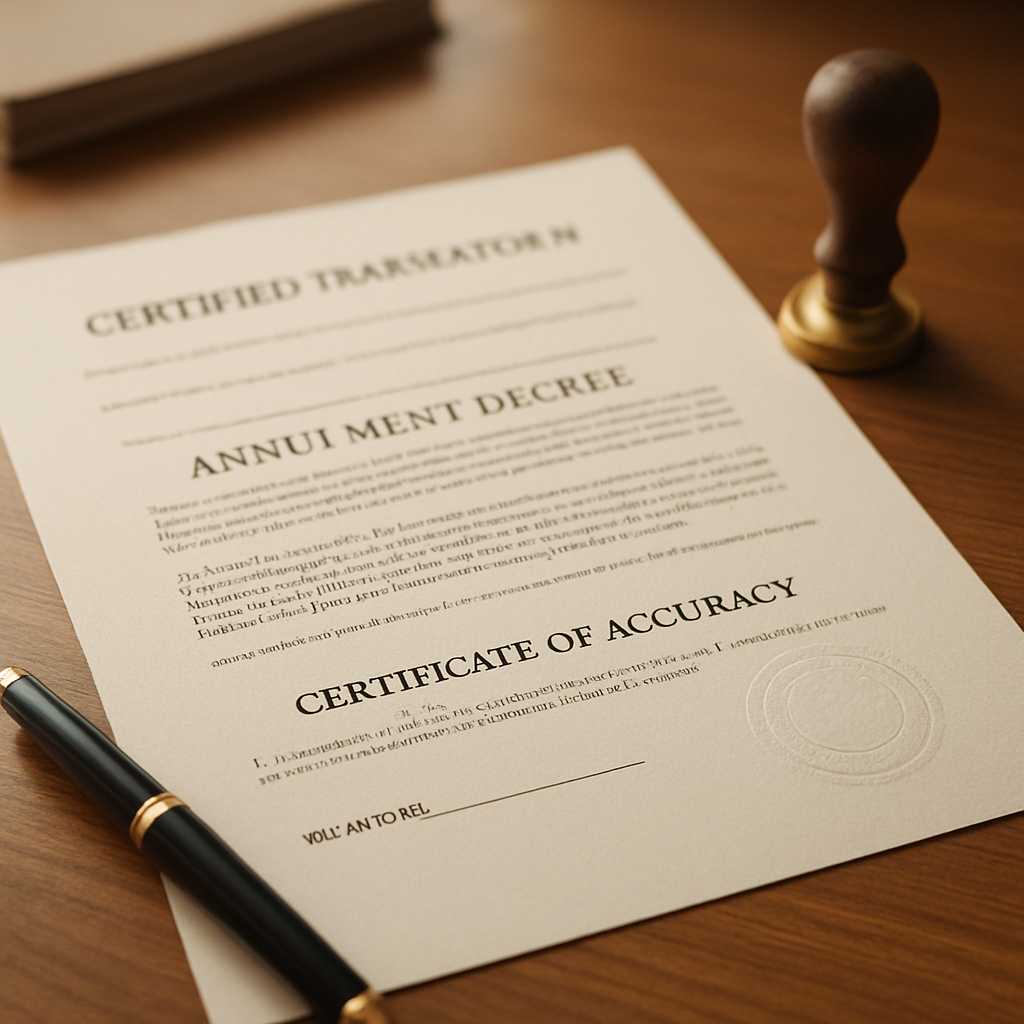
- Certification: The translator must provide a certificate of accuracy, affirming their qualifications and the accuracy of the translation.
- Formatting: The translated document should mirror the original in terms of layout and formatting.
Certificate of Accuracy
A certificate of accuracy is a crucial component of the certified translation process. This document should include:
- The translator’s name and signature
- The date of translation
- A statement affirming the accuracy of the translation
- The translator’s qualifications
USCIS Submission Tips
To ensure a smooth submission process, consider the following tips:
- Check Requirements: Always verify the specific requirements for your immigration application, as they may vary.
- Use Professional Services: Engage a professional translation service that specializes in USCIS documents to avoid common pitfalls.
- Fast Turnaround: If time is of the essence, look for services that offer expedited translation options.
Formatting Checklist for Certified Translations
Proper formatting is essential for your certified translation to be accepted by USCIS. Here’s a checklist to ensure compliance:
- Include the original document alongside the translation.
- Maintain the same order and structure as the original document.
- Use clear and legible fonts.
- Ensure all signatures and stamps are visible and clear.
Conclusion
Obtaining a certified translation of an annulment decree for U.S. immigration is a vital step in your immigration journey. By understanding the requirements and ensuring accuracy, you can facilitate a smoother application process. For professional assistance, consider our certified translation services to ensure your documents meet all USCIS standards.
FAQs
1. What is a certified translation of an annulment decree?
A certified translation of an annulment decree is an accurate translation of the document, accompanied by a certificate of accuracy from the translator.
2. Do I need a certified translation for USCIS?
Yes, USCIS requires certified translations for any documents submitted in a foreign language.
3. How long does it take to get a certified translation?
The turnaround time for certified translations can vary, but many services offer expedited options for urgent requests.
4. What should be included in the certificate of accuracy?
The certificate of accuracy should include the translator’s name, signature, date, and a statement affirming the translation’s accuracy.
5. Can I translate my annulment decree myself?
While you can translate your annulment decree, USCIS requires that the translation be certified by a qualified translator.
