
Table of Contents
ToggleUnderstanding the Importance of Organized Translated Exhibits
When applying for U.S. citizenship through the N-400 form, it is crucial to present your documents in a clear and organized manner. Translated exhibits play a significant role in this process, as they provide essential information about your background and qualifications. Proper organization not only enhances the clarity of your application but also helps USCIS officials review your case more efficiently.
Step-by-Step Guide to Organizing Translated Exhibits
1. Gather Required Documents
Before you can organize your translated exhibits, you need to collect all necessary documents. Common documents include:
- Birth certificates
- Marriage certificates
- Divorce decrees
- Military records
- Tax returns
2. Ensure Accurate Translations
All documents must be translated into English by a certified translator. Ensure that the translations are accurate and include a certificate of translation to verify the authenticity of the translations.
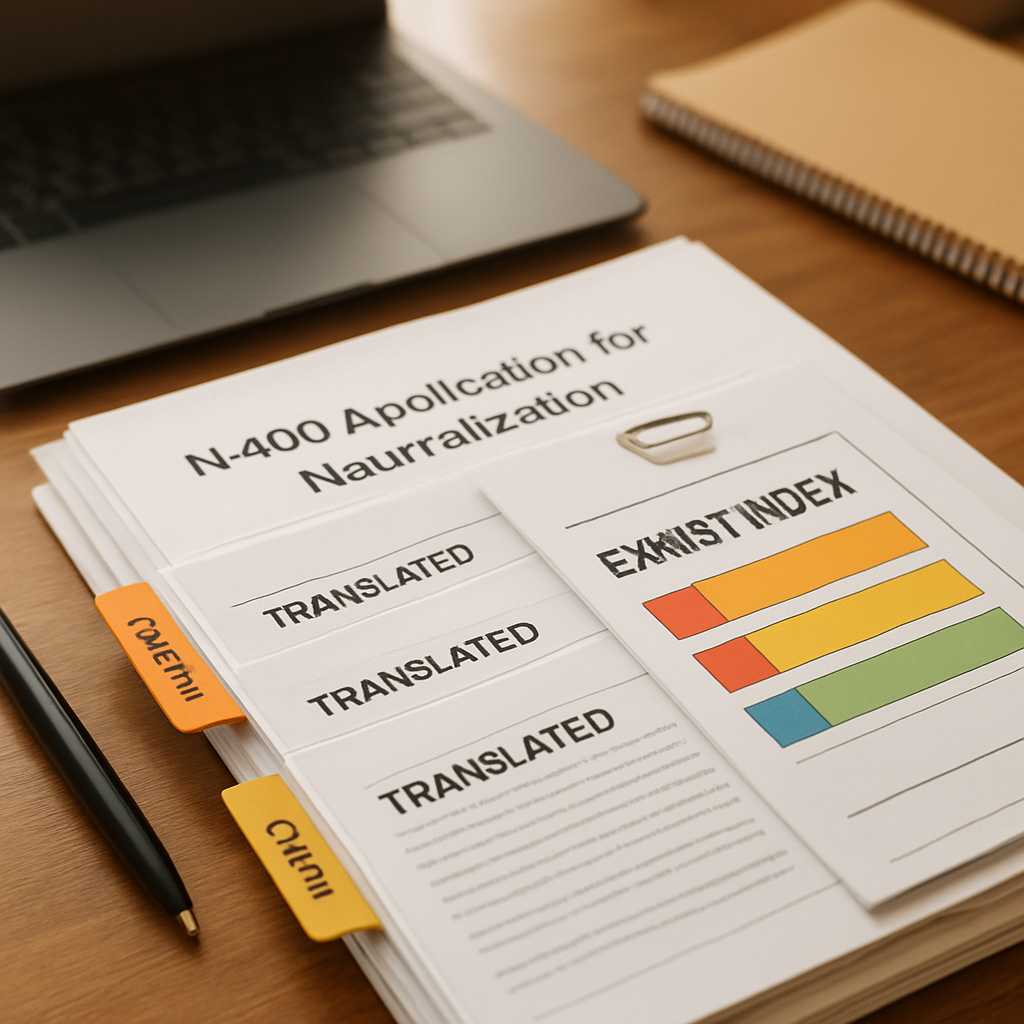
3. Create an Exhibit Index
An exhibit index is a helpful tool that lists all the documents included in your N-400 package. This index should include:
- Document title
- Translation status
- Page numbers
By creating an index, you provide USCIS with a quick reference guide to your documents.
4. Use Clear File Naming Conventions
When saving your documents, use clear and descriptive file names. For example:
- “John_Doe_Birth_Certificate_Translation.pdf”
- “John_Doe_Marriage_Certificate_Translation.pdf”
This practice helps maintain organization and makes it easier for USCIS to locate specific documents.
5. Merge PDF Files for Submission
To streamline the submission process, consider merging your translated documents into a single PDF file. This can be done using various PDF merging tools available online. Ensure that the merged file maintains the correct order as per your exhibit index.
6. Use Binder Tabs for Physical Submissions
If you are submitting a physical copy of your N-400 package, use binder tabs to separate each section of your application. Label each tab clearly to correspond with your exhibit index, making it easy for USCIS to navigate through your documents.
7. Place the Translation Certificate Appropriately
The translation certificate should be placed at the beginning of each translated document. This ensures that USCIS officials can quickly verify the authenticity of the translations.
Common Mistakes to Avoid
When organizing your translated exhibits, be mindful of the following common mistakes:
- Submitting unverified translations
- Failing to include an exhibit index
- Using unclear file names
- Not following the correct order of documents
Conclusion
Organizing translated exhibits for your N-400 package is a critical step in the citizenship application process. By following these guidelines, you can ensure that your application is clear, organized, and compliant with USCIS requirements. For more information on certified translations, visit our About Us page.
FAQs
What is an exhibit index for N-400?
An exhibit index is a list of all documents included in your N-400 application, helping USCIS navigate your submission easily.
How should I name my translated documents?
Use clear and descriptive file names that include the document type and your name, such as “John_Doe_Birth_Certificate_Translation.pdf”.
Do I need a translation certificate for my documents?
Yes, a translation certificate is required to verify the accuracy of your translations for USCIS.
Can I merge my PDF files for submission?
Yes, merging your PDF files into a single document can help streamline the submission process.
What should I do if I make a mistake in my application?
If you notice a mistake, correct it as soon as possible and ensure that the corrected document is included in your submission.
