
If you need to translate an Arabic visa to English, the safest approach is to get a full, certified human translation that mirrors the original document clearly and completely. For immigration, consular, academic, legal, or employer-related submissions, even a small omission can create delays. A visa translation is not just about converting words from Arabic into English. It is about preserving names, dates, passport references, visa classes, issue details, stamps, handwritten notes, and official markings in a way that makes sense to the receiving authority.
At USCIS Official Translation, we regularly help clients translate Arabic immigration and identity documents into clear, submission-ready English. If your file needs formal certification, fast turnaround, and careful formatting, you can start your order here.
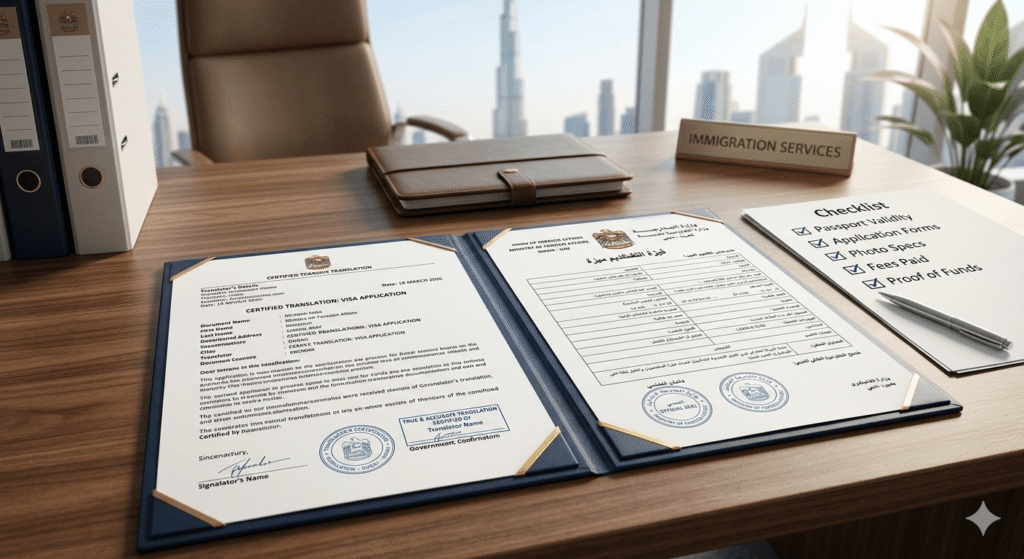
When an Arabic Visa Translation Is Needed
An Arabic visa may need to be translated into English for many reasons, including:
- USCIS filings and supporting evidence
- Consular or embassy applications
- Adjustment of status or immigrant visa processing
- Family-based immigration cases
- Employment verification or HR onboarding
- University admissions and international enrolment
- Court, legal, or notarial use
- Licensing, compliance, or background checks
In many cases, the visa itself is not the only page that matters. Supporting pages may also need translation, such as:
- Passport pages showing visa placement
- Entry and exit stamps
- Residence permit pages
- ID cards linked to the same immigration history
- Accompanying Arabic annotations or endorsements
What “Translate Arabic Visa to English” Really Means
A proper Arabic visa translation should do more than provide a rough English version of the main text. It should capture the full visible content of the document in a structured and readable way.
That usually includes:
- Visa holder name
- Passport number
- Nationality
- Date of birth
- Visa number
- Visa category or type
- Date of issue
- Date of expiry
- Place of issue
- Official remarks
- Stamps, seals, and endorsements
- Handwritten notes, where legible
If the original contains bilingual elements, only the non-English content may need translation in some situations. But where the English is incomplete, inconsistent, or unclear, a full reviewed translation is often the safer choice.
What Makes a Visa Translation Acceptable
For official use, a translation should be:
Complete
Nothing important should be skipped. That includes side notes, stamp text, marginal remarks, and partial handwritten entries if they are legible.
Accurate
The translation should reflect the original meaning, not paraphrase it. Visa categories, government terminology, and date formats need particular care.
Readable
Authorities should be able to compare the original and the translation easily. A clean layout matters.
Certified When Required
For many immigration-related uses, the English translation should be accompanied by a signed certification confirming that the translation is complete and accurate.
If your document is part of a U.S. immigration matter, read our USCIS translation requirements guide before submitting anything.
Can You Translate an Arabic Visa Yourself?
Technically, people often ask whether they can translate their own document. In practice, that is rarely the best option for a visa document.
A self-prepared translation can create problems such as:
- Inconsistent spelling of Arabic names
- Missing stamp text
- Incorrect visa terminology
- No formal certification
- Formatting that looks informal or incomplete
- Questions about neutrality or credibility
For a document tied to immigration history, travel status, residency, or lawful entry, it is better to use a professional human translator who understands official document formatting and certification standards.
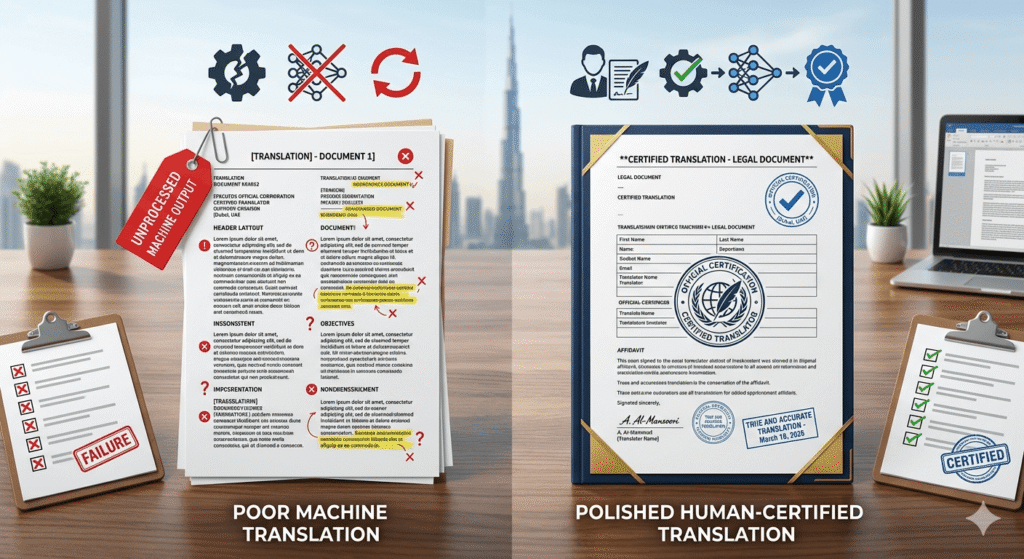
Why Machine Translation Is Risky for Visa Documents
Free tools can be useful for rough understanding, but they are not ideal for an official Arabic visa translation.
Common problems include:
- Poor handling of official titles
- Wrong interpretation of abbreviations
- Misreading transliterated names
- Confusion between Hijri and Gregorian date references
- Loss of stamp or seal context
- No signed certification
- No accountability if the result is challenged
Arabic documents also vary by country and issuing authority. A phrase on a Saudi, UAE, Egyptian, Jordanian, Iraqi, Moroccan, or Syrian visa may not be presented in exactly the same way. That is why document context matters, not just dictionary meaning.
For help from linguists who handle Arabic official documents regularly, see our Arabic translators page.
How to Translate an Arabic Visa to English Properly
Here is the simplest way to get it done correctly.
1. Scan or photograph the document clearly
Make sure:
- All four corners are visible
- Nothing is cropped
- Stamps are readable
- The image is not blurred
- Lighting does not hide seals or text
A flat scan is best, but a high-quality phone photo can also work for many documents.
2. Include any related pages
If the visa appears inside a passport, include the relevant passport page and any nearby stamps or annotations that may affect interpretation.
3. Tell the translator how the document will be used
This helps determine the right format and certification style. For example:
- USCIS
- U.S. consular processing
- University submission
- Employment file
- Court use
- General record keeping
4. Request a certified English translation if needed
For immigration and other formal submissions, certification is often the safest route.
5. Review spelling of names carefully
Arabic-to-English transliteration can vary. Your translation should match your supporting documents wherever possible, especially for:
- Passport spelling
- Birth certificate spelling
- Marriage certificate spelling
- USCIS forms
- Visa application records
6. Keep the final file with the original
When you submit the translation, keep the original Arabic document and the certified English translation together as one evidence set.
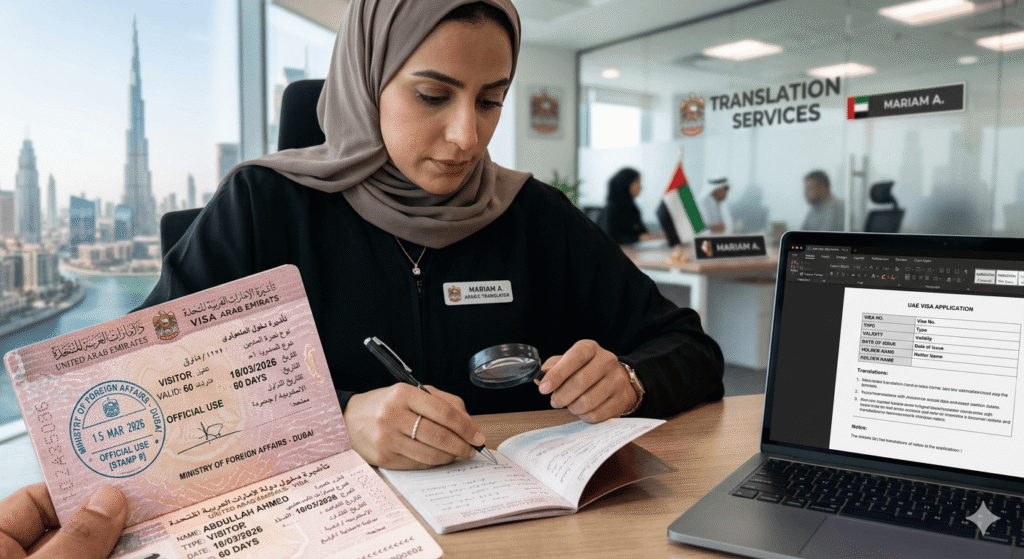
What a Good Arabic Visa Translation Should Look Like
A strong final translation usually includes:
- A clear heading identifying the document
- Line-by-line or block-by-block English rendering
- Notes for stamps, seals, signatures, or illegible parts
- Consistent spelling throughout
- Logical formatting that reflects the original
- A certification statement where required
It should not look like a casual typed summary. It should look like a formal document prepared for official review.
Common Mistakes That Cause Delays
Many avoidable issues come from small details. The most common ones include:
Missing stamp translations
A visa page may look simple, but the stamp text can contain key details about validity, authority, or entry status.
Inconsistent name spelling
One version of a surname on the visa and another on the translation can trigger questions.
Partial translation only
Some people translate only the main visa line and leave out remarks, issue authority text, or handwritten notes.
No certification
Even a good translation may not help if the receiving authority expects certification and it is missing.
Unclear file images
If the document image is cropped, shadowed, or low resolution, the translation may be incomplete or delayed.
Arabic Visa Translation for USCIS Cases
If your Arabic visa is being submitted with a USCIS application, the document should be prepared with care. Immigration files often depend on consistency across multiple documents. Your visa may need to align with other translated records such as:
- Birth certificates
- Marriage certificates
- Police certificates
- Passports
- Divorce documents
- Academic records
- Travel history evidence
If you are building a full immigration evidence package, you may also find these resources useful:
- USCIS certified translation services
- USCIS translation requirements
- How do I translate my birth certificate to English?
- Can I get a translator for a US visa interview?
Arabic Visa Translation Example: What Needs Attention
Imagine an Arabic visa page that includes:
- Main visa title in Arabic
- Sponsor or authority details
- A handwritten file number
- An entry stamp over printed text
- Expiry date in numeric format
- Place of issue in Arabic only
A weak translation may render only the visible title and expiry date.
A proper translation will also identify:
- The issuing authority
- The handwritten reference, if legible
- The stamp text
- The proper date format
- Whether any text is partially obscured
- Notes such as “[Official stamp: Entry permitted]” or “[Handwritten note illegible]” where appropriate
That level of care is what makes the document usable.
How Long Does It Take?
Turnaround depends on:
- Document quality
- Number of pages
- Whether stamps and handwritten notes are extensive
- Whether certification is needed urgently
- Whether other Arabic supporting documents are included in the same order
For short civil or visa documents, a fast professional service can often deliver quickly. If your case is time-sensitive, upload the file first so the document can be checked properly rather than guessing from a description alone.
What to Check Before You Submit
Before sending your Arabic visa translation to an authority, review this checklist:
- Original document is clear and complete
- English translation matches the full visible content
- Names are consistent with passport and forms
- Dates are accurate
- Stamps and seals are addressed
- Certification is included if needed
- Final PDF is readable and professional
This final review can save far more time than correcting a rejected submission later.
Why Clients Choose a Human Arabic Translation Service
When the document affects travel history, immigration, employment, education, or legal status, people usually want three things:
- Accuracy they can trust
- A final file that looks professional
- A process that is fast and straightforward
That is why clients often choose a specialist service rather than a general tool. A visa translation is a small document, but it can play a big role in a much larger application.
If your Arabic visa needs to be translated into English now, upload your document here and we will review it for the right certification and turnaround. For wider Arabic document support, you can also speak with our Arabic translators.
Frequently Asked Questions
How do I translate an Arabic visa to English for USCIS?
The safest method is to use a professional human translator and request a certified English translation. The translation should include all visible Arabic text, relevant stamps, notes, and identifying details.
Does an Arabic visa translation need to be certified?
For many immigration and official uses, yes. A certified translation is usually the best choice because it confirms that the English version is complete and accurate.
Can I use Google Translate for an Arabic visa document?
It may help you understand the document informally, but it is not a reliable solution for official submission. It does not provide certification and may miss important context, formatting, or stamp content.
What if my Arabic visa has stamps and handwritten notes?
Those should be addressed in the translation wherever they are legible. Official marks, annotations, and endorsements can carry important meaning and should not be ignored.
How much does Arabic visa translation cost?
Pricing depends on the document itself, the number of pages, the quality of the scan, and whether certification or rush delivery is required. The quickest way to get an exact answer is to upload the file for review.
Can you translate other Arabic immigration documents too?
Yes. In addition to visas, many clients request translation of passports, residence permits, police certificates, birth certificates, marriage certificates, academic records, and court documents.
