
If you need to submit a marriage certificate for immigration, a visa application, or another official process in the United States, the document usually cannot be filed in its original language alone. You need a complete English translation with the correct certification wording.
This guide explains exactly how to translate a marriage certificate to English, what must be included, what people get wrong, and how to avoid delays.
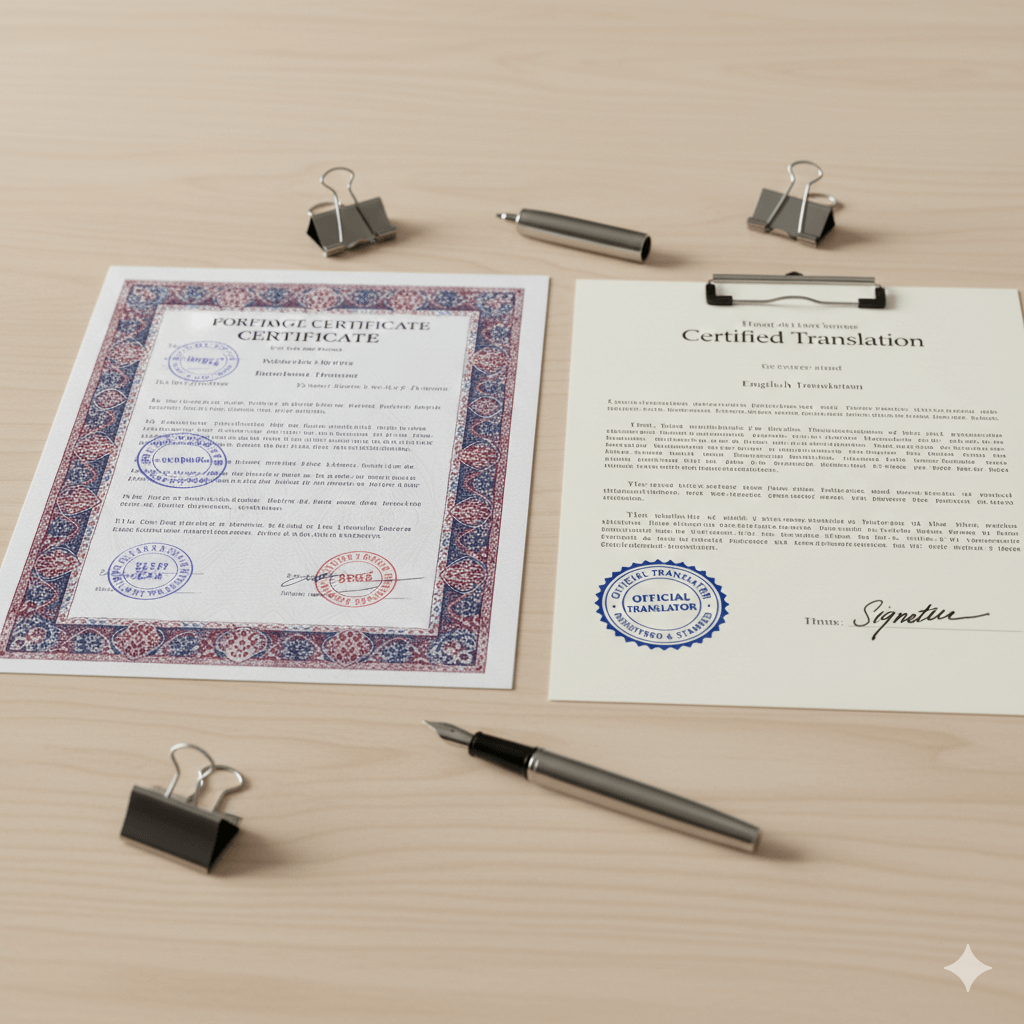
The quick answer
To translate a marriage certificate to English correctly, you need to:
- Use a clear copy of the original certificate
- Translate the entire document (not just the main text)
- Keep names, dates, and places exactly as shown
- Include stamps, seals, signatures, and handwritten notes
- Add a signed translator certification stating the translation is complete, accurate, and done by a competent translator
- Submit the original-language document and the English translation together
That is the part most people miss: the certification statement is not optional.
When a marriage certificate translation is required
You may need a certified English translation of your marriage certificate for:
- USCIS immigration filings
- National Visa Center and consular processing
- Family-based petitions
- Adjustment of status applications
- Green card interviews
- Court or legal proceedings
- Name change matters
- University, employer, or insurance requests
If your certificate is not in English, do not wait until the last minute. Translation issues often cause avoidable delays because they are easy to spot and easy for officers to flag.
What the rule means in plain English
For USCIS filings, the rule is straightforward: a foreign-language document must be submitted with a full English translation and a translator certification.
In practice, that means your English version should not be a “summary” or a “best effort” note. It must be a complete, document-style translation that mirrors the source record.
What counts as complete
A complete marriage certificate translation should include:
- Document title
- Registration number / certificate number
- Full names of both spouses
- Dates of birth (if shown)
- Place of marriage
- Date of marriage
- Issuing authority details
- Marginal notes / annotations
- Stamps and seals
- Signatures or signature markers
- Any handwritten additions
- Any printed notes on the reverse side (if relevant)
- The translator certification statement
Before you translate your marriage certificate
1. Make sure you have the right version of the certificate
Use the official civil document, not a decorative church certificate or a casual photocopy if a formal registry version exists.
Many countries issue multiple versions of a marriage record. The safest route is the one issued by the official civil registry or recognised government authority.
2. Check if your visa process needs country-specific document rules
For U.S. visa processing (through the National Visa Center or a U.S. consulate), document rules can vary by country. Some countries have specific formats, issuing authorities, or notes in the U.S. visa reciprocity guidance.
If your certificate format is unusual, old, or difficult to read, check the country-specific document guidance before ordering the translation. This can save days later.
3. Prepare a clear scan
A poor scan leads to poor translation outcomes. Before sending your file:
- Scan the full page
- Keep all edges visible
- Avoid shadows or glare
- Use high resolution
- Include both sides if there is text, stamps, or notes on the back
If the document is folded, flattened scans are much easier to read than phone photos with creases.
Step by step guide to translate a marriage certificate to English
Step 1: Choose an independent translator or professional service
The safest option is to use an independent translator or a professional translation service familiar with immigration paperwork.
Why this matters:
- They know how to format official records
- They know how to handle seals and annotations
- They include the correct certification wording
- They reduce the risk of missing details that trigger a request for more evidence
Even when someone is fluent, official document translation is not just about language. It is also about format, completeness, and certification.
Step 2: Send the source document and filing context
When you upload the certificate, include a short note such as:
- “USCIS marriage-based filing”
- “NVC immigrant visa submission”
- “Court use in the US”
- “General legal use”
This helps the translator prepare the correct certification style and flag anything unusual (for example, handwritten notes, regional abbreviations, or unclear seals).
Step 3: Request a full document-style translation
Ask for a full certified translation, not just “translation of the names and date”.
Your translation should follow the original layout as closely as practical. It does not need to be a visual copy, but it should preserve the same order and structure so an officer can compare the two documents easily.
Good format practice
- Keep field labels aligned with the source
- Preserve the original sequence
- Show section headers
- Use bracketed notes for seals/stamps
- Keep the same spelling of names as printed on the source
- Write dates clearly (for example,
12 March 2021)
Step 4: Check names, dates, and numbers twice
This is where many rejections or delays begin.
Review these items carefully before submitting:
- Spelling of both spouses’ names
- Date of marriage
- Registration number
- Place names
- Parent names (if shown)
- IDs or national numbers (if shown)
- Any marginal annotations (divorce, correction, reissue notes)
If the translation differs from your passport spelling or another USCIS form, fix the inconsistency before filing or add an explanation.
Step 5: Make sure the translator certification is included
A marriage certificate translation for immigration should include a signed certification from the translator (or translation company representative, depending on workflow).
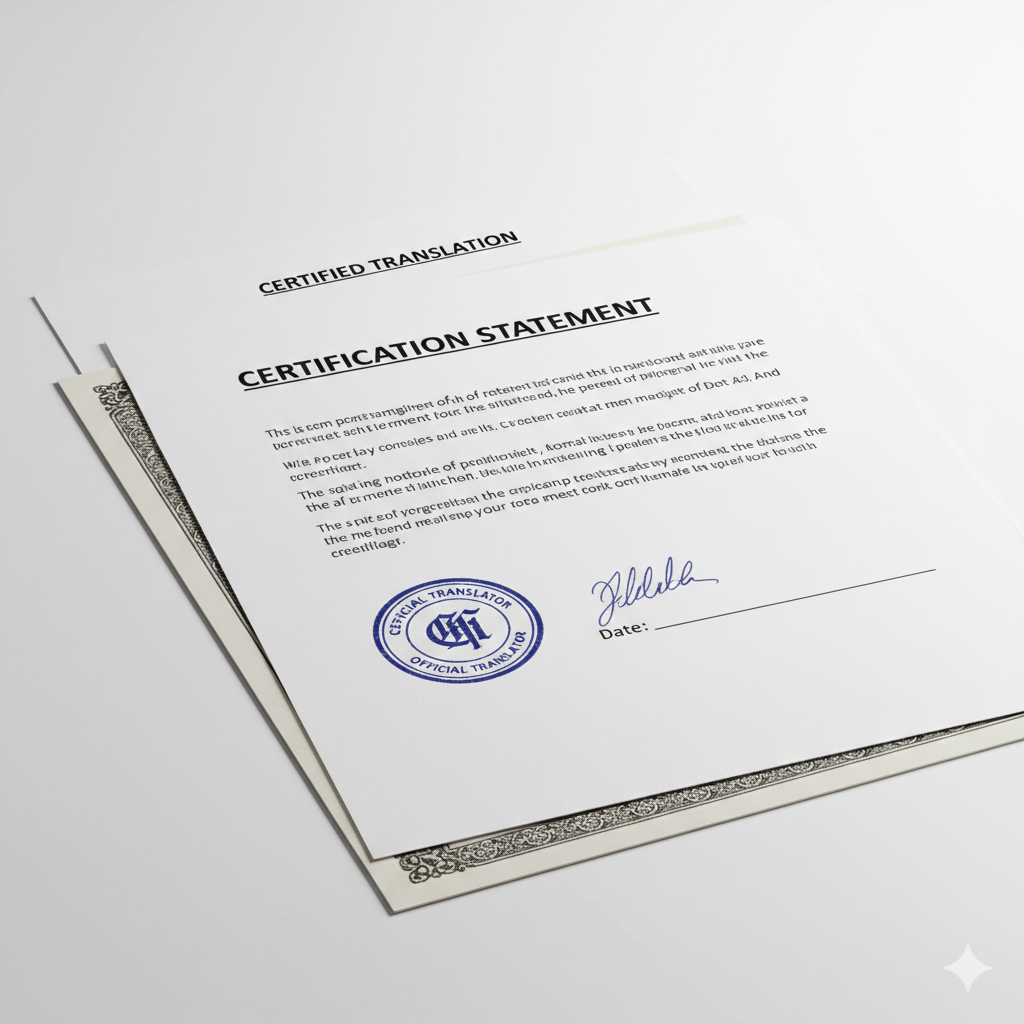
Sample translator certification wording
Certificate of Translation Accuracy
I, [Translator Full Name], certify that I am competent to translate from [Source Language] into English, and that the attached translation of the marriage certificate is complete and accurate to the best of my knowledge and ability.
Translator name: [Name]
Signature: [Signature]
Date: [Date]
Contact details: [Email / Phone]
This wording can be adapted slightly, but the key points must stay there:
- Translator competence
- Completeness
- Accuracy
- Signature
- Date
Step 6: Keep the source and translation together
Do not submit the translation alone.
For USCIS or visa filing, the translation should be attached to the original-language document (or the copy you are submitting), so the reviewer can compare both.
A simple order works well:
- Original marriage certificate copy
- English translation
- Translator certification statement (if placed on a separate page)
Step 7: Do a final pre-submission check
Use this quick checklist before filing:
- Full document translated
- No missing lines, notes, or stamps
- Names and dates match the source
- Certification statement included
- Signature and date included
- Clear scan of original attached
- File is legible after uploading
- Same document version used across your whole case
This two-minute check prevents the most common translation-related delays.

What a marriage certificate translation should look like
A strong translation is easy to compare against the original. It is not “creative writing” and it is not a loose summary.
Example of how details should be handled
- Source heading:
Acta de Matrimonio
Translation:Marriage Certificate - Stamp visible but unclear text:
Translation note:[Stamp: Circular civil registry seal, text partially illegible] - Handwritten registrar signature:
Translation note:[Signature of Registrar] - Marginal note about correction or reissue:
Translate the note in full, even if it seems unimportant.
Those “small” details often matter because officers use them to confirm authenticity and document history.
Certified translation and notarised translation are not the same thing
A lot of applicants get stuck here.
Certified translation
This is the translation plus the translator’s signed statement confirming competence, completeness, and accuracy.
Notarised translation
This usually means a notary verifies the identity/signature of the person signing the certification. The notary does not verify the language accuracy.
For USCIS, notarisation is generally not required unless another authority in your case specifically asks for it. If you are reusing the same translation for another country, consulate, or court, check their rules separately.
Can you translate your own marriage certificate
This is one of the most searched questions, and it causes a lot of confusion.
The safest answer is: use an independent translator.
Why:
- Self-translation can raise credibility concerns
- It increases the risk of formatting or certification mistakes
- It is harder to maintain consistency across multiple immigration documents
- If your certificate has stamps, handwritten text, or legal terminology, errors are more likely
If your case is important (and immigration cases usually are), this is not the place to cut corners.
Common mistakes that cause delays
1. Translating only the “important parts”
Officers decide what is important, not the applicant. Translate the whole document.
2. Missing seals, stamps, or annotations
A marriage certificate may look simple, but side notes, registry marks, and seals often carry legal meaning.
3. Using inconsistent name spellings
If your passport says one spelling and the translation uses another, your case may be flagged for clarification.
4. Forgetting the certification statement
This is one of the most common mistakes and one of the easiest to prevent.
5. Using poor scans
If the original is unreadable, the translation may include too many illegible markers, which weakens the file.
6. Mixing requirements from different authorities
USCIS, NVC, consulates, courts, and universities may use different wording or certification expectations. Confirm the destination requirement first, then order the translation.
A practical example you can follow
Imagine you are filing a marriage-based immigration case and your certificate is in Spanish.
A safe, low-risk workflow looks like this:
- Obtain the official civil registry marriage certificate
- Check the country document guidance if you are in consular processing
- Scan both sides clearly
- Order a certified English translation
- Review names, dates, and registry numbers against your forms
- Confirm the translator certification is signed and dated
- Submit the original-language copy and translation together
That is the process most applicants should follow, regardless of language.
A stronger submission strategy if you have multiple family documents
If you are filing a packet with a marriage certificate plus birth certificates, divorce decrees, or police records, use one provider for all translations when possible.
This improves:
- Name consistency across documents
- Date formatting consistency
- Certification formatting
- Turnaround coordination
- File naming and organisation
It also makes your final packet easier to review.
Ready to submit without translation-related delays
If you want a USCIS-ready result, use a service that handles immigration documents every day and includes a signed Certificate of Accuracy with the translation.
USCIS Official Translation specialises in this workflow and supports applicants with:
- Document-style certified translations
- Clear formatting for certificates and registry records
- Fast turnaround options
- Secure handling of personal documents
If your marriage certificate is ready, upload your file and get it checked before you submit your case. A clean translation now is much easier than fixing a delay later.
Trust and filing confidence
When choosing a provider, look for practical signals:
- A clear Certificate of Accuracy included
- Immigration-focused document experience
- Transparent pricing
- Secure document handling
- A published contact page and support details
- Consistent guidance on certified vs notarised translations
If any of those are missing, keep looking.
Frequently asked questions
How do I translate a marriage certificate to English for USCIS
Use a full English translation of the entire certificate and include a signed translator certification confirming competence, completeness, and accuracy. Submit the original-language document and translation together.
Does USCIS require a certified translation for a marriage certificate
Yes. If the marriage certificate is in a foreign language, USCIS expects a full English translation with the translator’s certification. A summary or partial translation is not enough.
Can I translate my own marriage certificate to English
It is strongly recommended to use an independent translator or a professional service. Self-translation can create credibility and formatting issues, especially in immigration filings.
Does a marriage certificate translation need notarisation
Usually not for USCIS. A certified translation is typically what is required. Notarisation may be needed only if another authority in your case specifically requests it.
What should be included in a certified marriage certificate translation
The translation should include all visible content on the source document, including names, dates, registry details, stamps, seals, signatures, annotations, and a signed translator certification statement.
How long does it take to translate a marriage certificate to English
Turnaround depends on provider capacity and document quality, but standard marriage certificate translations are often completed quickly. Rush options may be available if your filing deadline is close.
