
If you’re staring at a foreign-language birth certificate and thinking, “I can translate this myself,” you’re not alone. It feels straightforward—until you realise immigration and government filings don’t just want “an English version.” They want a translation that is complete, properly certified, and credible.
Here’s the practical answer most applicants need:
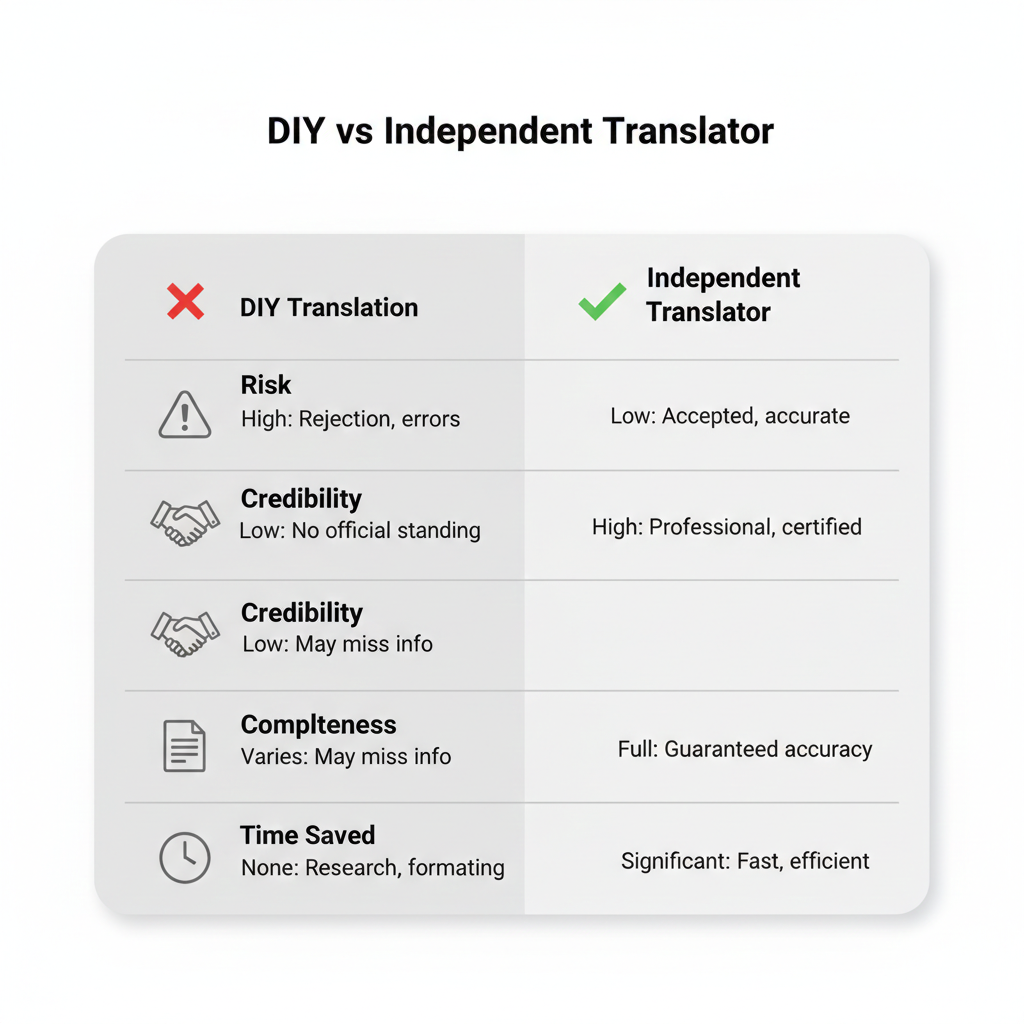
- If you’re filing, translating your own birth certificate is a high-risk choice even if you’re bilingual.
- The safer approach is to have an independent translator (not you, not the petitioner/beneficiary) produce the translation and sign a proper certification.
This guide breaks down what “certified” really means, when a DIY approach goes wrong, and exactly how to do it safely—without delays, awkward follow-ups, or a request to redo everything.
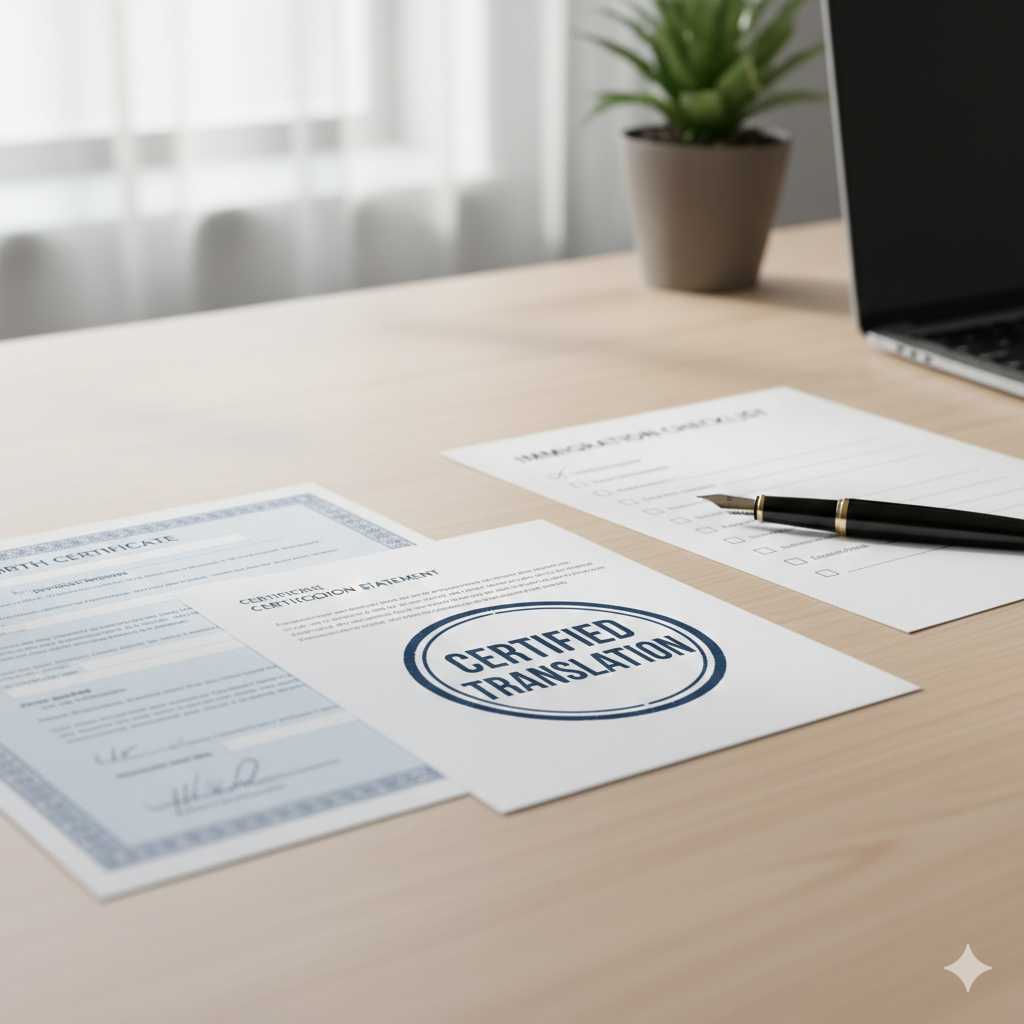
What “certified translation” actually means
A “certified translation” (for immigration and many official uses) usually means two things:
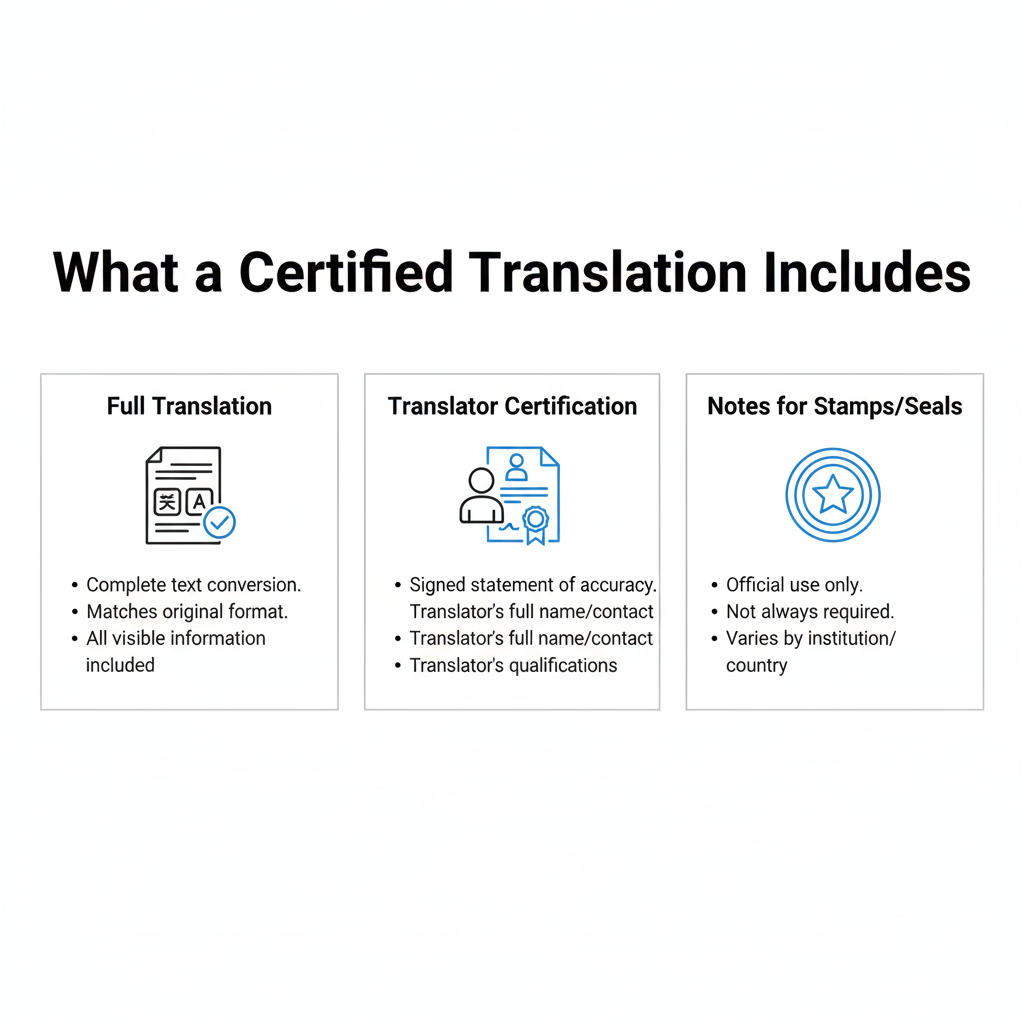
- A full English translation of everything on the document
- A signed certification statement from the translator confirming:
- the translation is complete and accurate, and
- the translator is competent in both languages
“Everything” means everything
Birth certificates often contain details people forget to translate, including:
- stamps and seals
- marginal notes (annotations in the margins)
- handwritten remarks
- registration numbers
- issuing authority lines
- reverse-side text (some countries print notes on the back)
- multi-page attachments or apostilles bundled with the record
A missing stamp note or an untranslated margin remark can create doubt about completeness—even when the main names and dates look correct.
Can you translate your own birth certificate?
The technical vs practical reality
Some people interpret the rules as: “If I’m competent, I can translate it.” In practice, self-translation creates credibility issues because you’re not an independent party. Officers and clerks are trained to look for conflicts of interest and document reliability. Even when the wording doesn’t explicitly say “you can’t,” the outcome you care about is acceptance without delays.
When self-translation tends to backfire
Self-translation commonly causes problems when:
- you are the applicant/petitioner/beneficiary
- the certificate contains stamps, handwritten notes, or local legal phrasing
- names don’t match across documents (spelling, order, diacritics)
- the certificate format is unfamiliar (registry extracts, family books, long-form civil records)
- you need the translation quickly and cut corners on formatting or completeness
Translation is rarely rejected because your English is “not good enough.”
It’s usually questioned because something looks incomplete, uncertified, inconsistent, or conflicted.
The safer alternatives that still keep things simple
Option A: Independent professional translator
This is the cleanest route: a qualified translator prepares the translation and signs the certification.
Option B: A bilingual friend (with strict rules)
This can work only if the friend is genuinely competent and willing to sign a proper certification with their real details.
However, it becomes risky if:
- the friend is a close relative, household member, or otherwise connected to the case
- they won’t include full contact details
- they aren’t comfortable translating stamps/notes precisely
- they “clean up” phrasing instead of translating literally
If you choose this option, treat it like an official job, not a favour.
Option C: You prepare a draft, an independent translator finalises and certifies
This is a smart compromise when you’re confident about the language but want the credibility of an independent signer.
You can:
- draft your version
- provide a glossary of names/places
- attach notes on unclear handwriting
Then the translator verifies, corrects, formats, and certifies the final version.
A quick decision guide: DIY or professional?
Ask yourself these five questions:
- Is this for immigration or a government filing?
- Is the certificate anything other than a clean, typed, single-page record?
- Does it contain stamps, handwritten notes, marginal text, or abbreviations?
- Do your names/places vary across documents (spelling/diacritics/order)?
- Would a delay cost you time, fees, or a missed deadline?
If you answered “yes” to two or more, professional translation is usually the cheapest option in total cost (because it reduces redo risk).
How to do a birth certificate translation properly (step-by-step)
Even if you hire a professional, knowing the process helps you spot errors before you submit.
Step 1: Use the correct version of the certificate
Many countries issue:
- short form vs long form
- registry extract vs full record
- multilingual extracts with extra notes
Step 2: Scan it clearly
Make sure:
- all edges are visible
- stamps and embossing are readable
- the file isn’t blurry or cut off
- multi-page records are in order
Step 3: Translate line-by-line (don’t rewrite)
A strong official translation is usually:
- literal where possible
- faithful to formatting (tables, headings, fields)
- clear about what is printed vs handwritten
- consistent in how it treats names and places
Step 4: Bracket non-text elements
For stamps, seals, logos, signatures, and handwriting, use bracketed notes like:
- [Round stamp: Civil Registry Office, City Name]
- [Illegible signature]
- [Embossed seal]
Step 5: Add a proper certification statement
A certification should be signed and dated by the translator, with identifying details.
Here is a clean sample you can adapt:
Translator’s Certification
I, [Translator Full Name], certify that I am fluent (competent) in English and [Source Language], and that the above translation is a complete and accurate translation of the attached document.
Signature: ____________________
Name: [Translator Full Name]
Date: [DD/MM/YYYY or Month DD, YYYY]
Address: [Translator Address]
Phone/Email: [Translator Contact]
The most common birth certificate translation mistakes
These are the issues that most often trigger questions, redo requests, or delays:
1) Missing stamps, seals, or marginal notes
If it’s on the document, it should appear in the translation (as text or bracketed description).
2) “Correcting” the document instead of translating it
If the certificate contains a misspelling or unusual phrasing, the translation should reflect it—not fix it. If clarification is needed, add a translator note.
3) Inconsistent names across documents
Birth certificates often need to align with passports, marriage certificates, and ID documents.
A good translation handles:
- multiple surnames
- patronymics
- diacritics
- name order differences
- transliteration choices for non-Latin scripts
4) Dates and locations formatted incorrectly
Many countries use different date orders. Keep the original meaning clear.
5) No certification, or a weak certification
A missing signature/date/contact detail is a common reason translations get questioned.
Certified vs notarised vs sworn: what you might actually need
People often ask for notarisation because it “sounds more official.” It can help in some situations—but it’s not always required.
- Certified translation: typically required for many official submissions
- Notarised translation: sometimes requested by courts, schools, or specific agencies
- Sworn translation: relevant in certain countries/consular contexts where sworn translators are a formal legal category
What to submit with your translation package
A solid submission set usually includes:
- a clear copy of the original birth certificate (all pages)
- the full English translation
- the signed translator certification
- any attachments bundled with the record (apostille pages, registry notes, annex pages)
Before you file, use this quick checklist:
- All stamps/seals described
- All handwritten notes included or described
- Names consistent with passport spelling (or explained)
- Dates unambiguous (day/month clarified if needed)
- Certification signed + dated + identifies translator
- Multi-page order preserved
A practical “low-stress” way to handle this
If you want the simplest path with the least risk:
- Upload a clear scan
- Receive a fixed, upfront quote
- Get a certified translation with a compliant certification page
- Review spellings once (names, places, dates)
- Submit confidently
FAQ
Can I translate my birth certificate myself for USCIS?
It’s a risky choice. Even if you’re bilingual, self-translation can raise credibility concerns. An independent translator who can certify the translation is the safer option.
Can a friend translate my birth certificate for immigration?
Yes, if your friend is truly competent and is willing to sign a proper certification with real identifying details. Avoid close relatives or anyone with a direct stake in the case.
What must be included in a certified birth certificate translation?
A complete English translation of all text (including stamps and marginal notes) plus a signed certification statement confirming completeness, accuracy, and translator competence.
Do I need notarisation for a birth certificate translation?
Not always. Many immigration filings accept certified translations without notarisation, but some courts, schools, or agencies may request notarisation. Confirm the receiving authority’s requirements.
Can I use machine translation or AI to translate a birth certificate?
Machine translation can help you understand a document, but official submissions typically require a human translator to review, correct, format, and certify the final translation.
How fast can I get a certified birth certificate translation?
Turnaround depends on page count, language, and whether you need rush service. For current options, see pricing and turnaround
