
Introduction
Applying for a US visitor visa (B‑1, B‑2, or combination) can be stressful. Even when you have valid reasons for visiting—be it tourism, visiting family, business conferences—small errors or missing pieces can cause delays that cost you time, money, and peace of mind. One frequent source of delay is improper document translation or certification. In this article, we’ll walk through the most common mistakes that delay US visitor visa applications, with detailed advice on translations, documentation, interview preparation, and more. If you follow these tips, you’ll improve your chance of a smooth application journey.
Understanding the US Visitor Visa
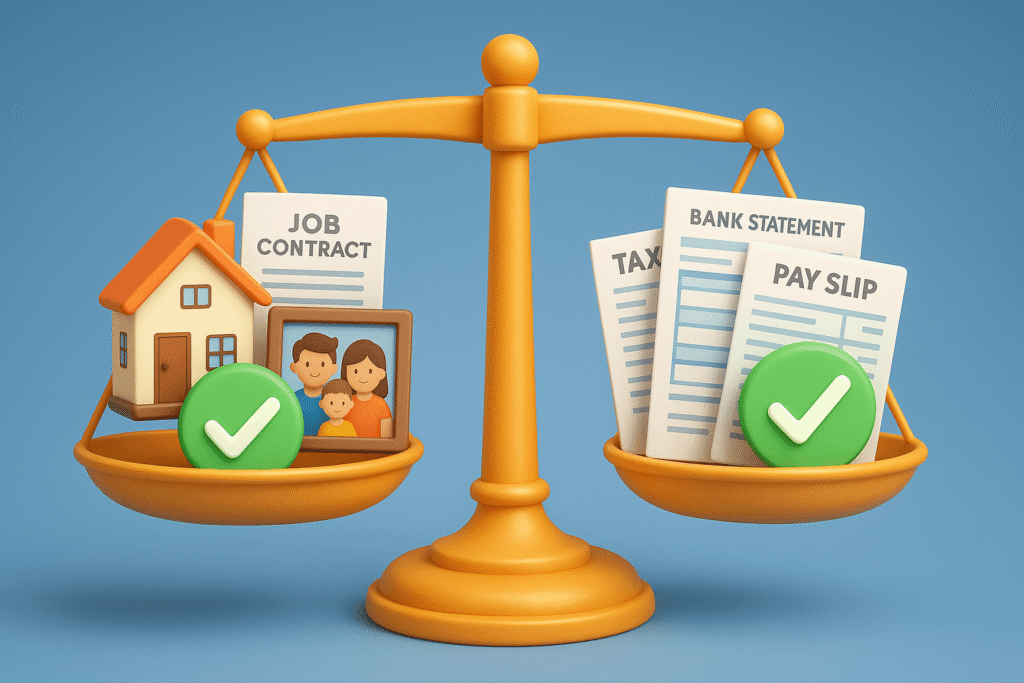
A visitor visa lets you enter the US temporarily for business (B‑1), tourism or medical treatment (B‑2), or a mix of purposes (B‑1/B‑2). It’s nonimmigrant: you must prove you intend to return home. Mistakes often stem from misunderstanding which category fits your purpose, or from failing to make your purpose clear. Visa officers look for evidence of strong home ties (job, family, property), financial ability, and truthful, consistent documentation.
Critical Documents You Need
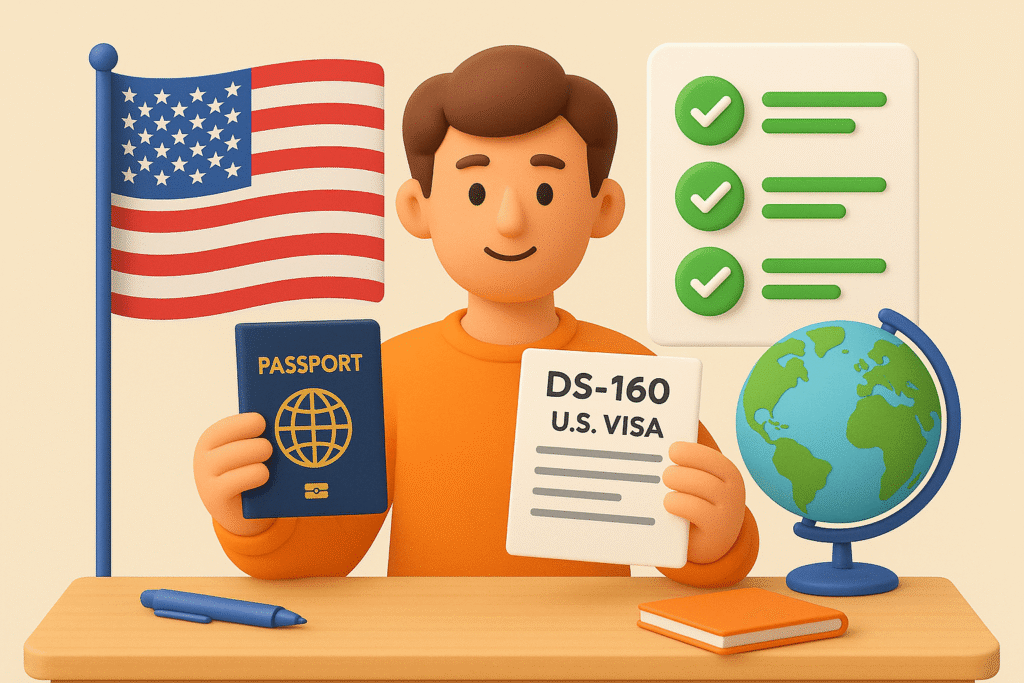
Before digging into common mistakes, it helps to list what documents you’ll typically need. Requirements vary by country and consulate, so always check your local US embassy/consulate website. But generally, you should gather:
- Valid passport (often valid for at least six months beyond planned stay)
- DS‑160 confirmation form
- Visa appointment confirmation & payment receipts
- Passport‑size photos meeting US photo specs
- Evidence of financial capacity (bank statements, pay slips, tax returns)
- Proof of home country ties (employment letters, property deeds, family obligations)
- Travel itinerary or planned schedule (hotels, flights if booked)
- Invitation letters if relevant
- Any previous visas or passports, if applicable
- All non‑English documents translated into English with proper certification
Common Mistakes That Delay US Visitor Visa Applications
Here are the major mistakes people often make, many of which you can avoid with careful preparation.
1. Incomplete or Inaccurate DS‑160 Form Submission
- Typos in names, dates, spellings. Even one letter off (e.g. in your name or passport number) can trigger extra checks.
- Omitting required fields because you’re unsure—leaving blank instead of writing “N/A” or “None” when appropriate.
- Inconsistent answers—if you have documents saying you are self‑employed, but you say “unemployed” in DS‑160, that raises questions.
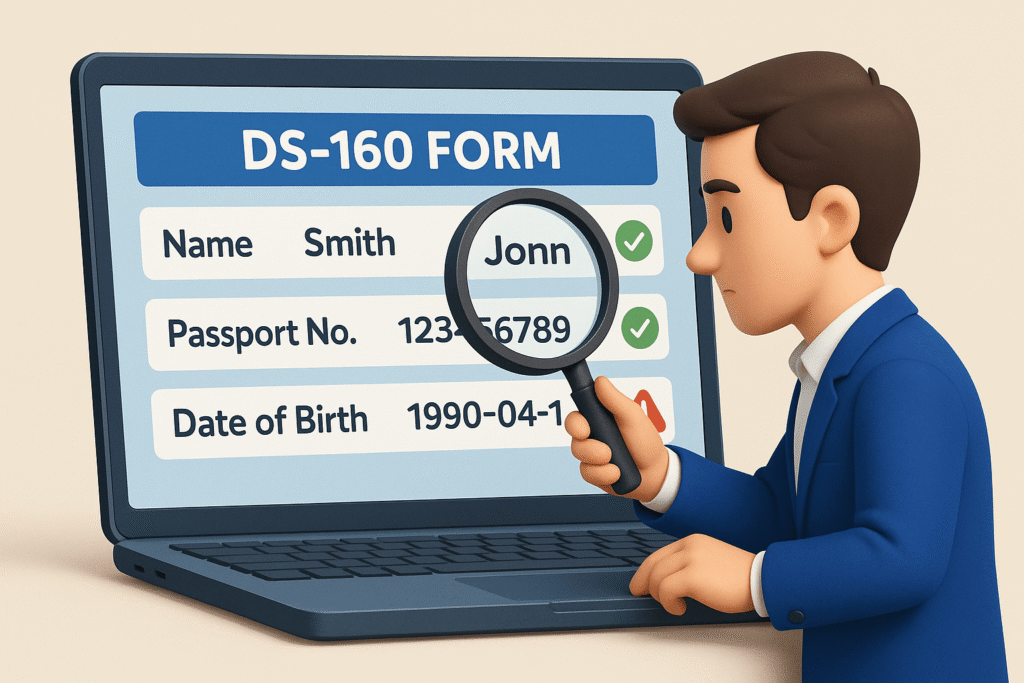
Fix: Fill carefully, cross‑check with your passport and other documents. Save drafts, review before final submit. Keep a copy of the confirmation page.
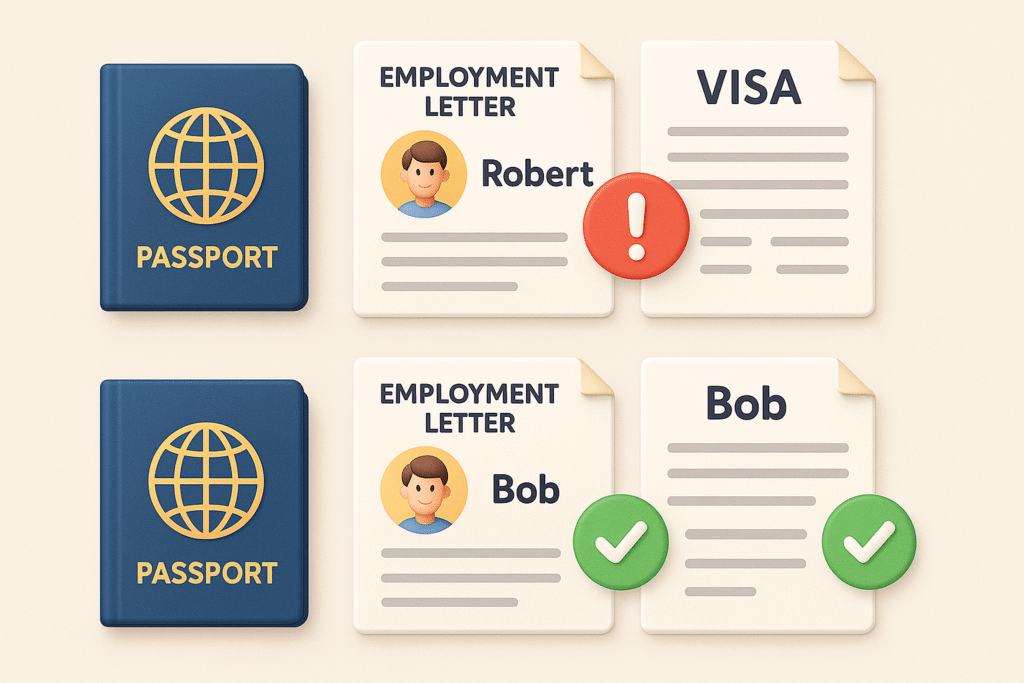
2. Mismatched Information Across Documents
- Differences in names (e.g. “Robert” vs “Bob”, or use of middle names in one document but not in another).
- Job titles not matching what you say in interview vs what’s in your employment letter.
- Dates (birth date, issue/expiry dates on documents) mis‑typed or formatted differently.
Fix: Ensure all documents, including translations, reflect exactly what your DS‑160 and passport show. If a translation changes wording (e.g. translating abbreviations or local job titles), you may need to add a note so it corresponds.
3. Making Evidence of Home Country Ties Weak or Vague
- Relying only on vague statements (“I will return to my family”) without proof.
- No employment letter, or the letter doesn’t state your leave period or that you’ll resume work.
- No proof of property ownership, school enrollment, or other binding obligations.
Fix: Collect formal proof—employment contracts, property deeds, school enrollment, family obligations. If these are non‑English, get translations (see below).
4. Insufficient Financial Evidence
- Submitting bank statements that look volatile (large unexplained deposits, recent opening).
- Not showing consistent income over a sustained period.
- Not showing funds to cover all costs (travel, lodging, return ticket, daily expenses).
Fix: Use statements for last 3‑6 months, include pay slips, tax documents, any sponsor’s letters if someone else is funding. Translate non‑English financial docs properly.
5. Poorly Defined Trip Itinerary / Purpose of Visit
- Saying “tourism” or “visiting” without details: where you’ll go, durations, what you’ll do.
- No or minimal proof of lodging/hotels or internal transport.
- No mention of events you plan to attend if relevant.
Fix: Prepare a day‑by‑day plan or at least a sketch of what cities you’ll visit, approximate dates. If possible, include hotel bookings or estimates. Translate documents like hotel confirmations if not in English.
6. Errors During the Visa Interview
- Being unable to clearly explain your trip, what you’ll do, how you will fund it.
- Contradictory answers—saying something in DS‑160 that you don’t match in interview.
- Nervousness causing you to withhold detail or seem evasive.
Fix: Practice possible interview questions, be honest, concise. Bring all documents (original + translations) so you can show proof. Stay calm and composed.
7. Language Barriers or Document Language Issues
- Documents in your native or another local language without English translation.
- Translations done poorly: grammar mistakes, missing parts, stamps/signatures omitted, or translator info missing.
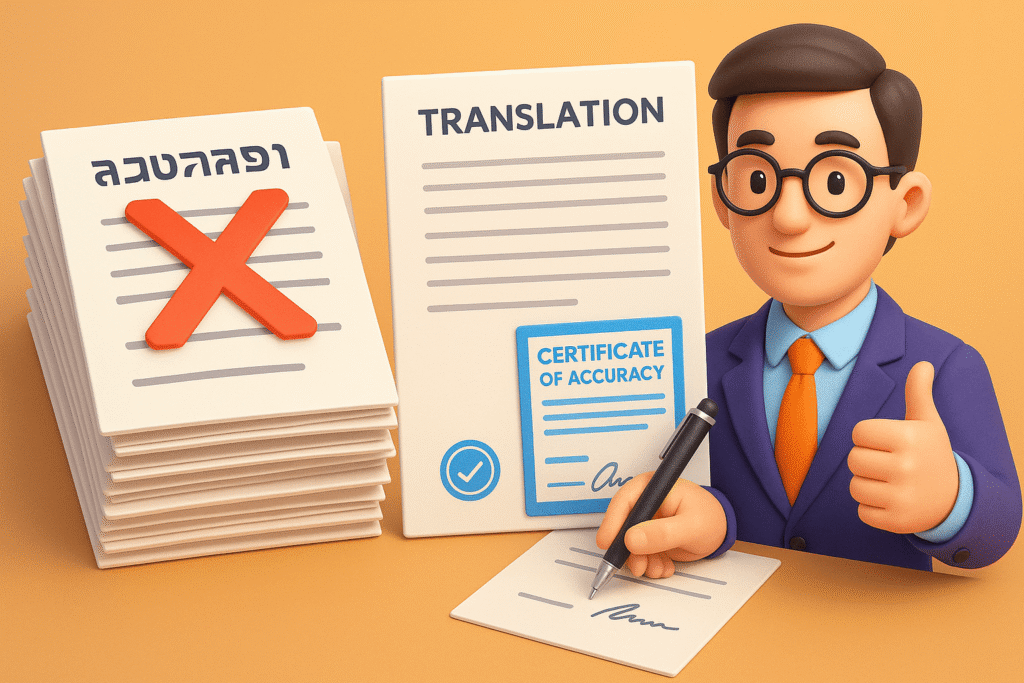
Fix: Translate all non‑English documents and make sure the translation is certified. Include every part of the document: stamps, seals, signatures, side notes. The translator’s name, signature, date, and contact info should be on the certification. Use a reliable professional or agency if possible.
Translation Services & Requirements: What You Must Know
Translation is crucial. Many delays or rejections happen simply because some document wasn’t translated properly, or because the translation didn’t meet the consulate’s standards. Here’s what official resources and experienced firms advise.
What US Government Requires
- The U.S. Department of State says any document in a foreign language submitted to its services (visa, immigration, etc.) must come with a full English translation, certified by the translator to be accurate.
- The translation must include a certification statement: translator certifies they are competent, that the translation is accurate, etc.
- You must bring originals (or certified copies) plus the translations.
What Translation Mistakes Delay Visas
- Using machine translation only, with no human proofing.
- Omitting stamps, seals, signatures, or side notes.
- Leaving the certification letter vague (no date, translator’s info, signature).
- Mismatched formatting: e.g. original doc is multiple pages, but translation has missing pages or reversed order.
- Translated document differs from what’s in other submitted materials (job title, name, date).
How to Choose & Use a Good Translation Service
- Pick a translator/agency experienced in legal or immigration document translation like USCIS Official Translation who specialises in translating immigration documents. They’ll usually know what consulates expect.
- Confirm that they will provide a Certificate of Translation Accuracy, including translator’s full name, signature, contact info, and statement confirming that the translation is accurate and complete.
- Ask if they are familiar with requirements of your local US embassy/consulate (some have extra rules).
- For countries like UAE, legal translators (licensed by Ministry of Justice or equivalent) may be required or helpful.
- Keep both original and translated versions, and ensure they’re clearly labelled.
More Mistakes That Cause Delays (Plus Fixes)
Adding to the ones above, here are other frequent problems that often catch people by surprise.
Incorrect Passport Validity or Problems With the Passport
- Passport expires too soon (some consulates require six months beyond planned return).
- Passport damaged, pages missing, or too many transformations (name changed, old passports, etc.).
Fix: Check validity well before applying. If needed, renew or request new.
Applying in the Wrong Embassy or Consulate Region
- Applying at a US consulate that doesn’t cover your residence or legal status.
- Not knowing which office processes which applications (sometimes different offices cover document authentication, interview, etc.).
Fix: Visit the US embassy/consulate website for your country. Verify your jurisdiction.
Not Being Aware of Processing Times and Peak Delays
- Waiting until last minute. During certain seasons (summer, holidays) appointments fill up.
- Under‑estimating how long translations, document gathering, or scheduling an interview will take.
Fix: Start early—months ahead if possible. Create a timeline working backward from your intended travel date.
Improper Payment of Fees
- Using wrong payment method or currency.
- Not keeping proof of payment or receipts.
Fix: Follow embassy instructions to the letter. Keep receipts, printed confirmations.
A Checklist: What to Do Before Submitting
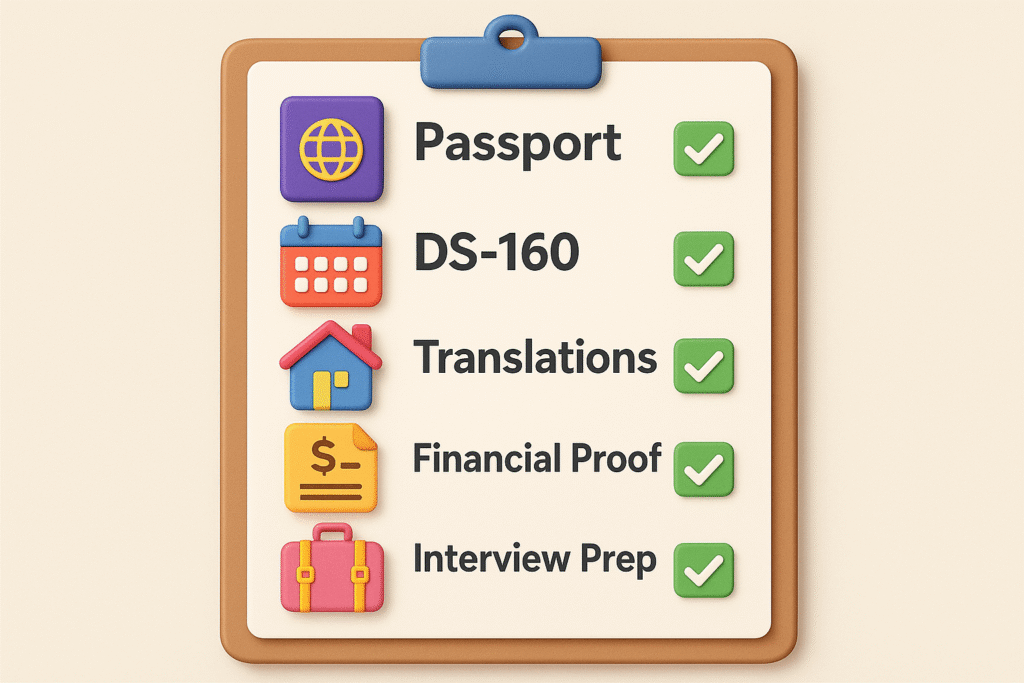
Here’s a checklist you can use to ensure your application likely won’t be delayed. Go through this carefully.
| Item | Action |
| Passport | Valid, undamaged, name matches (no nicknames) |
| DS‑160 | Completed, consistent info, confirmation printout saved |
| All required documents | Originals + copies ready |
| Non‑English documents | Translations prepared, certified, stamped/signed with translator’s info |
| Financial proof | Bank statements, employment letters, sponsor letters if needed |
| Ties to home country | Property, family, job, school etc. |
| Itinerary / Purpose | Detailed and credible |
| Appointment slots | Booked in advance; check visa wait times |
| Interview prep | Know what you’ll say; review your documentation |
| Payment proof | Non‑refundable fee paid, receipts kept |
Real‑World Examples: What Goes Wrong (And How It Was Fixed)
To make it concrete, here are a few true‑to‑life examples (modified) showing how small mistakes led to big delays—and how they could have been avoided.
- Example 1: A student submitted their secondary school transcripts in a local language without translation. The US consulate requested the translation afterward, delaying the application by three weeks. If they had translated at the start and included the certification, that delay would not have occurred.
- Example 2: A traveler’s job title in their employment letter was “Engineer” in their native language, but in their DS‑160 they wrote “Mechanical Engineer.” The translated employment letter used “Engineer.” The mismatch caused questions, needing clarifications and additional documents. Aligning them beforehand avoids that.
- Example 3: A family certificate showing sibling relationships had a seal and stamp; the applicant translated all text but omitted the stamp/embossed seal in translation. The officer asked for an updated translation including the seal detail.
- Example 4: Someone used Google Translate for documents with legal/financial content, without having a human check accuracy. There were mistakes in monetary values and terms, which led to a request for corrected or professionally translated documents.
FAQs
Do all documents not in English need to be translated?
Yes. The U.S. State Department requires any foreign‑language document submitted in visa/immigration processes to be accompanied by a full, certified translation.
Who can provide the translation? Can I translate my own documents?
You or someone you trust can translate, so long as the translator certifies they are competent in both languages, includes name, signature, contact info, and date. But using professional translation services is safer and less likely to cause questions.
Does the translator need to be licensed or certified by a particular authority?
Not always by law—for many visa/immigration purposes, what matters is the translator’s competence and the certification statement. However, some embassies or local jurisdictions may require translations by licensed or officially recognized translators. Always check with the local US consulate.
Do translations need notarization or apostille?
Usually no for translation itself, but in some countries, the originals or the translated document may need additional attestation or legalization. Translations should include a certification statement; notarization may be needed in certain jurisdictions or if specifically required by the consulate.
What is included in a certification statement for translation?
Typically: translator’s full name; statement that the translation is complete & accurate; statement that translator is competent in both languages; translator’s signature; date; and contact details. Some consulates may want the translation agency address or seal.
How much does translation cost and how long does it take?
This varies widely: per page costs depend on language pair, complexity, urgency, and whether notarization or extra services are needed. Turnaround times may range from same day (for simple docs) to several days for long documents or multiple items. Better to allow several days, not hours, especially if you need to review.
Conclusion
Delays in US visitor visa applications often spring from things that seem small—but they matter. Inconsistent information, missing documentation, weak proof of ties, and especially translation errors are among the most avoidable problems. By preparing in advance, using certified translations, being meticulous with every detail, and anticipating what the consulate will check, you greatly reduce the risk of delay or denial.
If I were you, I’d start gathering all documents now, translate anything not in English, double‑check all names/dates/job titles, and book the interview as early as possible. Do all that, and your application stands a much better chance of moving quickly.
