
Cost of Translation Services
Understand how translation pricing works—per page, per word and by project—what affects the final quote, and when each model is used. For qualifying standard certified documents, our published service currently starts from $20.57 per page. If you’re asking “how much does a translator cost?” or comparing document translation prices, this guide explains the main cost factors.
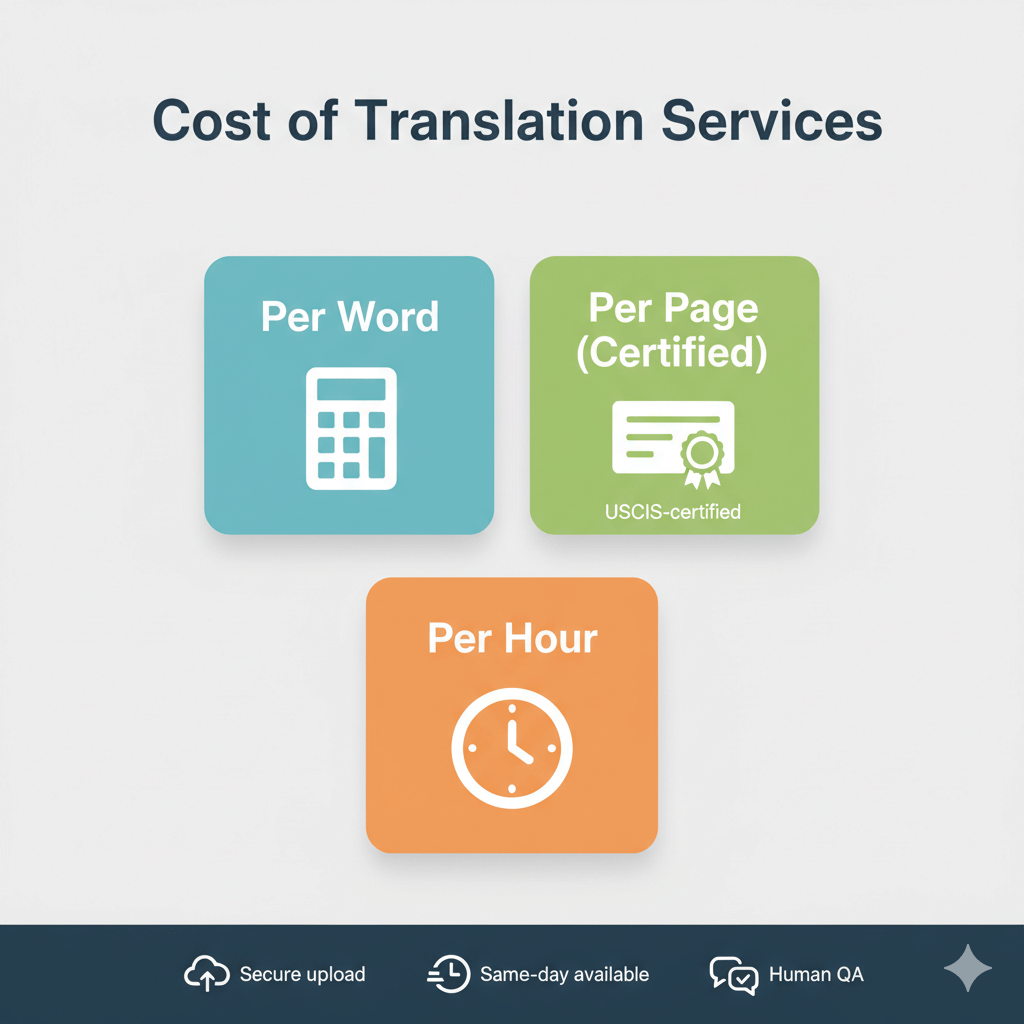
Translation pricing models at a glance
| Pricing model | How the quote is calculated | Best for |
|---|---|---|
| Per page | Our certified translation service starts from $20.57 per page for qualifying standard documents. See the current pricing page. | Standard civil and immigration documents that fit the stated page criteria. |
| Per word | Quoted according to language pair, word count, subject matter, file quality and formatting requirements. | Longer documents, business content and files where page length varies substantially. |
| Project or hourly quote | Used where word count alone does not reflect the work required. | Complex formatting, desktop publishing, review or specialist workflows. |
Urgent turnaround and additional services are confirmed in the quote before work begins.
How translation pricing works
Per-word translation rates
Per-word pricing is useful for longer documents because it scales directly with the amount of source text. The final rate depends on the language pair, subject matter, file quality, formatting and requested turnaround. We confirm the price before work begins rather than relying on a generic market-rate estimate.
Translation price per page (certified)
For qualifying standard documents, our certified translation service currently starts from $20.57 per page. The exact quote depends on document length, language, legibility, formatting and turnaround. The service includes signed certification for official use. See current certified translation pricing for the published service rate.
Translation cost per hour
Hourly or project pricing is more appropriate when word count does not reflect the work involved, such as desktop publishing, complex formatting, review, terminology work or transcreation. These projects are quoted individually after the files and scope have been reviewed.
What drives the cost of translating documents?
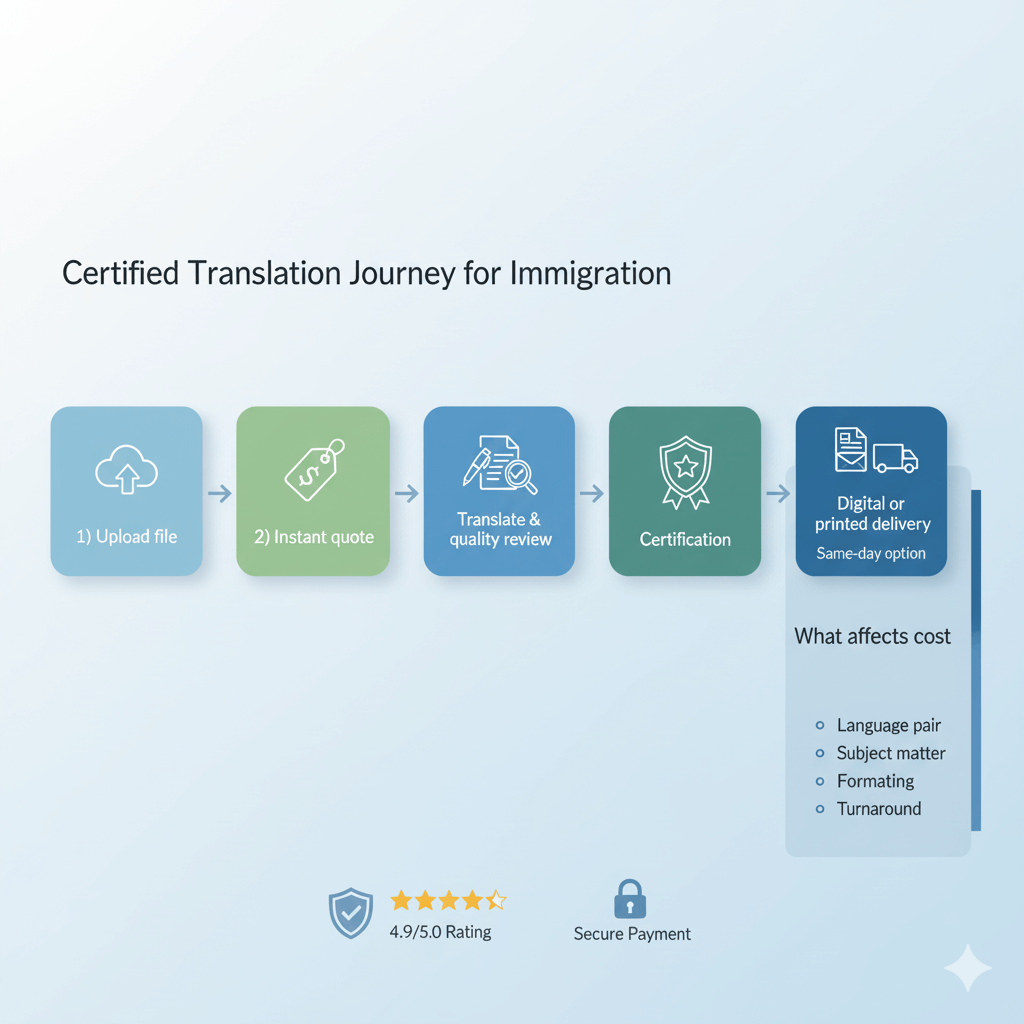
Language pair & availability. Common pairs (e.g., English↔Spanish) are cheaper than rare ones.
Subject matter & risk. Legal, medical and technical texts need expert linguists and QA.
Format & quality of files. Editable Word/Excel costs less than scans or images that need extra work.
Turnaround time. Same-day or overnight delivery adds a rush premium.
Certification/notarisation needs. Official certifications (and optional notarisation/apostille) add fees.
Certified document translation for immigration (USCIS)
USCIS requires a full English translation with a signed certification confirming completeness, accuracy and translator competence. If your documents aren’t in English, include a certified translation that meets 8 CFR 103.2(b)(3). Most providers bill certified work per page.
Quick price examples (real-world scenarios)
- Standard civil document: often suitable for the published per-page certified translation rate when it meets the page criteria.
- Longer general document: normally reviewed for word count, language pair and formatting before a fixed quote is issued.
- Medical, legal or technical file: specialist subject matter and review requirements can affect the quote.
- Complex layout or creative work: may be quoted as a project where word count does not reflect the work involved.
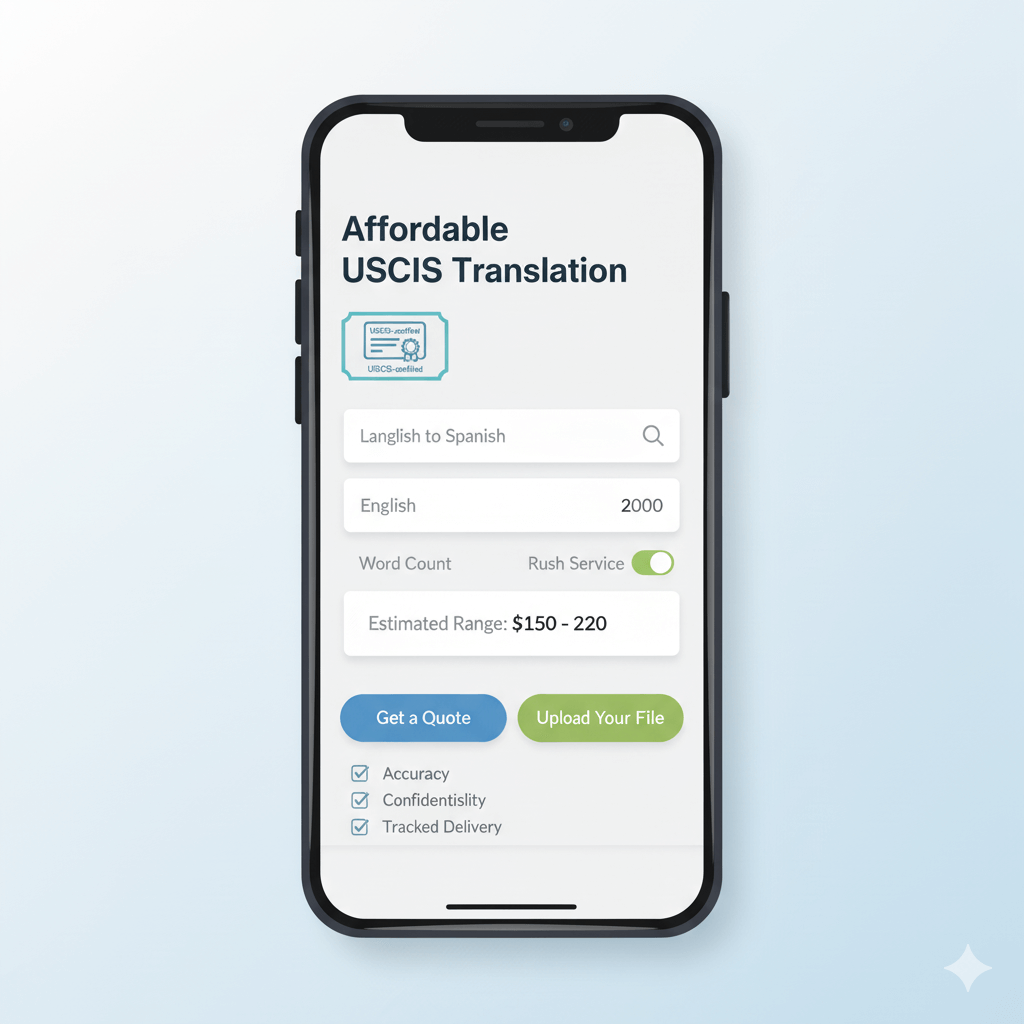
For an exact figure, upload the source document so the team can confirm the price before work begins.
Same-day needs?
If you’re on a deadline, our same day translation services prioritise your file while preserving quality controls. Same-day delivery typically carries a rush premium; sending editable files and clear instructions helps keep costs lean.
How to keep translation services prices low (without cutting quality)
Send editable files (avoid scans) to reduce manual prep.
Bundle related documents to unlock volume efficiencies.
Share terminology or past translations so repeated text can be discounted.
Plan ahead to avoid rush fees where possible.
Why choose USCIS Official Translation
- Specialist support for legal, medical and other high-stakes documents.
- Transparent, itemised quotes based on the language pair, document type, complexity and turnaround required.
- Secure document handling through the site’s upload and delivery workflow.
- Rush options may be available depending on document length, language and capacity.
For USCIS filings, the translation should be complete and accompanied by a signed certification confirming accuracy and translator competence under 8 CFR 103.2(b)(3).
FAQs: translation costs & pricing
How much do translation services cost?
Translation work can be priced per page, per word or as a project depending on the document. For qualifying standard certified documents, our published service currently starts from $20.57 per page. Longer or specialist files are reviewed and quoted according to the language pair, length, formatting, complexity and turnaround. See the pricing page for the current published service rate.
What’s the difference between per word and per page pricing?
Per word suits larger files and precise budgeting. Certified documents (birth, marriage, diplomas) often use per page pricing that includes the certification letter.
Do translators charge a minimum fee?
Yes—short jobs still require admin/QA time, so many providers have a minimum service charge even for a single paragraph.
How much does notarisation or an apostille add?
These are additional services billed separately and vary by jurisdiction and provider; request them only if your recipient requires them.
Are rush or same-day translations more expensive?
Usually yes. Rush work is prioritised and may involve extra resources to meet your deadline.