
Immigration authorities require official documentation that is accurate, complete, and clearly understood by government officers reviewing an application. If a document is written in a language other than English, it must be translated properly before submission.
Understanding how to translate a legal document for immigration is essential for avoiding delays, rejections, or requests for additional evidence. Immigration officers must be able to rely on translated documents when verifying identity, family relationships, education history, financial records, or legal status.
This guide explains the correct process for translating legal documents for immigration, the requirements imposed by immigration authorities, and the best practices for ensuring translations are accepted without complications.
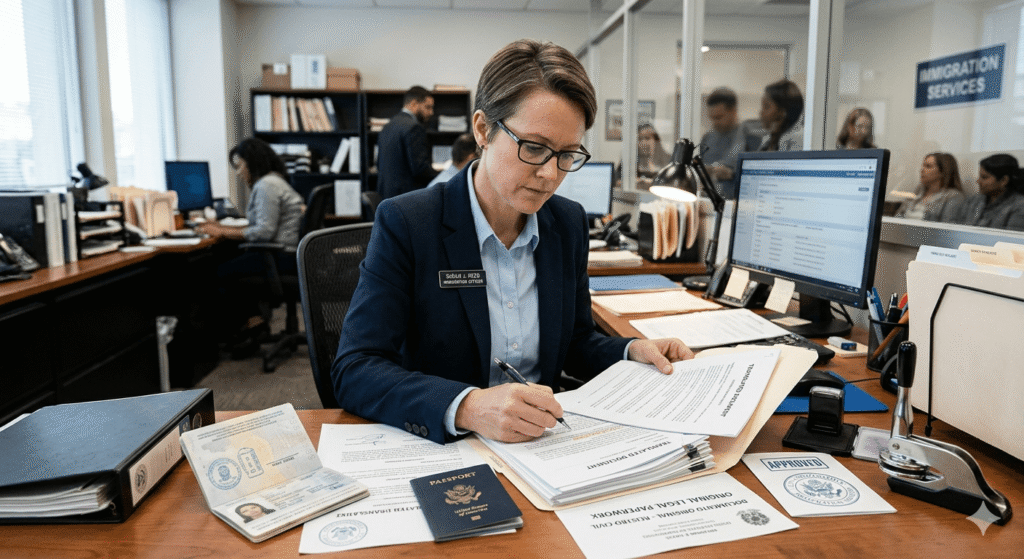
Why Immigration Authorities Require Legal Document Translations
Immigration applications rely heavily on official documents issued in different countries and languages. These documents often include civil records, legal certificates, and official statements that must be understood by immigration officers.
When these documents are written in a foreign language, a translation ensures the reviewing authority can accurately interpret the information.
Common immigration documents requiring translation include:
- Birth certificates
- Marriage certificates
- Divorce decrees
- Police clearance certificates
- Court records
- Academic transcripts and diplomas
- Bank statements
- Employment records
- Adoption documents
- Affidavits and sworn statements
Without proper translation, immigration authorities cannot evaluate an application correctly.
This is why immigration agencies strictly require translated versions of documents to accompany the originals.
What Counts as a Legal Document for Immigration
Legal documents are official records issued by government agencies, courts, educational institutions, or authorised bodies.
These documents are considered legally binding evidence during immigration review.
Examples include:
Civil Records
Civil status documents confirm identity and family relationships.
Examples include:
- Birth certificates
- Marriage certificates
- Death certificates
- Adoption records
- Divorce judgments
Court and Legal Records
Court-issued documents often provide evidence of legal history.
Examples include:
- Criminal records
- Police clearance certificates
- Court rulings
- Affidavits
Educational Documents
Immigration authorities often verify academic credentials.
Examples include:
- Diplomas
- Academic transcripts
- Certificates of completion
Financial and Employment Records
These documents may prove financial stability or employment history.
Examples include:
- Bank statements
- Tax documents
- Employment contracts
- Pay slips
Any document written in a language other than English must be translated before submission.
Step-by-Step Process for Translating a Legal Document for Immigration
Translating legal documents for immigration requires accuracy and strict adherence to formatting standards. The following process ensures the translation is compliant with immigration authority expectations.
1. Obtain a Clear Copy of the Original Document
Immigration authorities require that translations reflect the original document exactly.
A clear scanned copy or high-resolution photograph is necessary so that:
- All text is readable
- Seals and stamps are visible
- Signatures can be referenced
Unreadable documents may result in translation errors or application delays.
2. Translate the Entire Document
Immigration translations must be complete.
This means every element of the document must be translated, including:
- Headers
- Footnotes
- Marginal notes
- Stamps and seals
- Signatures
- Handwritten notes
Nothing can be omitted.
Even small details like official stamps may contain important legal information.
3. Preserve the Layout and Formatting
A properly translated immigration document follows the structure of the original document.
Professional translations usually mirror the original layout so immigration officers can easily compare the two documents.
This includes:
- Paragraph structure
- Table layouts
- Dates and numbering
- Headings and sections
Maintaining formatting helps prevent confusion during application review.
4. Add a Certification Statement
Immigration authorities require translations to be certified.
A certification statement confirms that the translation is accurate and complete.
A typical certification statement includes:
- Translator or company name
- Confirmation that the translation is accurate
- Translator signature
- Date of certification
- Contact information
Without this certification, immigration authorities may reject the translation.
5. Submit the Translation with the Original Document
Immigration submissions normally include:
- The original document copy
- The full translation
- The certification statement
These documents are submitted together as part of the immigration application.
Certified Translation vs Standard Translation
Not all translations are acceptable for immigration purposes.
Immigration authorities typically require certified translations rather than informal translations.
Certified Translation
Certified translations include a signed statement confirming that the translation is accurate and complete.
These translations are prepared by qualified translators or translation agencies.
They are accepted by immigration authorities including:
- USCIS
- UKVI
- Home Office
- Immigration courts
Standard Translation
Standard translations do not include certification.
These translations may be suitable for personal use but are usually not accepted for immigration applications.

Common Mistakes When Translating Immigration Documents
Even small translation mistakes can cause immigration delays.
Here are common issues applicants encounter:
Incomplete Translations
Leaving parts of a document untranslated is a common reason for rejection.
Everything must be translated, including stamps and handwritten notes.
Using Machine Translation
Automated tools often produce inaccurate translations, especially with legal terminology.
Immigration authorities may reject translations that appear machine-generated.
Missing Certification
Without a certification statement confirming accuracy, the translation may not be accepted.
Incorrect Formatting
Translations that do not match the structure of the original document may confuse immigration officers reviewing the file.
Which Immigration Authorities Require Certified Translations
Many immigration authorities worldwide require certified translations when reviewing documents written in foreign languages.
United States Immigration (USCIS)
USCIS requires certified English translations for any foreign-language document submitted with an immigration application.
United Kingdom Immigration (UKVI)
UK immigration authorities require translated documents that include certification confirming accuracy.
Canadian Immigration
Immigration authorities in Canada also require certified translations prepared by qualified translators.
European Immigration Offices
Many European immigration agencies require sworn or certified translations depending on the country.
Understanding the translation requirements of the specific immigration authority helps prevent application delays.
How Professional Immigration Translation Services Help
Professional translation services specialise in preparing documents that meet immigration authority requirements.
Working with experienced translators ensures:
- Accurate legal terminology
- Correct formatting
- Certified translations
- Fast processing times
- Acceptance by immigration authorities
Immigration applications often involve strict deadlines, and professional translators understand the urgency involved.
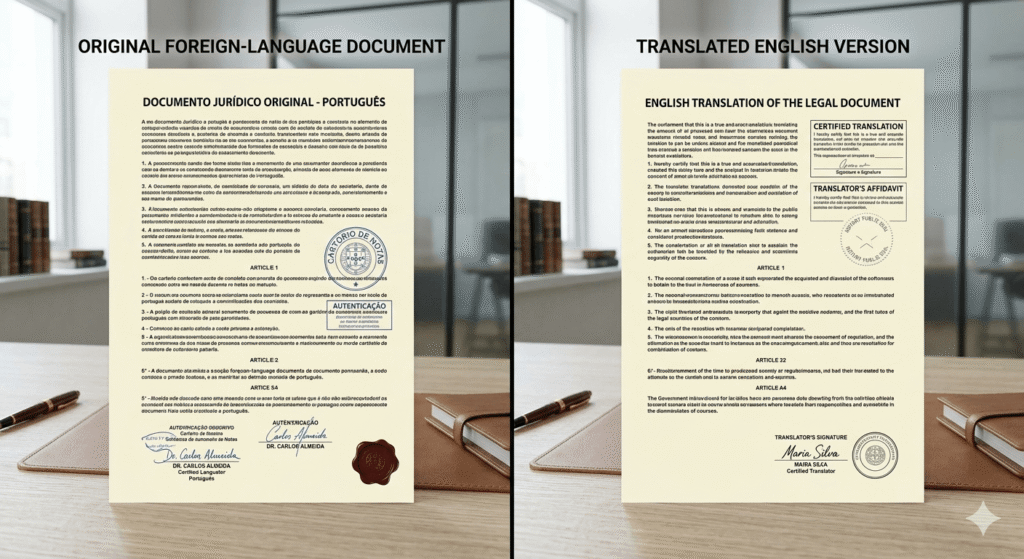
Example: Translating a Birth Certificate for Immigration
Birth certificates are one of the most common documents submitted in immigration applications.
A proper translation includes:
- Full translation of the certificate
- Translation of stamps or government seals
- Translator certification statement
- Formatting matching the original document
The translated document is then submitted alongside the original certificate.
Turnaround Times for Immigration Document Translations
Translation timelines vary depending on the document length and complexity.
Typical turnaround times include:
- Same-day service for short documents
- 24-hour service for standard certificates
- Several days for large legal files
Many translation services also offer expedited delivery for urgent immigration applications.
How to Submit Documents for Translation
Submitting documents for translation is usually simple.
Applicants typically follow these steps:
- Upload a scanned copy of the document
- Receive a quote and turnaround time
- Approve the translation order
- Receive a certified translation ready for submission
Digital delivery is commonly accepted for immigration applications.
Ensure Your Immigration Documents Are Translated Correctly
Submitting incorrect translations can lead to costly delays and application refusals.
Working with experienced translators ensures that immigration authorities receive accurate, properly formatted, and certified documents.
If you need help translating a legal document for immigration, you can upload your file today and receive a certified translation ready for submission.
Frequently Asked Questions
Do immigration documents need certified translations?
Yes. Most immigration authorities require certified translations confirming the translation is accurate and complete.
Can I translate my own immigration documents?
In most cases, applicants cannot translate their own documents. Immigration authorities usually require a third-party translator.
Are notarised translations required for immigration?
Not usually. Most immigration authorities require certified translations rather than notarised translations unless specifically requested.
How long does it take to translate immigration documents?
Short documents such as birth certificates can often be translated within 24 hours.
Will immigration authorities accept digital translations?
Yes. Many immigration authorities accept digital certified translations as long as they include the translator’s certification statement.
