
If your marriage certificate is not in English, you will almost certainly need a certified translation before submitting it to official bodies such as USCIS, UK Home Office, or other government authorities.
The process is straightforward — but only if you follow the correct steps. A poorly translated or uncertified document can lead to delays, rejections, or additional costs.
This guide walks you through exactly how to get a marriage certificate translated properly, what authorities require, and how to avoid common mistakes.
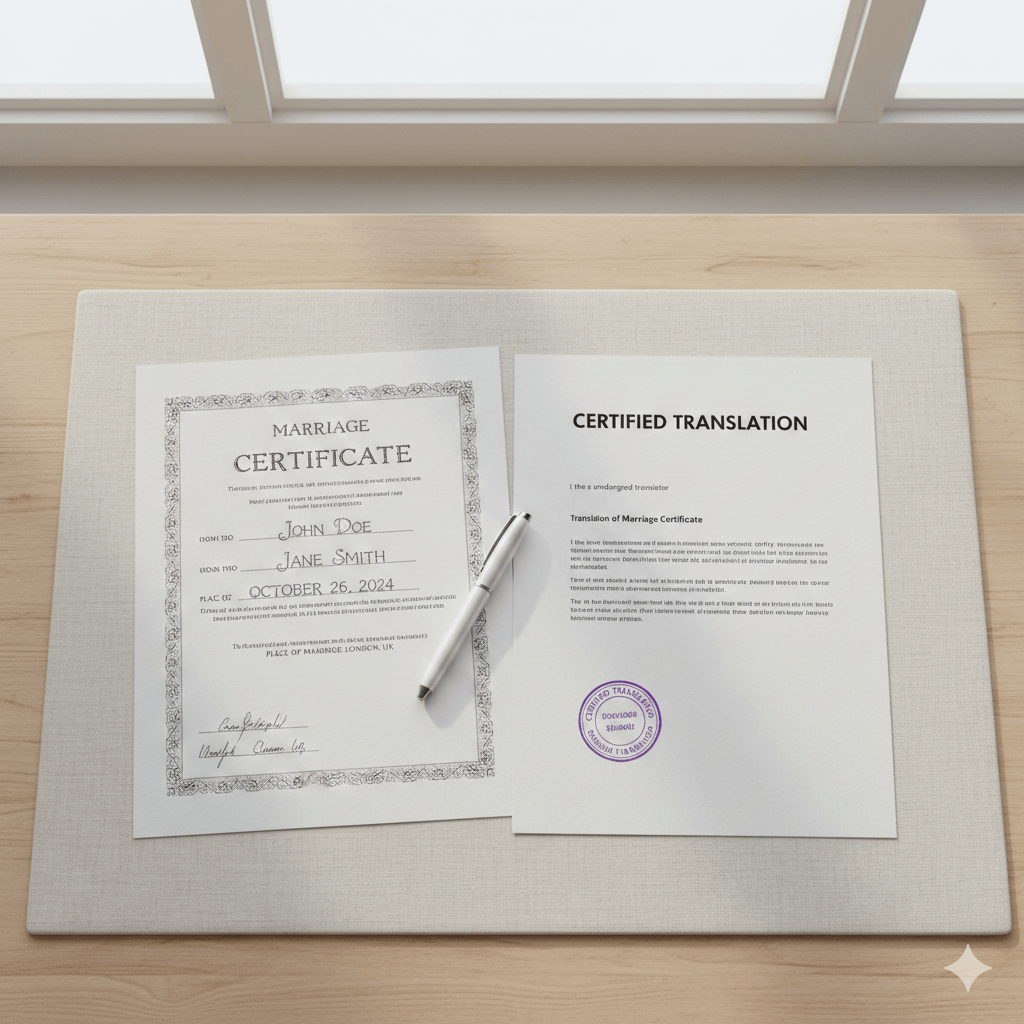
Why Marriage Certificate Translation Is Required
Marriage certificates are commonly required for:
- Immigration applications (e.g. USCIS, UKVI)
- Visa applications
- Spouse sponsorships
- Legal name changes
- Property and financial documentation
- Court proceedings
Authorities require an accurate and complete English translation to verify:
- Names
- Dates
- Locations
- Legal status of the marriage
Even small translation errors can result in document rejection.
What Is a Certified Marriage Certificate Translation?
A certified translation is not just a translated document — it includes a signed statement confirming accuracy.
A certified translation must include:
- Full, word-for-word translation of the original document
- Translator’s name and signature
- Certification statement confirming accuracy
- Date of translation
- Contact details of the translator or agency
For USCIS, the translator must certify that:
They are competent to translate and that the translation is complete and accurate.

Step-by-Step: How to Get a Marriage Certificate Translated
Step 1: Prepare a Clear Copy of Your Certificate
Ensure your document is:
- Fully visible (no cut-off edges)
- High resolution
- Legible (no blur or shadows)
Accepted formats usually include PDF, JPG, or PNG.
Step 2: Choose a Professional Translation Provider
Avoid using:
- Free tools like Google Translate
- Friends or non-certified individuals
Instead, choose a provider that offers:
- Certified translations accepted by USCIS and UK authorities
- Native linguists
- Experience with legal documents
- Fast turnaround options
Step 3: Submit Your Document
Most providers allow you to:
- Upload your file online
- Receive an instant quote
- Select turnaround time
At this stage, you can usually request:
- Standard certified translation
- Notarisation (if required)
- Apostille or legalisation (for international use)
Step 4: Translation and Quality Check
A professional process typically includes:
- Translation by a native linguist
- Proofreading by a second linguist
- Formatting to match the original layout
This ensures your document mirrors the original as closely as possible.
Step 5: Receive Your Certified Translation
You will receive:
- A digital certified copy (PDF)
- Option for a hard copy (posted)
The certified document will include the signed declaration required for official use.
How Long Does It Take?
Turnaround times depend on urgency:
- Standard: 24–48 hours
- Express: Same day or within a few hours
Marriage certificates are usually short, so fast delivery is often available.
How Much Does It Cost?
Typical pricing depends on:
- Document length
- Language pair
- Urgency
Example pricing:
- Standard translation: £20–£40 per page
- Express service: +£10–£25
- Notarisation: +£40–£80
Common Mistakes to Avoid
1. Using Machine Translation
Automated tools cannot meet official requirements and are not accepted.
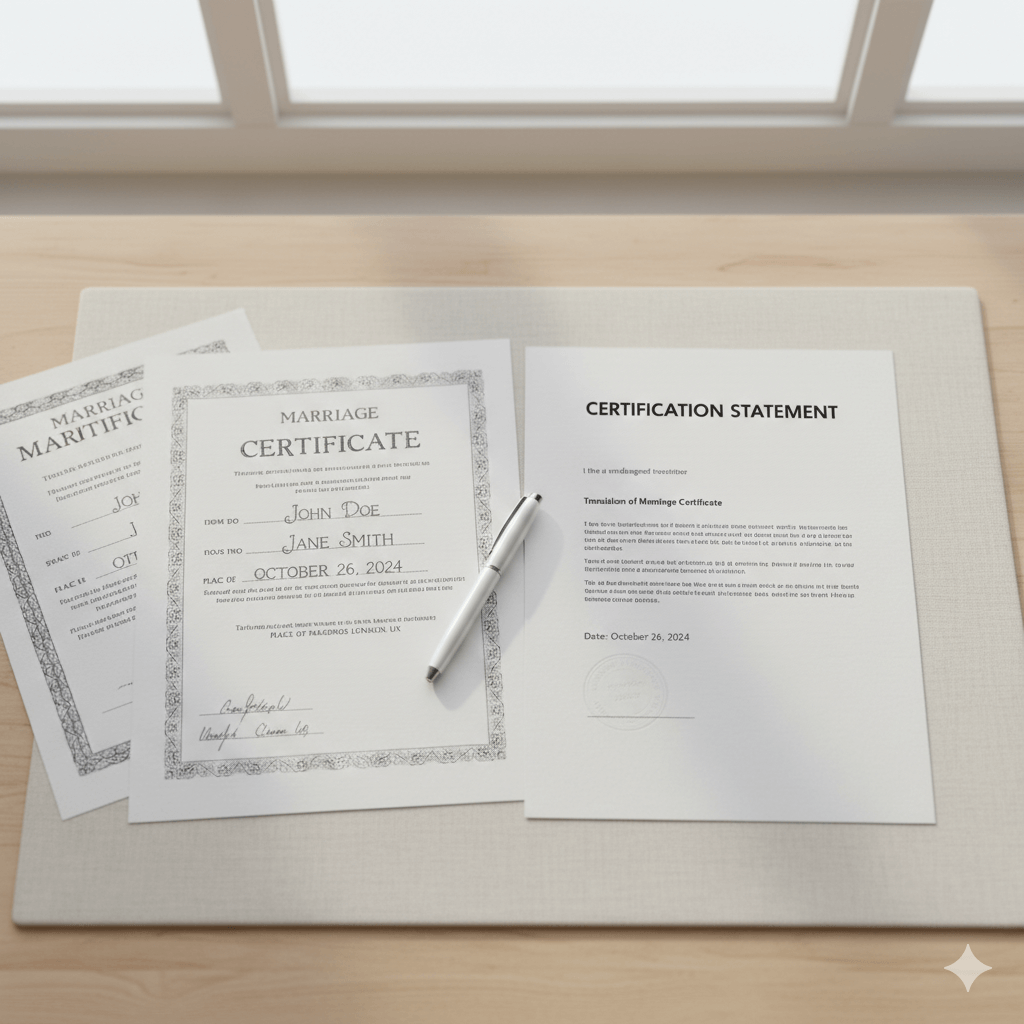
2. Missing Certification Statement
Without certification, your translation will be rejected.
3. Incomplete Translation
Every stamp, seal, and annotation must be translated.
4. Poor Formatting
Authorities expect the translation to reflect the original layout.
5. Choosing the Cheapest Option
Low-cost providers often compromise on accuracy and compliance.
Do You Need Notarisation or Apostille?
This depends on where you are submitting the document.
You may need notarisation if:
- Required by certain legal institutions
- Requested by embassies or consulates
You may need an apostille if:
- The document is used internationally
- Required for legal recognition abroad
For USCIS, notarisation is not required — only certification is needed.
What Makes a Translation Accepted by USCIS?
To be accepted, your translation must:
- Be complete and accurate
- Include a signed certification
- Be in English
- Be clearly formatted
Failure to meet these requirements can delay your application.
Real Example: Avoiding Rejection
A client submitted a marriage certificate translated by a non-certified individual.
Result:
- Application delayed by 4 weeks
- Additional fees incurred
- Required re-submission
After obtaining a certified translation, the document was accepted immediately.
Why Use a Professional Service?
A reliable translation provider ensures:
- 100% acceptance by authorities
- Fast turnaround
- Accurate legal terminology
- Proper formatting
- Peace of mind
You avoid delays, rejections, and unnecessary stress.
Start Your Marriage Certificate Translation Today
Getting your marriage certificate translated doesn’t need to be complicated.
Upload your document, receive a quote instantly, and get a certified translation ready for official submission — often within the same day.
FAQ Section
How do I get a marriage certificate translated for USCIS?
You need a certified translation that includes a signed statement confirming accuracy and translator competence.
Can I translate my own marriage certificate?
No. USCIS requires the translation to be completed by a competent third party.
How long does a marriage certificate translation take?
Most translations are completed within 24–48 hours, with same-day options available.
Does a marriage certificate translation need to be notarised?
Not for USCIS. Certification is sufficient unless specifically requested by another authority.
How much does it cost to translate a marriage certificate?
Typically between £20 and £40 per page, depending on urgency and language.
