
If you’re wondering how to get my birth certificate translated for a USCIS application, the goal is simple: you need a full English translation plus a signed translator certification that confirms the translation is complete, accurate, and done by someone competent in both languages.
That’s it—yet many applicants still get delayed because of avoidable issues like missing stamps, partial translations, or an incomplete certification statement.
This guide shows you exactly what to do, what to avoid, and how to get a translation that’s ready to submit.
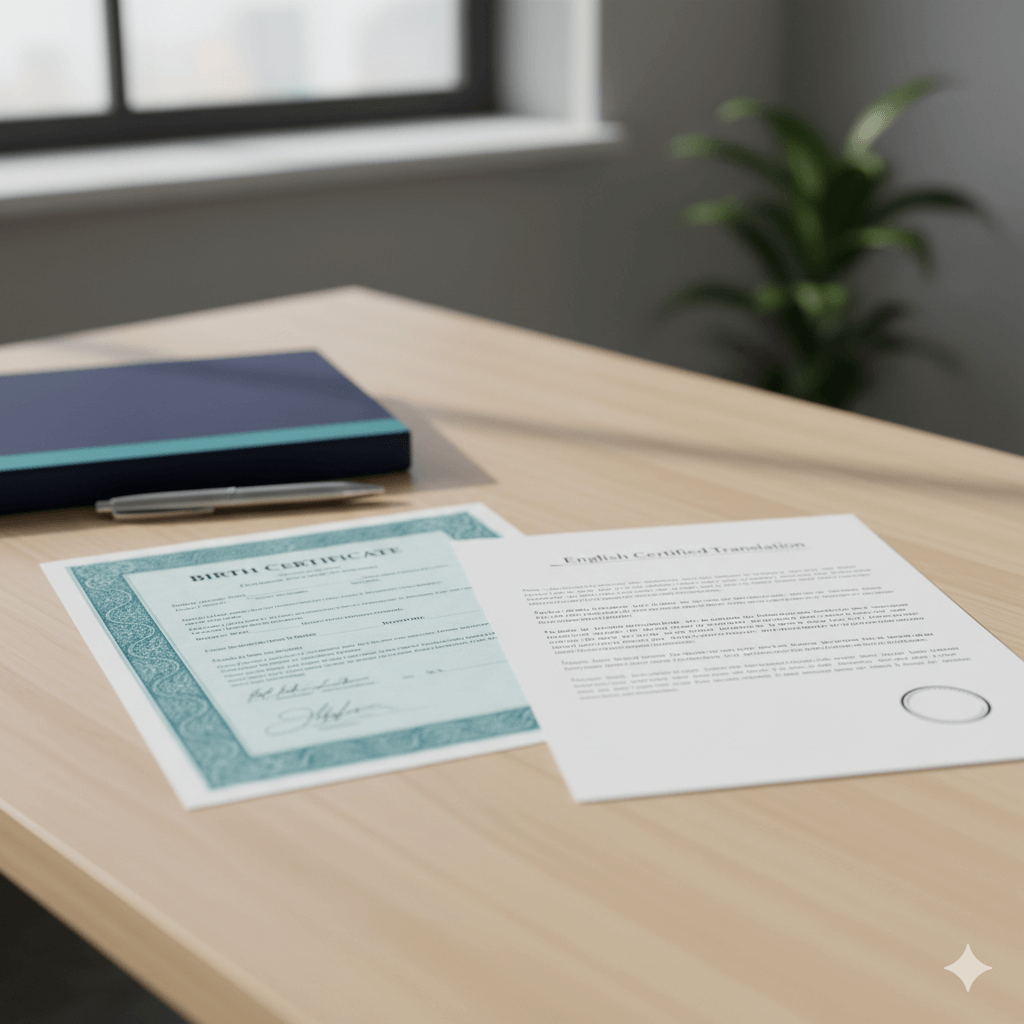
What USCIS actually expects from a birth certificate translation
A USCIS-ready birth certificate translation has three non-negotiables:
- A complete English translation
Not a summary. Not “key fields only.” Every visible element must be translated. - Accuracy + consistency
Names, dates, and places must be consistent across your immigration packet. - A signed translator certification
A short statement signed by the translator confirming:- the translation is complete and accurate, and
- the translator is competent to translate into English.
Important: USCIS does not require notarisation in most cases. Notarisation may be helpful if another authority asks for it (court, consulate, certain institutions), but it’s not the default requirement for USCIS filings.
Step-by-step: how to get your birth certificate translated the right way
Step 1: Confirm you have the right birth certificate version
Before you translate anything, check you’re using the version USCIS (or the agency you’re filing with) typically expects.
Birth certificates come in different formats depending on country:
- “Long form” vs “short form”
- Extracts vs full register entries
- Versions missing parent details
If your document is missing parent names or key details, you may need a different version from the issuing authority before translating.
Step 2: Create a clean scan (this matters more than people realise)
A translator can only translate what they can read.
Use this checklist:
- Scan in colour if possible
- Ensure all edges are visible (no cut-off seals)
- Make stamps and handwritten notes legible
- Avoid shadows and phone glare
- Export as PDF (preferred) or a high-quality image
Step 3: Translate every visible element (including stamps, seals, and notes)
A “complete translation” includes:
- All printed fields and labels
- Every handwritten entry
- Marginal notes
- Stamps and seals (described in brackets if they aren’t fully legible)
- Watermarks that carry text
- Registration numbers and certificate numbers
How to handle stamps/seals cleanly:
- If the stamp text is readable, translate it.
- If it’s not readable, label it clearly, e.g. [Round stamp, partially illegible].
Step 4: Keep names as names (don’t translate them)
This is a common mistake.
- Translate field labels (e.g., “Nombre” becomes “Name”)
- Do not translate personal names
- Keep spelling consistent with the document
- If your passport spelling differs (diacritics, spacing, letter swaps), add a translator note
Example translator note (acceptable and helpful):
Translator’s note: The name appears as “José Muñoz” on the source document. Applicant’s passport spells the name as “Jose Munoz”.
Step 5: Match the layout so it’s easy for an officer to review
USCIS officers often compare your translation with the original line-by-line.
Best practice formatting:
- Same order as the source document
- Clear headings
- Consistent date format (and clarify ambiguous dates if needed)
- Bracketed notes for seals/stamps
Step 6: Attach a translator certification (use this exact structure)
The certification does not need to be long. It just needs to be complete.
Copy-friendly example:
Translator Certification
I, [Translator Full Name], certify that I am fluent in English and [Source Language], and that the attached translation of [Document Name] is a complete and accurate translation of the original document.
Signature: _______________________
Printed Name: [Translator Full Name]
Date: ___________________________
Email / Phone: ___________________
Step 7: Keep the packet clean: original + translation + certification
When submitting:
- Include a copy of the original birth certificate
- Include the English translation
- Include the signed translator certification (attached to that translation)
Step 8: Choose DIY vs professional (use this decision guide)
DIY can work only when:
- The document is simple
- Everything is legible
- You have a truly competent translator
- You’re confident your certification is correct
Professional translation is the safer choice when:
- There are stamps, handwritten notes, or complex formatting
- Names differ across documents (diacritics/multiple surnames)
- Your case is time-sensitive
- You want an acceptance guarantee and revisions if needed
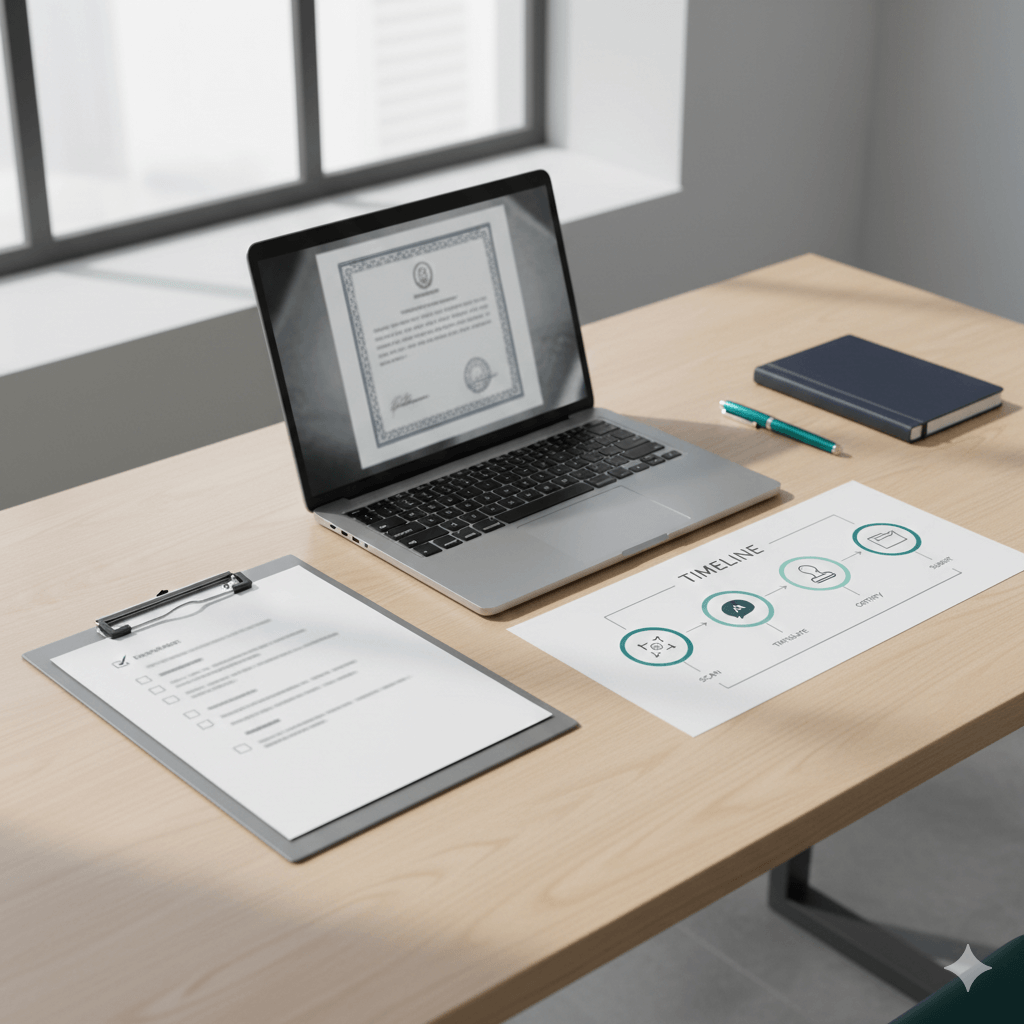
Can I translate my own birth certificate for USCIS?
In practice, it’s strongly discouraged, even if you’re bilingual.
Why? Your birth certificate is a primary identity document, and self-translation can look self-serving. Many applicants only discover this after a delay.
Certified vs notarised: what do you actually need?
For USCIS, the usual requirement is certified translation (translation + signed certification statement). Notarisation is sometimes requested by:
- Courts (depending on local rules)
- Consulates/embassies for non-US processes
- Certain institutions that want an additional verification step
The most common reasons birth certificate translations get questioned
Use this as your pre-submission check:
- Missing translator signature or date
- No statement of translator competence
- Partial translation (stamps/notes omitted)
- Names “translated” instead of preserved
- Inconsistent spelling across documents
- Poor scan quality (officer can’t match text)
- Multiple documents certified under one vague certificate (certification should clearly match the specific document)

What it costs and how long it takes
Most birth certificates are 1–2 pages, and pricing is usually per page.
On USCIS Official Translation:
- Pricing starts at $24.99 per page (certified translation)
- Rush options are available (as fast as 12 hours for many civil documents)
- Unlimited minor revisions are included on eligible plans
- If USCIS rejects a translation due to formatting or wording issues, corrections are handled—per policy—so you can submit confidently
Real-world examples: what “complete translation” looks like
Here are examples of elements that are often missed (and should be included):
- Registration number: “No. 0047812” → “Registration No. 0047812”
- Marginal note: “Corrección de apellido” → “Marginal note: Surname correction”
- Stamp: “Registro Civil” → “Civil Registry”
- Illegible stamp: “[Round stamp, illegible text]”
This is the difference between “it looks fine” and “it’s clearly USCIS-ready.”
Frequently asked questions
How do I get my birth certificate translated for USCIS?
You need a complete English translation of every visible element on the certificate, plus a signed translator certification confirming accuracy, completeness, and competence.
Do I need a notarised translation for USCIS?
Usually, no. USCIS typically requires a certified translation (translation + signed certification statement). Notarisation is only needed if a separate authority explicitly asks for it.
Can a family member translate my birth certificate?
A family member can translate if they are truly competent and provide proper certification, but it can create unnecessary risk—especially for core identity documents. A neutral third-party translator is the safer route.
What should the translator certification statement include?
It should state the translator is competent in both languages and that the translation is complete and accurate. It should also include the translator’s name, signature, date, and contact details.
How long does a birth certificate translation take?
Many birth certificate translations can be completed within 24 hours. Rush options may be available if you’re on a deadline.
Will USCIS accept a PDF translation?
USCIS generally accepts certified translations provided they are properly formatted and include a signed certification. Keep the file clear and legible, and include the original document copy in your submission.
