
If you’ve been told you need your birth certificate “translated and apostilled,” you’re dealing with two separate steps that often get mixed up:
- Translation makes the content readable in the language your authority requires.
- Apostille authenticates the public document (or a signature on it) so it can be recognised in another country.
Do them in the wrong order, apostille the wrong version, or translate the wrong pages, and you can end up paying twice—or losing weeks.
This guide walks you through the safest, most widely accepted process for birth certificate translation and apostille, with clear decision points for different use cases (including U.S. immigration).
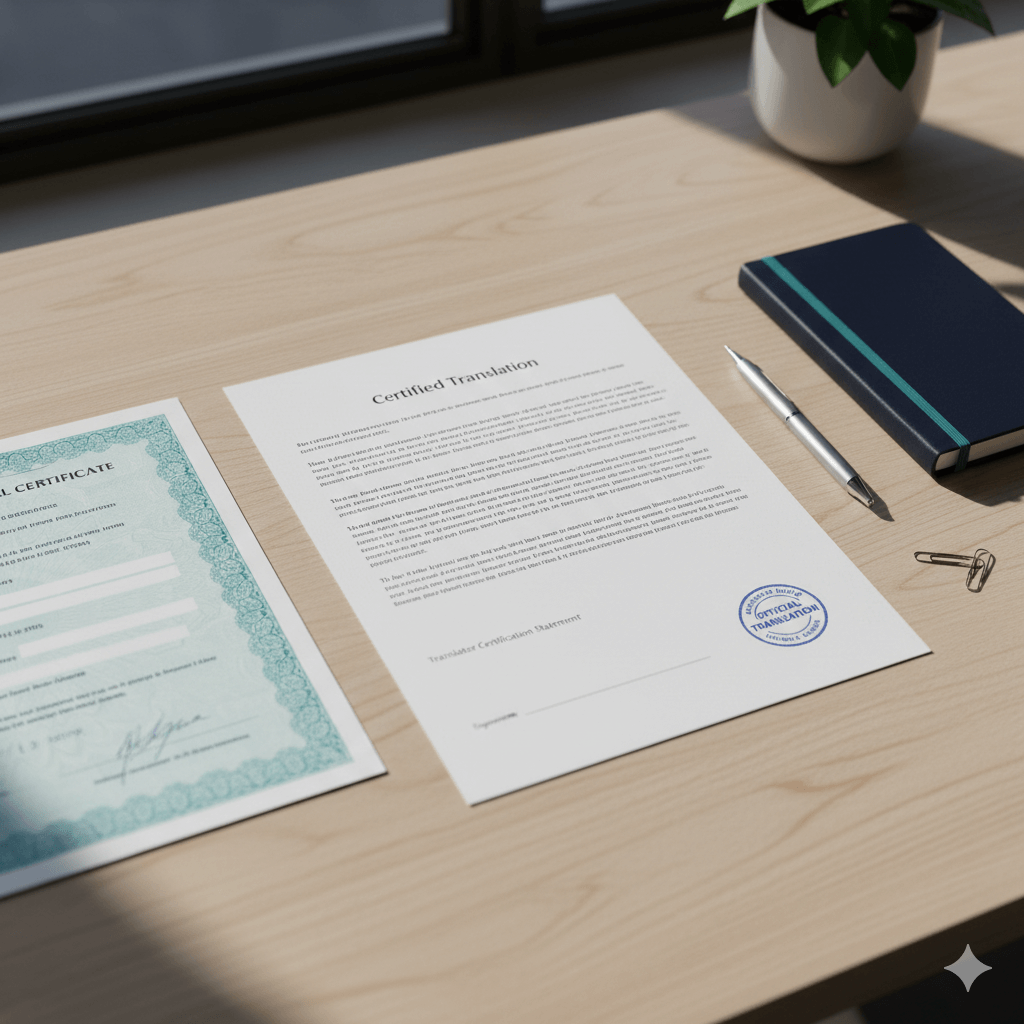
The Fast Answer (Most People Need This First)
Before you pay anyone, answer these two questions:
1) Where will you use the birth certificate?
- For U.S. immigration (USCIS filings): you typically need a certified English translation. An apostille is usually not required for USCIS submissions (but confirm if a specific court/agency/consulate asked for it).
- For use outside the country that issued the birth certificate: you may need an apostille (Hague countries) or authentication/legalisation (non-Hague countries).
2) Did the authority ask for the apostille on:
- The original/certified copy of the birth certificate, or
- The translation, or
- Both?
Different authorities ask for different combinations. When in doubt, request their requirement list in writing (email is fine) and follow it exactly.
Key Terms (So You Don’t Order the Wrong Thing)
Certified translation
A complete translation plus a signed statement from the translator confirming:
- the translation is complete and accurate, and
- they are competent in both languages.
This is the format most immigration and official processes expect.
Notarised translation
A notary public verifies the identity of the signer (usually the translator signing a declaration). Notarisation can be required for certain courts, universities, and some consular processes—but it’s not automatically required everywhere.
Apostille
A certificate issued by the competent authority in the issuing jurisdiction (often a government office) confirming a public document or signature is authentic for use in another country that participates in the Hague Apostille Convention.
Authentication / legalisation
If the destination country is not in the Hague Apostille Convention, you may need a different chain (often “authentication” plus embassy/legalisation steps). People still casually say “apostille,” but the procedure can be different.
Step-by-Step: How to Get Your Birth Certificate Translated and Apostilled
Step 1: Confirm the destination authority’s exact requirements
Ask (or check their website) for the requirement list for “foreign birth certificates.” Look for details like:
- Language required (English, Spanish, French, etc.)
- Whether they require a certified translation or sworn translation
- Whether they need the apostille (or legalisation)
- Whether the apostille must be on the birth certificate, the translation, or both
- Whether they require a paper original, or accept PDF scans
Tip: If they mention “sworn translator,” that usually relates to specific countries (common in parts of Europe and Latin jurisdictions). Many U.S. processes use certified translations instead.
Step 2: Get the correct version of the birth certificate
A huge percentage of rejections happen because the wrong version is used.
Use this checklist:
- ✅ Prefer a long-form or full birth certificate if available (shows parents, registry details, official stamps/notes)
- ✅ Make sure it’s an official copy (not a hospital souvenir certificate)
- ✅ If the certificate has text on the back, include it
- ✅ If it’s laminated, confirm whether the issuing authority or apostille office will accept it
If you’re unsure, obtain a fresh certified copy from the issuing vital records/civil registry office.
Step 3: Decide the correct order (apostille first or translation first)
In most real-world cases, the safest sequence is:
- Obtain the official/certified birth certificate copy
- Get the apostille/legalisation on the certificate (if required)
- Translate the birth certificate and any attached apostille page/stamps
Why this order is safest:
- Some authorities treat the apostille as part of the document package and want it translated too.
- If you translate first and then later add an apostille page, you may need to re-translate.
When translation first can make sense
Sometimes the authority wants:
- the translation notarised, and then
- an apostille attached to the notary’s signature (not the birth certificate)
This is more common in certain consular/legal scenarios. That’s why Step 1 matters.
Step 4: Get a certified translation that matches the original exactly
A birth certificate translation is not a creative rewrite—it’s a precision task.
A high-acceptance translation should:
- Translate every visible element: stamps, seals, handwritten notes, registry numbers, marginal notes
- Keep the same structure as the original where possible (so it’s easy to compare)
- Use consistent spelling of names across all your documents
- Standardise date formats clearly (e.g., “14 February 2001”) to avoid confusion
- Include translator notes for items like:
- [illegible stamp]
- [signature]
- [seal]
- [handwritten note]
Avoid this common mistake: machine translation for official records. Even if it looks readable, it can fail on names, civil-registry terms, and stamped text.
Best next step: Upload a clear scan/photo of the birth certificate (and any apostille page) so the translator can format it properly the first time.
Step 5: Add notarisation only if your authority requires it
Notarisation can be useful when:
- a court requests a translator affidavit,
- a consulate asks for notarised translator certification,
- you want an extra formal layer for a non-immigration process.
But notarisation is not universal—ordering it “just in case” can be unnecessary in many workflows.
Step 6: Get the apostille (or authentication/legalisation) from the correct authority
If the birth certificate was issued in the United States
Most U.S. birth certificates are state-issued, so the apostille is typically handled at the state level (often through the Secretary of State or equivalent office).
If the birth certificate was issued outside the United States
The apostille (or legalisation chain) must usually be completed in the issuing country through that country’s competent authority.
Important: An apostille authenticates the document/signature—it does not translate the content. You may still need a certified translation to satisfy your destination authority.
Step 7: Translate the apostille page if it’s attached (often overlooked)
Many authorities treat the apostille page as part of the official record set. If the apostille is attached and contains text in a language different from what your destination authority requires, you may need to translate it too.
This is especially common when:
- the destination is a consulate/embassy,
- you’re filing civil status documents abroad,
- the apostille contains key identifying details (names, dates, registry numbers).
Step 8: Assemble a submission-ready “birth certificate package”
Use this packaging structure (it reduces questions and speeds up review):
- Copy/scan of the original birth certificate (front/back if applicable)
- Apostille page (if attached)
- Certified translation of the birth certificate
- Certified translation of the apostille page (if required)
- Translator’s signed certification statement
- If applicable: notarisation page and notary details
Practical tip: Keep a PDF set and a print-ready set. Some authorities want wet-ink originals; others accept scanned copies.

Common Scenarios (So You Know Which Path Applies)
Scenario A: You’re filing with USCIS
What you typically need:
- Certified English translation of the birth certificate
- Correct birth certificate type (often long-form if available)
What you typically do not need:
- Apostille on the birth certificate for USCIS alone
- Notarisation of the translation (unless someone explicitly asked)
Scenario B: You’re using a U.S. birth certificate abroad (marriage, dual citizenship, visa, overseas registration)
What you commonly need:
- Certified copy of the birth certificate
- Apostille from the issuing state (or the proper authority)
- Certified translation into the destination country’s required language (sometimes including the apostille page)
Scenario C: You’re using a foreign birth certificate in the U.S. for a state agency, school, or court
What you commonly need:
- Certified translation into English
- Sometimes notarised translation (depends on the agency/court)
- Apostille is sometimes requested, sometimes not—depends on the institution
Scenario D: A consulate/embassy gave you a checklist
Follow it exactly. Consular checklists often specify:
- whether the apostille must be translated,
- whether the translation must be notarised,
- whether you need sworn translation in a particular jurisdiction.
Cost & Timing (Realistic Planning Without Guesswork)
Costs and turnaround vary by country/state and urgency, but these ranges help you plan:
Typical translation timeline
- Standard: 24–48 hours for a single birth certificate (when the scan is clear)
- Rush: same-day may be possible for many languages
Apostille timeline
- Often ranges from a few business days to a few weeks depending on:
- the issuing jurisdiction,
- mail vs in-person processing,
- whether additional authentication steps are required.
What makes timelines explode
- Ordering translation before the apostille is attached (then needing re-translation)
- Submitting short-form certificates when long-form is required
- Illegible scans (especially stamps and handwritten notes)
- Name inconsistencies across documents (triggers verification loops)
The Most Common Mistakes (And How to Avoid Them)
- Translating only the main text and ignoring stamps/seals
Fix: Translate every visible mark or label it clearly. - Using inconsistent name spellings across documents
Fix: Decide a standard spelling (matching passports/IDs) and keep it consistent. - Getting an apostille for the wrong version
Fix: Apostille the certified/official copy if that’s what the destination requires. - Skipping the apostille-page translation
Fix: If it’s attached and contains text, assume it may need translation unless told otherwise. - Assuming “notarised” and “apostilled” mean the same thing
Fix: Notarisation verifies a signer; apostille authenticates a public document/signature for international recognition.

Submission Checklist (Copy/Paste)
- Correct birth certificate version (prefer long-form where required)
- Clear scan of front/back, including stamps, notes, and registry numbers
- Apostille/legalisation completed (if required)
- Apostille page included (if attached)
- Certified translation completed for all pages required
- Translator certification statement signed and dated
- Notarisation included only if required
- Final PDF assembled in the correct order for the authority
If you want this handled as a single clean workflow, the easiest path is to upload your birth certificate (and any apostille page) and request a compliant, submission-ready translation package—so you don’t discover missing steps after you’ve already paid.
FAQ Section
Do I need an apostille for a birth certificate translation for USCIS?
Usually no. For most USCIS filings, the key requirement is a complete certified English translation with a signed translator certification. Only get an apostille if a specific authority explicitly requests it.
Should I apostille my birth certificate before translating it?
In many cases, yes. Apostille first is often safest because some authorities want the apostille page translated as part of the same package.
Does the apostille itself need to be translated?
Sometimes. If the apostille page is attached and contains non-target-language text, many consulates and overseas authorities require it to be translated too.
What’s the difference between a certified translation and a notarised translation?
A certified translation includes a signed translator certification statement. A notarised translation adds a notary verification of the signer’s identity. Notarisation is only required when the receiving authority asks for it.
Can I translate my own birth certificate for an official process?
It’s strongly discouraged for high-stakes filings. Even if you are bilingual, many authorities prefer an independent translator who can sign a certification and be contactable if questions arise.
Do I need the long-form birth certificate translated?
If the authority requires the long-form version, yes. Long-form certificates typically contain registry details and parent information that short-form versions may not include.
