
Table of Contents
ToggleUnderstanding Statutory Declarations
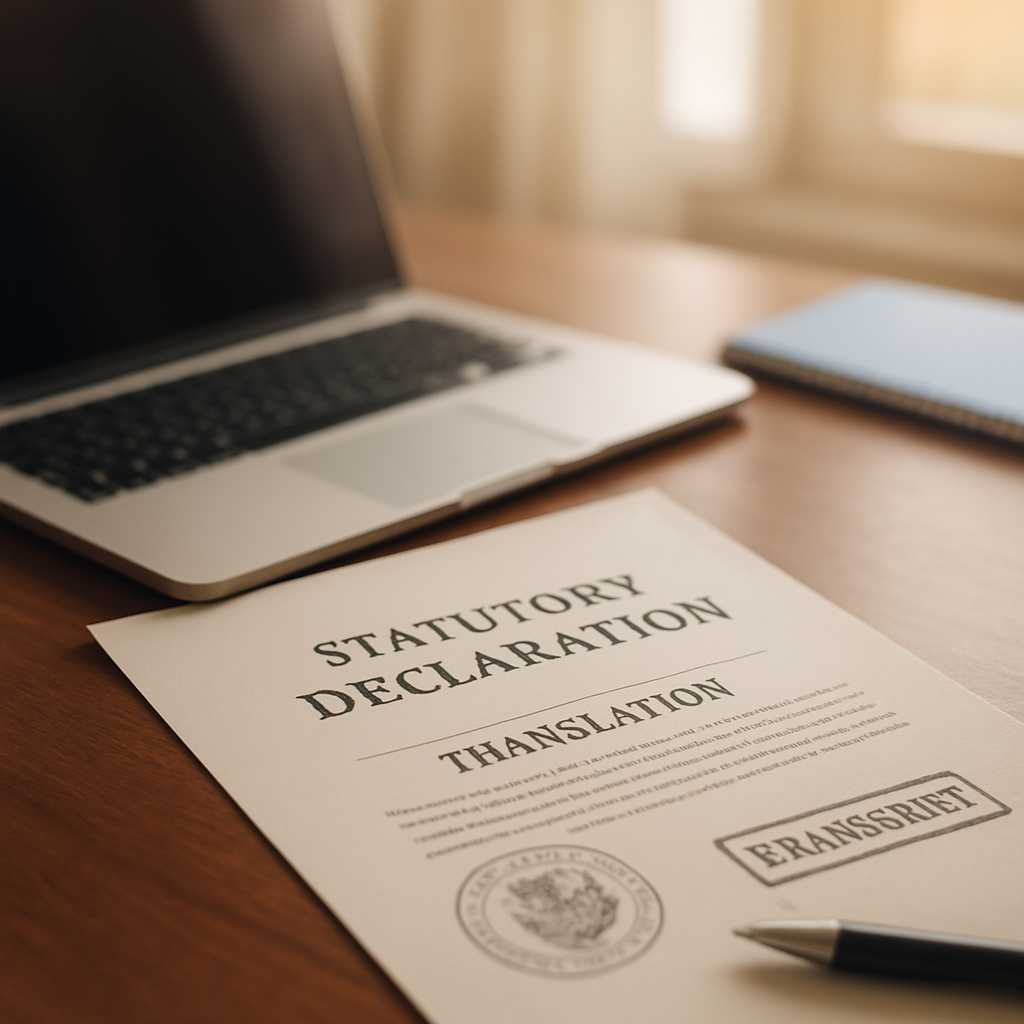
A statutory declaration is a legal document that allows individuals to declare something to be true in a formal manner. It is often used in legal proceedings, immigration applications, and various administrative processes. Proper translation of a statutory declaration is crucial, as inaccuracies can lead to legal complications or rejection of documents.
How to Translate a Statutory Declaration Correctly
1. Format of the Translation
The format of a statutory declaration translation should closely mirror the original document. This includes maintaining the layout, headings, and sections. Here are some key formatting tips:
- Maintain Original Layout: Ensure that the translated document follows the same structure as the original.
- Use Clear Headings: Clearly label each section to match the original document.
- Font and Size: Use the same font and size as the original document for consistency.
2. Seals and Stamps
Many statutory declarations include official seals or stamps. When translating, it is essential to:
- Translate Stamps and Seals: Provide a description of any seals or stamps in the translation, indicating their significance.
- Include Visuals: If possible, include images of the seals or stamps in the translated document to enhance authenticity.
3. Notes and Certifications
Adding notes and certifications can enhance the credibility of the translation:
- Translator’s Certification: Include a certification statement from the translator affirming the accuracy of the translation.
- Notarization: Depending on the requirements, consider having the translation notarized to add an extra layer of authenticity.
4. Avoiding Common Mistakes
To ensure a high-quality translation, avoid these common pitfalls:
- Omissions: Ensure that no part of the original document is omitted in the translation.
- Inaccurate Terminology: Use precise legal terminology to avoid misinterpretation.
- Proofreading: Always proofread the translation for errors before submission.
Statutory Declaration Translation Example
Here’s a brief example of how a statutory declaration might be translated:
Original: “I, John Doe, declare that the information provided is true and correct.”
Translation: “Yo, John Doe, declaro que la información proporcionada es verdadera y correcta.”
Conclusion
Translating a statutory declaration correctly is vital for ensuring its acceptance in legal and administrative processes. By following the guidelines outlined above, you can produce a translation that meets the necessary standards. For professional assistance, consider our Certified Translation of Statutory Declaration for U.S. Immigration Filings.
FAQs
What is a statutory declaration?
A statutory declaration is a legal document that allows individuals to declare something to be true in a formal manner.
Do I need a certified translation for a statutory declaration?
Yes, a certified translation is often required for legal documents like statutory declarations.
How do I ensure accuracy in my translation?
To ensure accuracy, use a professional translator familiar with legal terminology and proofread the document thoroughly.
Can I translate my own statutory declaration?
While you can translate your own document, it is recommended to use a certified translator to avoid potential issues.
