
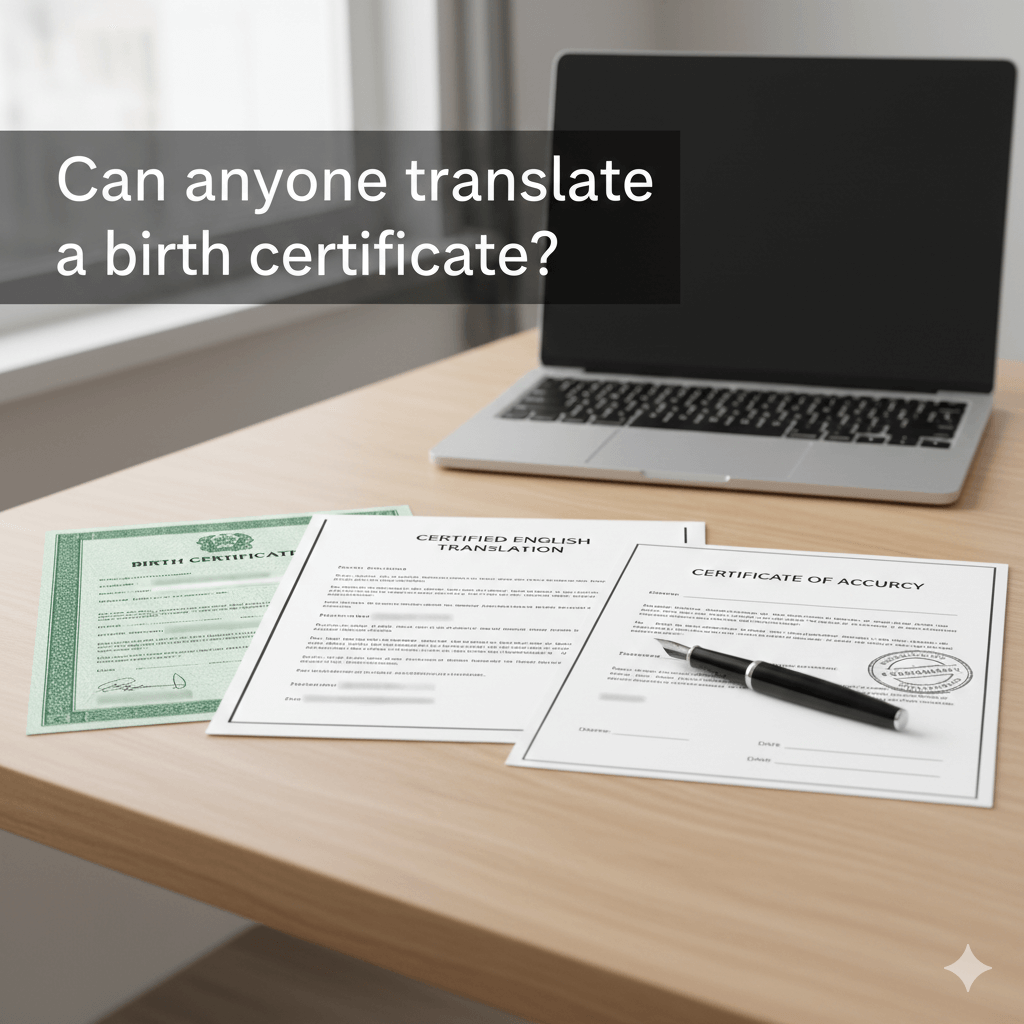
If you’re preparing documents for immigration, visas, passports, or official records, one question comes up again and again: can anyone translate a birth certificate?
The short, honest answer is no — at least not if the translation is going to be accepted by authorities. Birth certificates are legal identity documents, and most government agencies require translations that meet specific certification standards. Using the wrong translator is one of the most common reasons applications are delayed or rejected.
This guide explains exactly who can translate a birth certificate, who cannot, and how to make sure your translation is accepted the first time.
Who Sets the Rules for Birth Certificate Translation?
For U.S. immigration and federal processes, the rules are defined. Other authorities, such as passport offices or foreign consulates, follow very similar standards.
At a minimum, a birth certificate translation must be:
- Complete and accurate
- Translated into English (if the original is in another language)
- Accompanied by a signed certification of accuracy
- Completed by a qualified third party
This is where many people go wrong.\
Can a Friend or Family Member Translate a Birth Certificate?
No. Even if they are fluent or bilingual.
Government authorities generally reject translations completed by:
- The document holder
- A spouse, parent, or relative
- A friend or colleague
- Anyone with a personal interest in the application
The issue isn’t language ability — it’s impartiality and accountability. Authorities need a neutral professional who can legally certify the translation’s accuracy.
Can a Bilingual Person Translate a Birth Certificate?
Being bilingual alone is not enough.
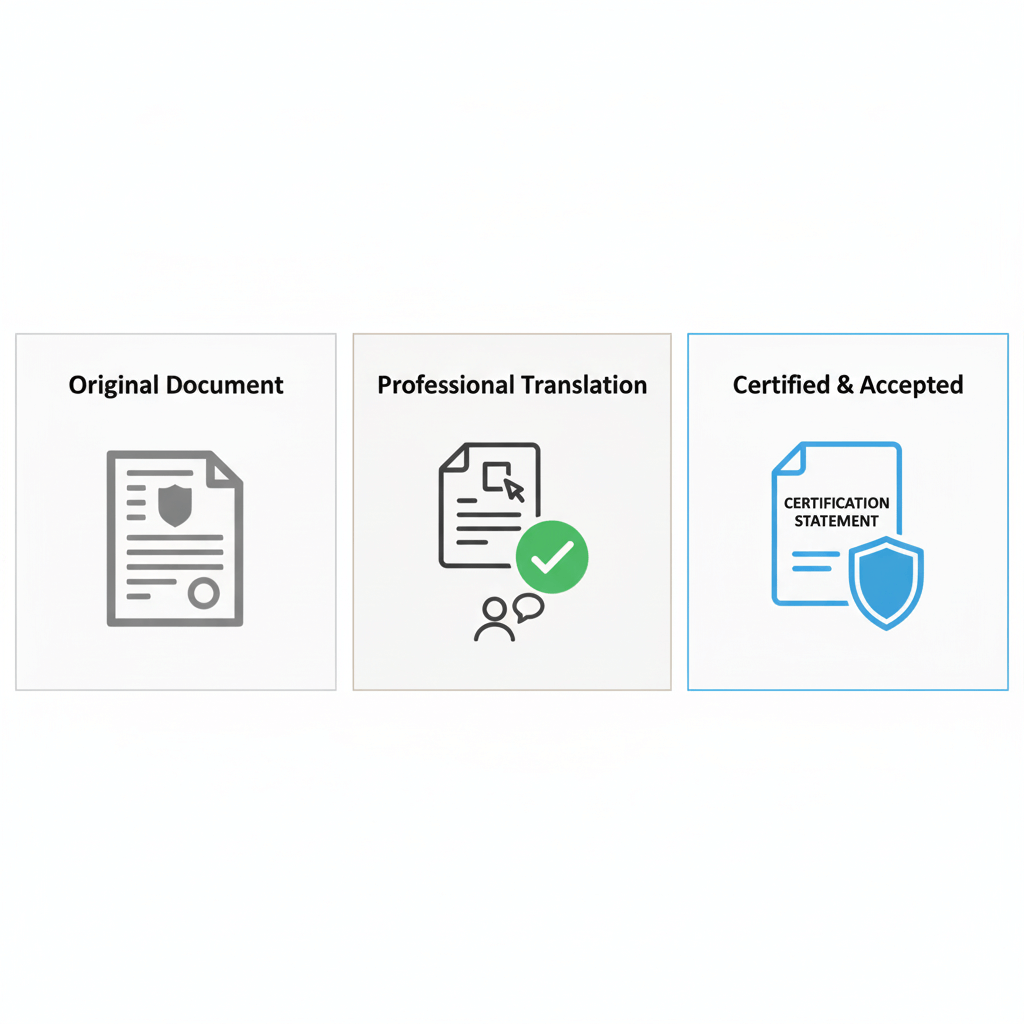
A translator must also provide a formal certification statement confirming:
- They are competent in both languages
- The translation is complete and accurate
- The document reflects the original without omissions or alterations
Most bilingual individuals cannot issue a legally acceptable certification, which means their translation may be refused even if the wording is correct.
Who Is Actually Allowed to Translate a Birth Certificate?
A birth certificate translation must be completed by a professional translator or translation agency that can issue a compliant certification.
This usually means:
- An independent professional translator
- A recognised translation agency
- A service experienced with immigration and legal documents
The certification must include the translator’s name, signature, date, and a formal statement of accuracy.
Does the Translation Need to Be Notarised?
Not always.
For U.S. immigration purposes, notarisation is not required as long as the translation includes a proper certification. However, some foreign governments, courts, or consulates may request notarised translations.
If you’re unsure, it’s best to use a service that can provide:
- Certified translations
- Notarised translations (if required)
- Additional legalisation if requested
Why Birth Certificate Translations Get Rejected
Applications are commonly delayed or refused due to:
- Missing certification statement
- Incomplete translations (missing stamps, seals, or notes)
- Self-translated documents
- Family member translations
- Formatting that does not reflect the original document
These issues often mean resubmission, additional fees, and lost time.
What a Proper Birth Certificate Translation Includes
A compliant translation should:
- Translate every element on the document
- Reproduce layout where relevant
- Note stamps, seals, signatures, and handwritten text
- Include a signed certificate of accuracy
- Be delivered in a clear, professional format
When a Professional Translation Is Essential
You should always use a professional service if the translation is for:
- Immigration or visa applications
- Adjustment of status or naturalisation
- Passport or citizenship records
- Court or legal proceedings
- Embassy or consular submissions
In these cases, using an uncertified translator risks rejection — even if the translation itself is linguistically perfect.
Frequently Asked Questions
Can I translate my own birth certificate?
No. Self-translations are not accepted because they lack independence and certification.
Can a notary translate a birth certificate?
Only if the notary is also a qualified translator and provides a proper certification. Most notaries do not translate documents.
Does USCIS accept digital translations?
Yes, provided the translation is certified and complete. Physical copies are rarely required unless specifically requested.
Does every page need translating?
Yes. Every word, stamp, note, and marking must be translated.
What languages require certified translation?
Any birth certificate not originally in English must be translated into English for U.S. immigration use.\
