
If you’re submitting a foreign birth certificate for immigration, passport, or legal purposes, you may be wondering: do translated birth certificates need to be notarized?
The short answer: Usually no for USCIS. Sometimes yes for other authorities.
The longer answer depends on who is requesting the translation and what type of certification they require.
This guide explains when notarization is necessary, when it is not, and how to ensure your translated birth certificate is accepted without delays.
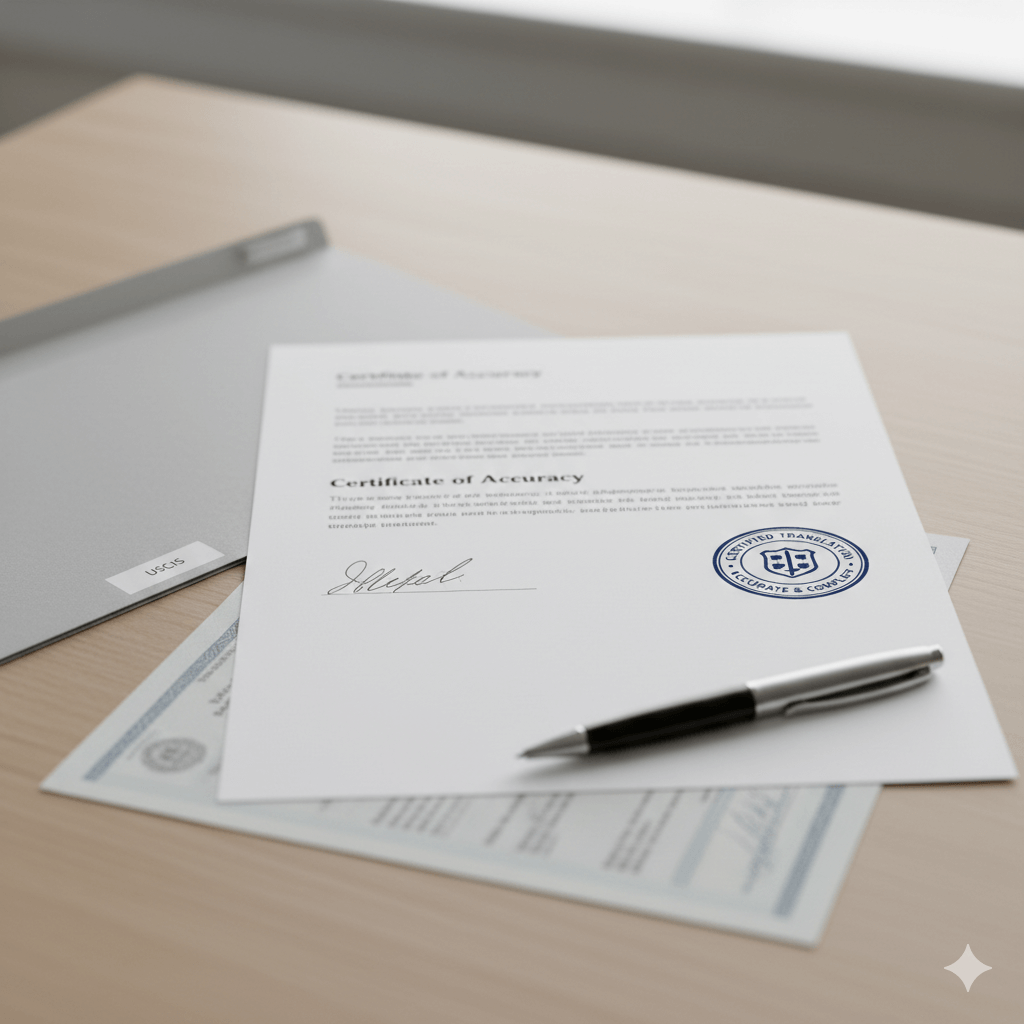
Understanding Certified vs. Notarized Translations
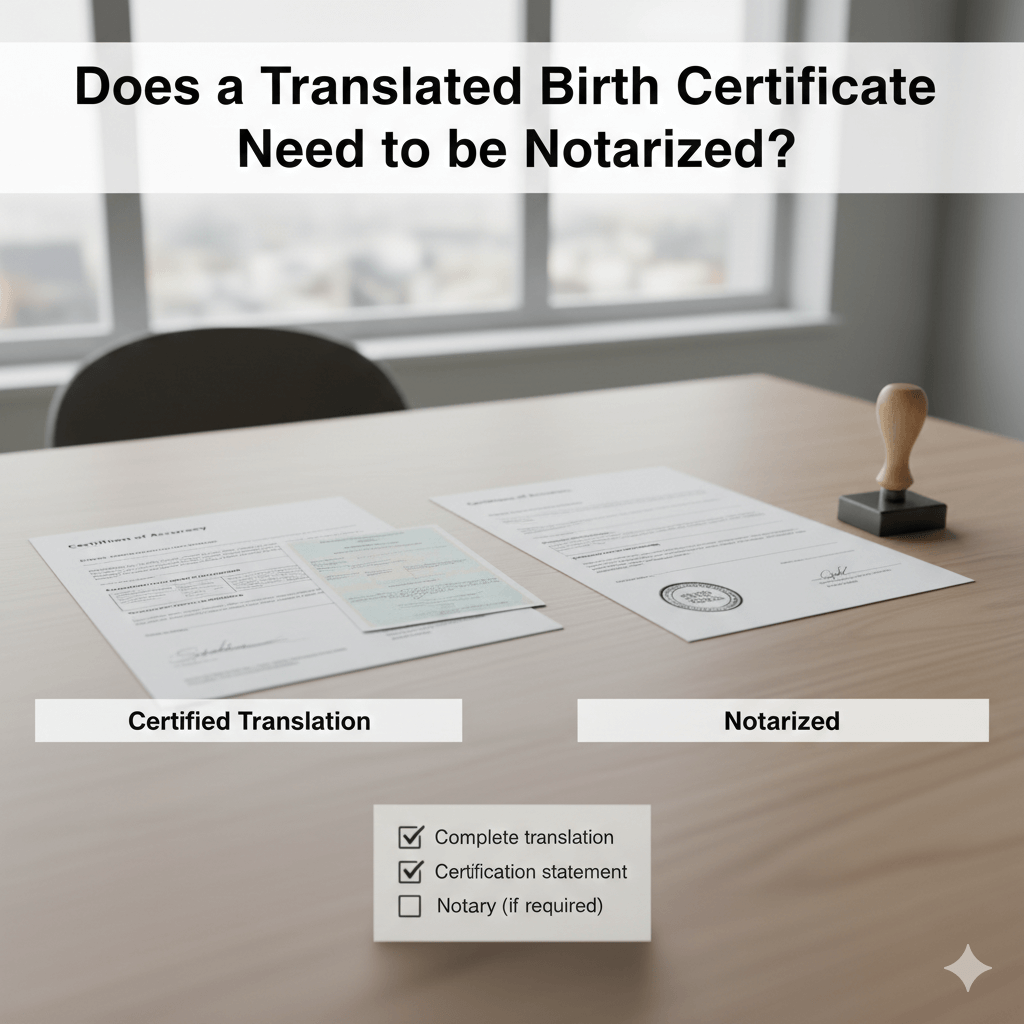
Before deciding whether notarization is required, it’s important to understand the difference between a certified translation and a notarized translation.
Certified Translation
A certified translation includes:
- A complete and accurate translation of the document
- A signed certification statement from the translator or agency
- Confirmation of translator competence
- Contact details of the translation provider
For U.S. immigration purposes, a certified translation is generally sufficient.
Notarized Translation
A notarized translation means:
- The translator signs the certification statement
- A notary public verifies the identity of the signer
- The notary applies a seal or stamp
The notary does not verify the accuracy of the translation. They only confirm the identity of the person signing.
Does USCIS Require Notarized Translations?
For most immigration applications, USCIS does NOT require notarized translations.
According to USCIS guidelines, you must provide:
A full English translation and a certification from the translator stating that the translation is complete and accurate, and that they are competent to translate.
When Is Notarization Required?
Although USCIS does not typically require notarization, some situations do.
1. State-Level Requests
Certain U.S. state agencies may require notarized translations for:
- Marriage license applications
- Court proceedings
- Vital records registration
- DMV documentation
Each state has different rules.
2. Court Documents
If your birth certificate translation is submitted in court proceedings, notarization may be required to add an additional layer of verification.
3. Foreign Government Authorities
Some embassies, consulates, and international institutions request notarized translations.
For example:
- Dual citizenship applications
- International marriage registration
- Apostille processes
Always verify the specific authority’s requirements before proceeding.
Certified vs. Notarized vs. Apostilled Translation
Many applicants confuse these three terms. Here is a simple comparison:
| Type | What It Means | Who Requires It |
|---|---|---|
| Certified | Signed statement confirming accuracy | USCIS, universities, employers |
| Notarized | Certification signed before a notary | Some courts and state agencies |
| Apostilled | Government authentication for international use | Foreign governments |
An apostille is different from notarization. It is an official certificate issued by a Secretary of State confirming the authenticity of a public document.
If your document will be used outside the United States, you may need an apostille after translation.
Common Mistakes That Cause Rejection
Even when notarization is not required, translations are often rejected due to:
- Missing certification statements
- Incomplete translations (excluding stamps or seals)
- Translator failing to confirm competence
- Poor formatting that does not match the original
- Machine translation without human certification
Using an experienced immigration-focused translation provider significantly reduces the risk of rejection.
Real-World Example
Consider this scenario:
Maria submits her foreign birth certificate for adjustment of status. She includes:
- The original document
- A full English translation
- A signed certification statement
Her application is accepted.
Now compare that to David, who submits a machine translation without certification. USCIS issues a Request for Evidence (RFE), delaying his case by months.
The difference? Proper certification — not notarization.

How to Know What You Actually Need
Follow this checklist:
- Who is requesting the translation?
- Do they explicitly state “notarized”?
- Are you filing with USCIS only?
- Will the document be used internationally?
If the requesting authority does not specifically require notarization, a certified translation is typically sufficient.
When in doubt, confirm before paying for additional services you may not need.
Why Professional Translation Matters
A birth certificate contains critical data:
- Legal names
- Dates of birth
- Parent details
- Registration numbers
- Official seals
Errors can affect:
- Immigration eligibility
- Passport approvals
- Visa applications
- Citizenship processes
Working with specialists in immigration translation ensures compliance and peace of mind.
Thousands of clients trust USCIS Official Translation for accurate, certified birth certificate translations delivered quickly and accepted nationwide.
Upload your file today and receive a professionally certified translation prepared by experienced linguists.
FAQ
Do translated birth certificates need to be notarized for USCIS?
No. USCIS requires certified translations, not notarized translations. A signed certification statement confirming accuracy and competence is sufficient.
Can I notarize my own translated birth certificate?
If you are the translator, you cannot notarize your own signature. A notary must verify your identity. However, notarization is usually not required for immigration purposes.
What happens if I submit a non-notarized translation?
If the requesting authority does not require notarization, your certified translation will be accepted. If notarization is required and missing, your application may be delayed.
Is a notarized translation stronger than a certified translation?
Not necessarily. Notarization only confirms identity, not accuracy. For immigration purposes, certification is what matters.
Do I need an apostille on a translated birth certificate?
Only if the document will be used in another country that requires apostille authentication. USCIS does not require apostilles for translations.
