
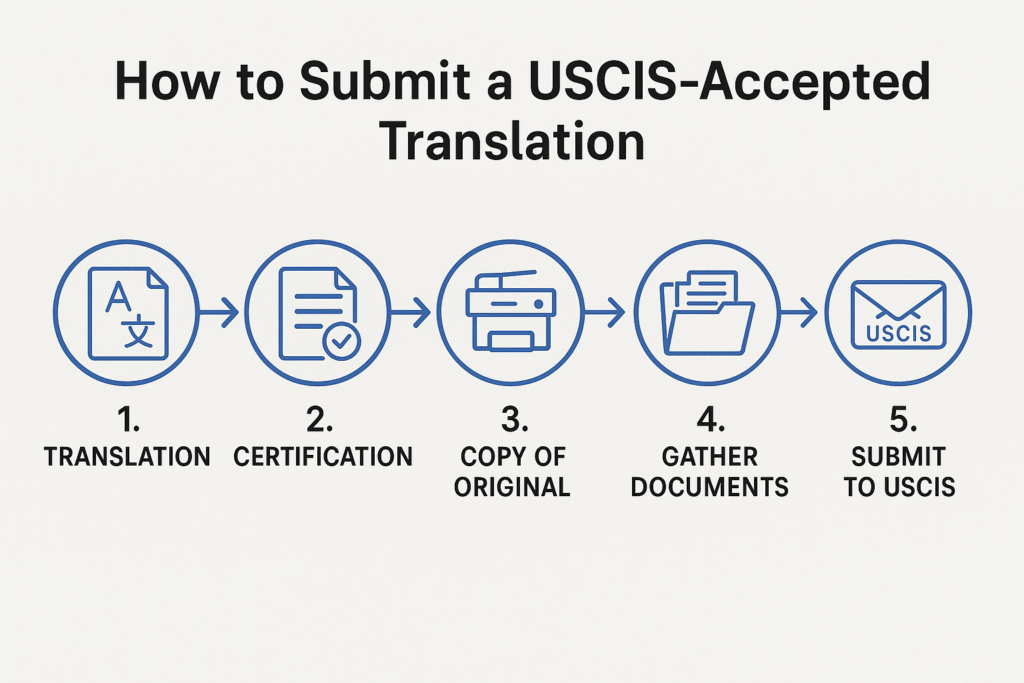
When submitting documents to the United States Citizenship and Immigration Services (USCIS), only certified English translations are accepted for documents originally written in a foreign language. USCIS doesn’t accept summaries, paraphrased content, or machine-generated translations. The translation must be complete, accurate, and come with a signed certification attesting to its validity.
The certification must confirm that the translator is competent in both the source and target languages and that the translation is complete and accurate to the best of their knowledge. This requirement helps USCIS ensure the integrity of immigration processes, eliminating errors that could cause confusion or fraud.
Introduction to USCIS Document Translation Requirements
The USCIS translation policy is not arbitrary. It serves to verify that every applicant’s documents are legitimate and understandable by English-speaking officers. Whether it’s birth certificates, marriage licenses, diplomas, or court records—if it’s not in English, it must be translated and certified.
This is a legal requirement, and failure to comply may result in a Request for Evidence (RFE), or even outright denial of your application.
Understanding Certified Translations
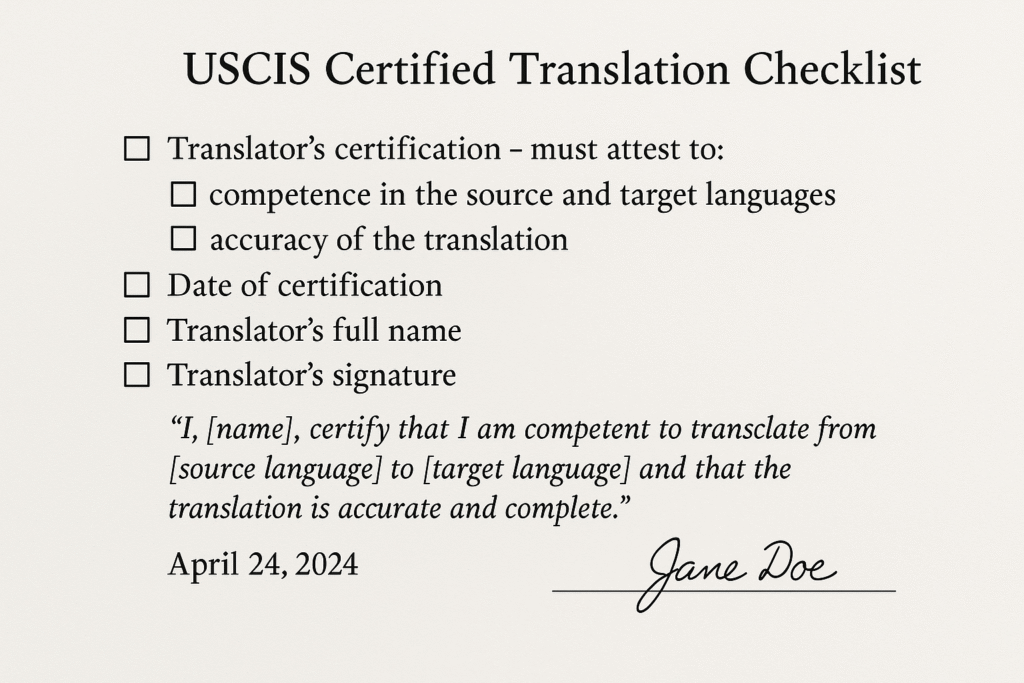
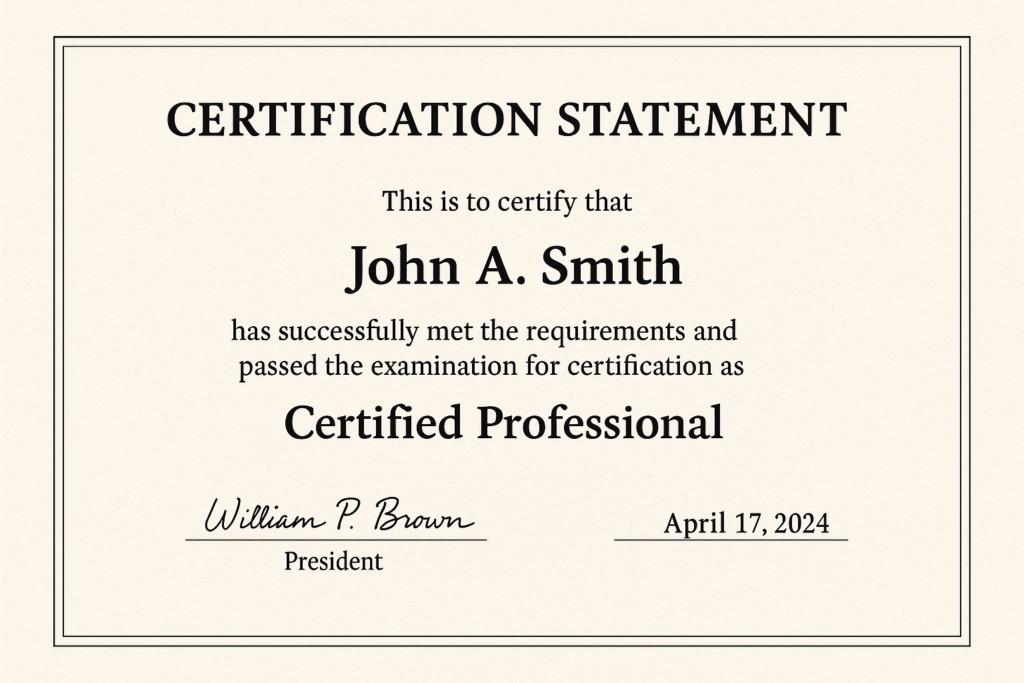
A certified translation is a document accompanied by a signed statement from the translator (or translation company) affirming:
- Their fluency in both the original and translated languages
- The completeness and accuracy of the translation
- Their personal or professional competency
This statement is often referred to as a Certificate of Translation Accuracy and must include contact information, a signature, and the date of certification.
Notarized vs. Certified Translations: What’s the Difference?
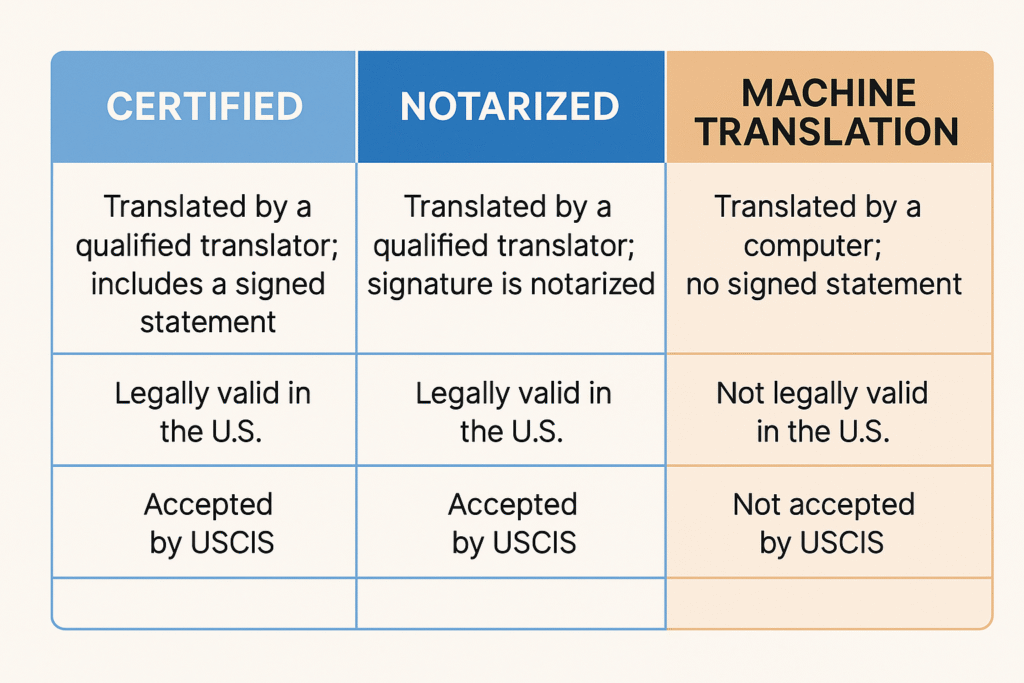
Here’s a common confusion: USCIS does not require notarized translations, only certified ones. Notarization is when a notary public verifies the identity of the person signing a document. While helpful for other legal processes, it’s not a substitute for certification in the eyes of USCIS.
So, if a translation is notarized but not certified—it won’t be accepted.
Who Can Provide USCIS-Accepted Translations?
Technically, any fluent bilingual person who is not the applicant or their immediate family can certify a translation. But this comes with risks. If the translation has mistakes or looks unprofessional, it may still be rejected.
That’s why using a professional translation service with experience in USCIS requirements is the safest route. These services have templates, trained linguists, and knowledge of USCIS document types.
Can You Translate Your Own Documents for USCIS?
In short, no. USCIS explicitly states that you cannot translate your own documents, even if you’re fluent in English and the source language. This is to prevent biased translations and preserve the objectivity of immigration applications.
Essential Components of a USCIS-Accepted Translation
A compliant translation should include:
- The entire text of the original document
- A matching layout or format where feasible
- The name, signature, and contact details of the translator
- A certification statement confirming completeness and accuracy
Do You Need a Professional Translator?
While not mandatory, it’s highly recommended. A professional translator is more likely to understand the nuance of official language, legal jargon, and format requirements—ensuring your translation doesn’t just meet the standard, but exceeds it.
Top Mistakes to Avoid When Translating for USCIS
- Incomplete translations (leaving out stamps or handwritten notes)
- Using free tools like Google Translate
- Not including the certification statement
- Forgetting to sign and date the certification
- Formatting that deviates too far from the original
Each of these can lead to delays or denials.
How USCIS Verifies Translations
While USCIS typically does not contact the translator, they do review the certification and may issue an RFE if something seems off. The review process includes:
- Evaluating formatting and consistency
- Checking for completeness
- Verifying the translator’s declaration
USCIS Policy on Translated Birth Certificates
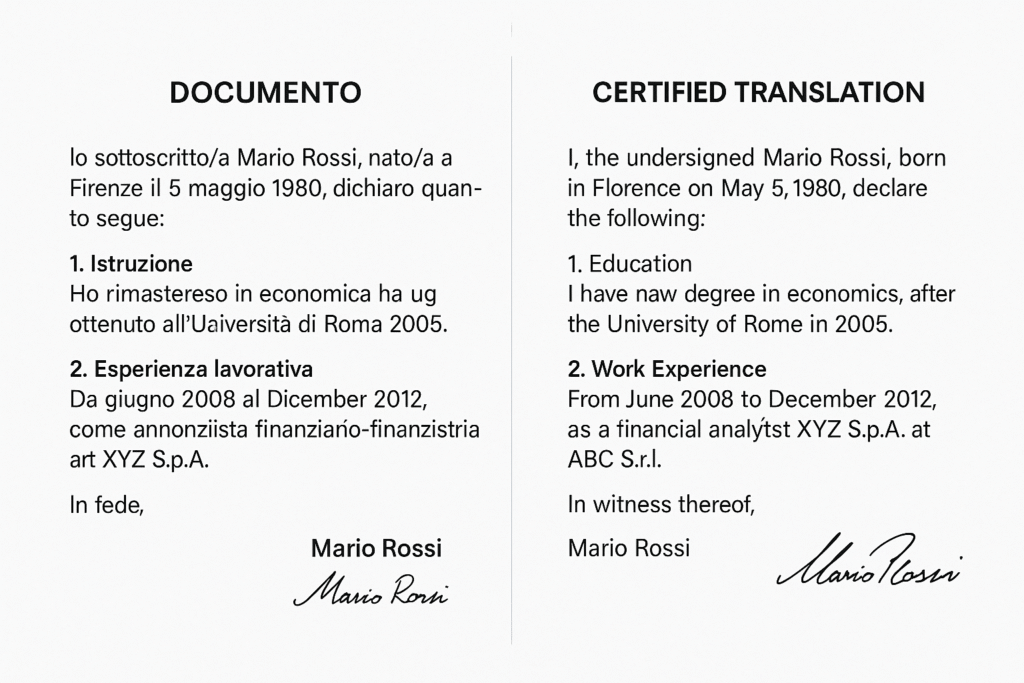
Birth certificates are among the most frequently submitted documents. The translation must include:
- Full name of child and parents
- Date and place of birth
- Registration number (if applicable)
- Official seals, stamps, and annotations
All details must be translated—not just the main text.
Translating Academic Records for USCIS
For visa applications or employment-based petitions, academic records must show:
- Institution name
- Dates attended
- Degree(s) obtained
- Grades, if relevant
Include a transcript legend if available..
Marriage and Divorce Certificates Translation Guidelines
These documents often include archaic or regional terminology. Be precise and consistent, translating terms like “registro civil” or “divorcio voluntario” with care. Certification is especially crucial here due to the legal impact.
Translation Services Recommended by USCIS
USCIS doesn’t endorse specific providers, but they expect translators to adhere to high professional standards. Trusted options include:
- USCIS-experienced firms like RushTranslate or Rev
- ATA-certified translation agencies
- Legal document specialists
Turnaround Time for USCIS Translations
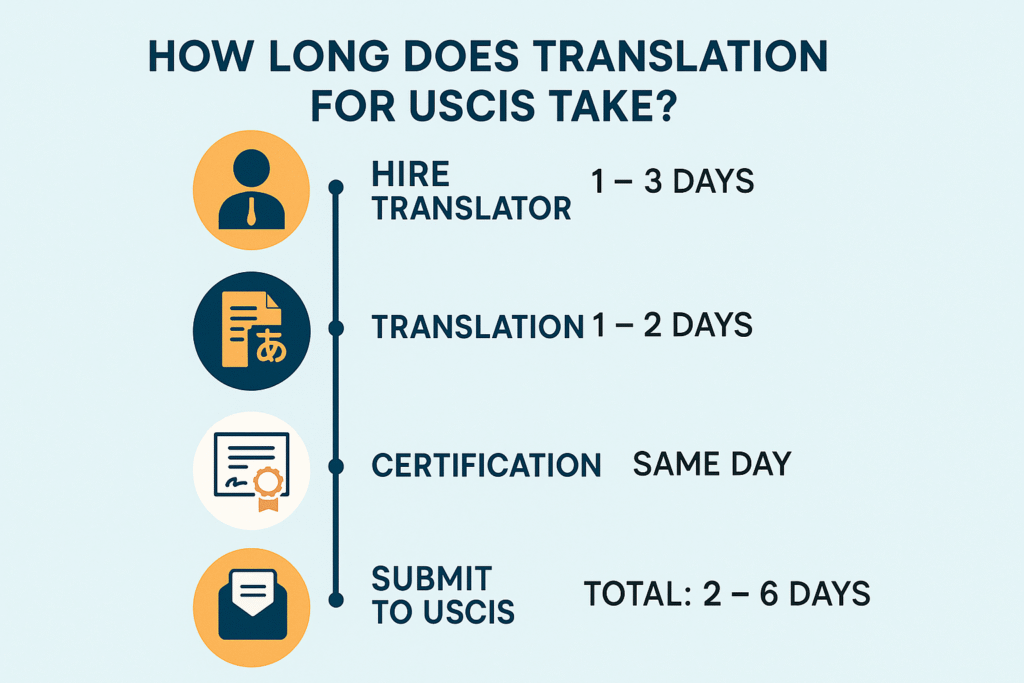
Translation timelines vary but typically range from 24–72 hours per page. Urgent services may offer same-day delivery for an additional fee.
Cost of Certified Translations for USCIS
Expect to pay between $20 to $50 per page, depending on the provider, document type, and urgency. Beware of services that charge far below market rates—they may cut corners.
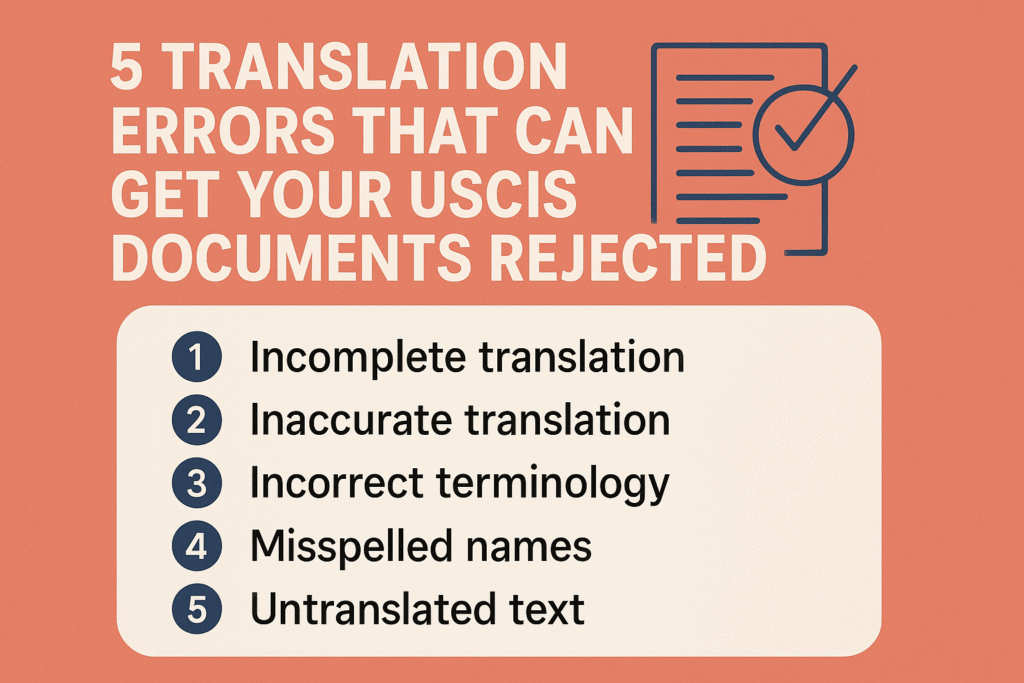
USCIS Rejection Due to Translation Issues
Rejections often stem from:
- Missing certification statements
- Incomplete translation
- Illegible scans or formatting
- Suspected inaccuracies
In most cases, USCIS will issue a Request for Evidence (RFE), giving you time to resubmit properly.
How to Resubmit Translations to USCIS
If you receive an RFE:
- Hire a qualified translator
- Include a complete translation and certification
- Attach the RFE notice with your new submission
Act promptly—delays can jeopardize your case.
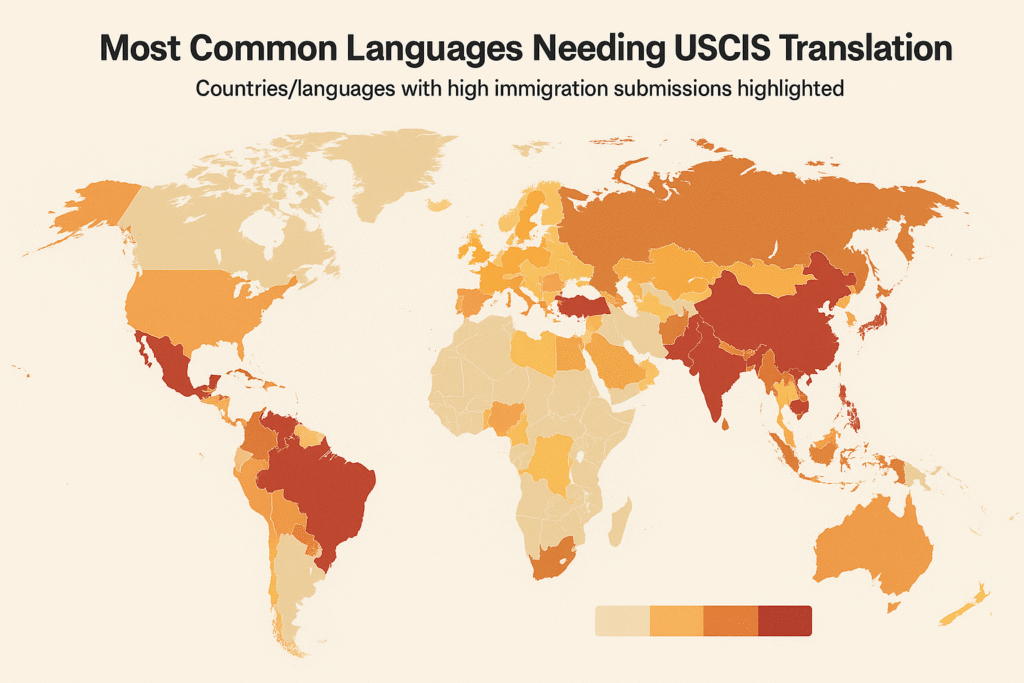
Languages Commonly Translated for USCIS
- Spanish
- Chinese
- Arabic
- Russian
- Hindi
- French
Each language poses unique challenges—use experts familiar with your specific language pair.
Can Machine Translations Be Used for USCIS?
No. Tools like Google Translate are useful for informal use but not USCIS-compliant. They often produce errors, especially in legal or nuanced documents.
Digital vs. Physical Certified Translations
Digital submissions must be in PDF format, clear, and include the full certification statement and signature. Physical copies require original signatures—no photocopies.
How to Verify a Translation Service is USCIS-Compliant
Before choosing a provider, ask:
- Do you offer certified translations?
- Are your translators ATA-certified?
- Do you have USCIS experience?
- Can you provide a sample certificate?
Tips for a Smooth USCIS Submission
- Start translations early
- Use only certified professionals
- Double-check formatting
- Include certification with every document
- Avoid automated translation tools
FAQs
Is notarization required for USCIS translations?
No, USCIS only requires certified translations, not notarized ones.
Can I translate my own documents for USCIS?
No, applicants cannot translate their own documents.
How long does a certified translation for USCIS take?
Typically, 24 to 72 hours per document, depending on the provider.
What happens if I submit an uncertified translation?
USCIS may reject your application or issue a Request for Evidence (RFE).
What kind of documents need translation for USCIS?
Any non-English document submitted to USCIS must be translated, including birth, marriage, divorce certificates, and academic records.
Do USCIS translations expire?
Translations don’t have an expiration date, but they must match the document being submitted at the time of application.
Conclusion
Navigating USCIS document requirements can be daunting, but knowing exactly what translation is accepted by USCIS sets the foundation for a successful application. Certified translations aren’t just a bureaucratic hoop—they ensure fairness, accuracy, and clarity in a process that deeply impacts lives. Choose your translation partner wisely, follow guidelines closely, and you’ll avoid unnecessary headaches on your path to a better future.
